Stocks
What Is an IPO?
Quick answer
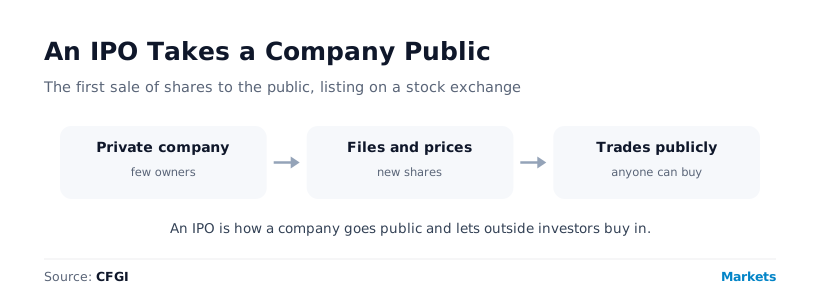
An IPO, or initial public offering, is when a private company sells shares to the public for the first time and lists on a stock exchange. It raises money for the company and lets early owners cash out, through a months-long process run by underwriting banks. IPOs are intensely sentiment-driven: a debut in a greedy market can soar, often "popping" on day one, while the same company in a fearful market may struggle to list at all. This is education, not financial advice.
CFGI data
IPO demand rides the wider market mood, and CFGI scores that mood. The Stock Fear and Greed Index runs 0 to 100, updated daily since 2021 across major indices and leading stocks, so you can see whether a company is debuting into greed or into fear.
Source: CFGI dataset, 2021 to June 2026.
Key takeaways
- An IPO is a company’s first sale of shares to the public.
- Underwriting banks run a months-long process and set the price.
- IPOs are often deliberately underpriced, creating a first-day "pop".
- Direct listings and SPACs are alternative routes to going public.
- IPO demand rides the overall market mood.
What Is an IPO?
An initial public offering is the moment a private company becomes a public one. It sells a batch of new shares to investors, raising money for growth, and from that point its stock trades on a stock exchange where anyone can buy it. For the company it is a major funding event and a milestone; for investors it is a first chance to own a piece of a business that was previously closed off. It is also, for many startups, the long-awaited "exit" that lets early employees and venture backers finally turn their shares into cash.
How an IPO Works
Going public is a long, regulated process, typically six to eighteen months. The company hires "underwriters", investment banks that run the deal and earn a fee of several percent of the proceeds, then files a detailed prospectus (the "S-1") with the SEC and works through its comments. Next comes the "roadshow", a week or two in which executives pitch the company to large institutional investors, who place "indications of interest" that build a "book" of demand. Using that demand, the bankers set the offering price the night before trading begins, and the next morning the shares start changing hands on the exchange. Insiders are then usually subject to a "lockup", barred from selling for around 90 to 180 days.
The First-Day "Pop" and Underpricing
IPOs frequently "pop" on their first day, jumping well above the offering price, with the average first-day gain running around 19% historically. This is not an accident: the shares are often deliberately underpriced, set 10 to 25% below where the bankers think they will trade, to guarantee a successful debut and reward the institutional clients who get the initial allocation. The pop is, in effect, money left on the table by the company, a transfer of value from the firm raising capital to the favoured early buyers, which is one reason underpricing is controversial. For ordinary investors, it also means the easy first-day gains often go to insiders, while those buying once the stock is trading freely are paying the already-popped price.
The Pop Is Engineered
A first-day jump is usually the result of deliberate underpricing, not pure demand. The early gains tend to go to institutions with allocations, not to the public buying after the open.
Alternatives: Direct Listings and SPACs
The traditional IPO is not the only route to public markets. In a "direct listing", a company lists its existing shares directly on an exchange without underwriters raising new capital, letting the market set the opening price, which avoids underpricing but raises no fresh money. A "SPAC", or special-purpose acquisition company, is a blank-check shell that raises money in its own IPO and then merges with a private company to take it public, offering more certainty on price and terms than a volatile traditional IPO. Both became popular as faster or cheaper alternatives, though SPACs in particular have a chequered record. The choice of route often itself signals how hot or cautious the market for new listings is.
Why Are IPOs So Sentiment-Driven?
Because a brand-new stock has little trading history to anchor it, the debut is shaped heavily by mood. The same company can soar on its first day in a greedy market and stumble in a fearful one, the fundamentals did not change between those worlds, the investor sentiment did. The whole IPO market behaves this way: the "IPO window" swings open when confidence is high, with a rush of listings, and slams shut in fearful markets, when companies postpone their debuts and wait. That makes the pace of IPOs a useful barometer of risk appetite, and reading the broader mood on the Stock Fear and Greed Index gives context for whether a debut is landing in greed or in fear.
Frequently asked questions
What does IPO stand for?
Initial public offering: the first time a company sells its shares to the public and lists them on a stock exchange, usually through a months-long process run by underwriting banks.
Why do IPOs "pop" on the first day?
Because the shares are often deliberately underpriced, set below their likely trading value, to guarantee a successful debut and reward institutional buyers. The average first-day gain has been around 19%, but those gains tend to go to insiders, not the public buying after the open.
What are direct listings and SPACs?
Alternatives to a traditional IPO. A direct listing puts existing shares on an exchange without underwriters or new capital; a SPAC is a blank-check shell company that raises IPO money and then merges with a private firm to take it public.
Why do some IPOs soar and others flop?
Largely sentiment. A debut in a greedy, risk-on market attracts eager buyers; the same company in a fearful market may find few, and many simply postpone. The market mood is the difference. This is education, not financial advice.
CFGI.io, Market sentiment research
The CFGI research team builds and maintains the CFGI Fear and Greed Index: a 0 to 100 sentiment score from 10 sub-indicators across hundreds of crypto assets and the equity market, refreshed every 15 minutes. We have tracked market emotion through multiple full crypto and equity cycles.
Think we missed something?
Spotted a gap, disagree with a take, or think we should cover a new topic? Message us and we'll act on your input.
Message us on TelegramKeep reading
This article is educational and is not financial advice. Crypto and equities are volatile and you can lose money. See our disclaimer.