Stocks
What Is a Portfolio?
Quick answer
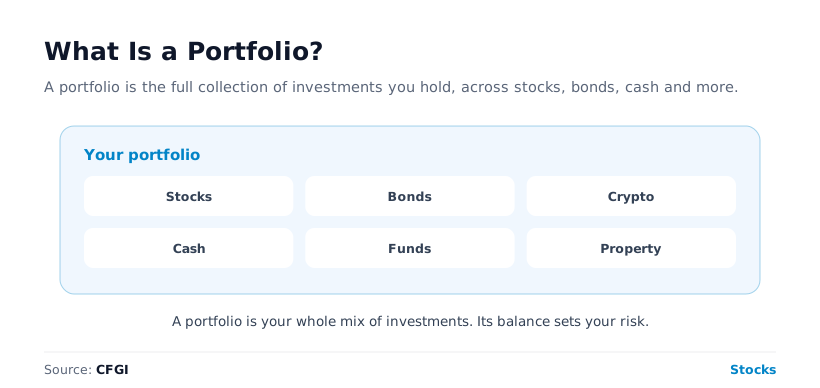
A portfolio is the whole collection of investments you own, taken together: your stocks, bonds, funds, cash, crypto and anything else. What matters is not just each holding but the mix, how your money is spread across different assets. That mix, your asset allocation, decides your overall risk and return far more than any single pick, which is why building a portfolio is mostly about balance rather than finding one winner. This is education, not financial advice.
CFGI data
Your portfolio mix decides how much any sentiment swing actually touches you. A Fear and Greed Index reads the market mood on a 0 to 100 scale; the balance of your holdings decides whether an Extreme Fear day, below 20, is a scratch or a wound. The gauge measures the storm; your allocation is the shelter you built before it.
Source: CFGI methodology, 0 to 100 sentiment model.
Key takeaways
- A portfolio is all your investments taken together.
- The mix of assets matters more than any single holding.
- Diversification is famously "the only free lunch" in investing.
- It works best when assets are not highly correlated.
- Rebalancing keeps the mix in line with your target over time.
The Whole, Not the Parts
Any single stock is just one holding. Your portfolio is the full picture: everything you own across asset types, viewed as one thing. The point of thinking in portfolio terms is that the parts interact. A risky holding matters far less when it is a small slice of a balanced whole, and diversification is really a statement about your portfolio, not about any one asset. Judging investments one at a time, rather than by what they do to the whole, is one of the most common and costly mistakes.
Why the Mix Matters: Asset Allocation
The single most important decision in a portfolio is its "asset allocation", the balance between broad classes like stocks, bonds and cash. This is usually expressed as target percentages, such as the classic 60% stocks and 40% bonds. The allocation sets how much your portfolio swings and what return you can reasonably expect: a heavier tilt to stocks means more growth and more volatility; more bonds and cash means a steadier, lower-return ride. Studies consistently find that this top-level mix explains far more of a portfolio’s results over time than the individual securities chosen within it, which is a humbling and useful fact.
Diversification: The Only Free Lunch
The Nobel-winning economist Harry Markowitz famously called diversification "the only free lunch in finance", and the phrase has stuck because it is true. Almost everything in investing is a trade-off: more return demands more risk. Diversification is the rare exception. By spreading money across assets that do not all move together, you can reduce a portfolio’s overall risk without giving up expected return, getting something genuinely for nothing. That is why "do not put all your eggs in one basket" is not just folk wisdom but the mathematical heart of modern investing.
Why It Is "Free"
Most ways to lower risk also lower expected return. Diversification can lower risk while keeping return roughly intact, which is what makes it the closest thing to a free lunch the markets offer.
Correlation: The Secret Ingredient
The catch is that diversification only works if your holdings are not too similar. The technical measure is correlation, which runs from minus one to plus one: assets with low or negative correlation move out of step, so when one falls another holds up, smoothing the ride. Owning twenty technology stocks is barely diversified, because they tend to rise and fall together; owning stocks alongside bonds, which have often moved differently, is far more so. One important warning: in a true crisis, correlations can spike toward one and almost everything falls at once, which is why diversification tames everyday risk far better than it shields against a systemic shock.
Modern Portfolio Theory In Brief
These ideas come together in "modern portfolio theory", which Markowitz developed in the 1950s. Its central insight is that you should judge an investment not in isolation but by what it contributes to the whole portfolio’s risk and return. From that follows the "efficient frontier", the set of portfolios that deliver the highest expected return for each level of risk; a rational investor, the theory says, should hold one of those rather than something needlessly riskier for the same return. You do not need the maths to use the lesson: build the mix deliberately, and judge every holding by its effect on the whole.
Rebalancing: Keeping the Mix
A portfolio does not stay put. As prices move, your winners grow into a bigger slice and your losers shrink, so a 60/40 mix can drift to 70/30, quietly taking on more risk than you intended. Rebalancing is the discipline of periodically selling what has grown and buying what has lagged to restore your target. It does two things at once: it keeps your risk where you want it, and it mechanically forces you to sell high and buy low, the opposite of what emotion tempts you to do. Done on a schedule rather than a hunch, it is one of the simplest ways to impose discipline on a portfolio.
Your Portfolio and Sentiment
Your portfolio mix is ultimately what decides how much any wave of fear or greed actually affects you. A Stock Fear and Greed Index reads the market’s mood on a 0 to 100 scale, but the same Extreme Fear day is a minor wobble for a well-diversified, balanced portfolio and a serious blow for one concentrated in a single risky bet. Sentiment tools can inform your decisions and steady your nerves, but the allocation is the foundation: it is the shelter you build in calm weather that determines how you weather the storm the gauge is warning you about.
Frequently asked questions
What is a portfolio?
The full collection of investments you own, taken together, across stocks, bonds, funds, cash and more. Its mix, or asset allocation, decides your overall risk and return.
Why does the mix of a portfolio matter?
Because the balance between asset classes sets how much the portfolio swings and what return to expect, and it explains more of your results over time than individual security picks. A heavier stock tilt means more growth and volatility; more bonds and cash means a steadier ride.
Why is diversification called a "free lunch"?
Because it can reduce a portfolio’s overall risk without giving up expected return, by spreading money across assets that do not all move together. Almost everything else in investing is a risk-for-return trade-off; diversification is the rare exception.
What is rebalancing?
Periodically restoring your portfolio to its target mix by selling what has grown and buying what has lagged. It keeps your risk in line and mechanically forces you to sell high and buy low. This is education, not financial advice.
CFGI.io, Market sentiment research
The CFGI research team builds and maintains the CFGI Fear and Greed Index: a 0 to 100 sentiment score from 10 sub-indicators across hundreds of crypto assets and the equity market, refreshed every 15 minutes. We have tracked market emotion through multiple full crypto and equity cycles.
Think we missed something?
Spotted a gap, disagree with a take, or think we should cover a new topic? Message us and we'll act on your input.
Message us on TelegramKeep reading
This article is educational and is not financial advice. Crypto and equities are volatile and you can lose money. See our disclaimer.