Stocks
Fear and Greed Index and Portfolio Rebalancing
Quick answer
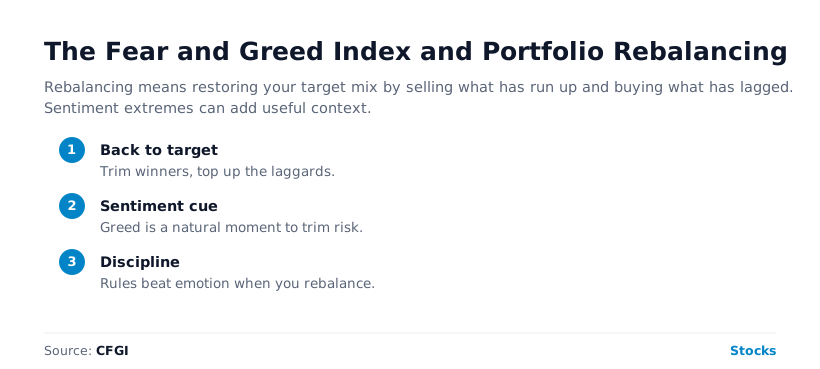
Rebalancing is the discipline of periodically restoring your portfolio to its target mix, trimming what has grown too large and topping up what has shrunk. It is naturally contrarian: you sell strength and buy weakness. The Fear and Greed Index can add context to that discipline, since extremes often line up with the moments when your mix has drifted most. It supports a rules-based process rather than replacing it, the schedule should lead, the score should only inform. This is education, not financial advice.
CFGI data
Rebalancing and sentiment rhyme. Greed inflates the winners you trim; fear deflates the laggards you top up. CFGI marks those extremes, like the equity 3 on 8 April 2025, giving context to a rebalance, though the schedule, not the score, should drive the discipline.
Source: CFGI dataset, 2021 to June 2026.
Key takeaways
- Rebalancing restores your target mix on a schedule.
- It is naturally contrarian: sell strength, buy weakness.
- It can be done by calendar or by drift threshold.
- Sentiment extremes often coincide with the biggest drift.
- Use the index as context, not as the trigger.
Rebalancing Is Built-In Contrarianism
Over time, the winners in a portfolio grow to dominate while laggards shrink, pulling your mix away from its target and quietly raising your risk. Rebalancing corrects that: you sell some of what has run up and buy some of what has lagged. Done on a schedule, it forces you to sell high and buy low without having to predict anything. That contrarian rhythm maps neatly onto sentiment: assets in greed are usually the ones you trim; assets in fear are usually the ones you add to.
What Rebalancing Actually Is
Rebalancing starts with a target allocation, the mix of assets you have chosen to match your goals and risk tolerance, say 60% stocks and 40% bonds. As markets move, that mix drifts: a strong run in stocks might push it to 70/30, leaving you carrying more risk than you intended. Rebalancing sells enough of the overweight asset and buys enough of the underweight one to restore the 60/40 target. There are two common approaches. Calendar rebalancing does it on a fixed schedule, quarterly or annually, regardless of conditions. Threshold rebalancing does it whenever an asset drifts beyond a set band, say more than 5 percentage points from target. Both are mechanical by design, and that is the point: the rules, not your emotions, decide when you act.
Why Rebalancing Works
The quiet genius of rebalancing is that it forces you to do the emotionally hardest thing at exactly the right time. Selling some of your best-performing asset feels wrong when it is soaring, and buying more of your worst feels worse when it is falling, yet that is precisely "sell high, buy low" in action, executed by rule rather than nerve. By systematically trimming what greed has inflated and adding to what fear has deflated, rebalancing harvests the market’s volatility instead of being whipsawed by it, an effect sometimes called the "rebalancing bonus". Just as importantly, it keeps your risk where you want it: without rebalancing, a long bull market would leave you dangerously overexposed to stocks at exactly the moment a downturn would hurt most. It is discipline, automated.
Sell High, Buy Low, by Rule
Rebalancing makes you trim the greedy winners and buy the fearful laggards on schedule, doing the emotionally hard thing automatically. The rule, not your nerve, executes the contrarian trade.
How to Add Sentiment to Rebalancing
- Set a rebalancing schedule or threshold and stick to it, that discipline is the core.
- When you rebalance, note the sentiment: are you trimming greed and adding to fear?
- Let the schedule drive the action; use the index only as confirming context.
- Avoid the temptation to over-rebalance just because a reading is extreme.
- Keep your target mix tied to your goals and risk tolerance, not to the score.
Schedule First
The power of rebalancing comes from doing it regularly, not from timing it to sentiment. Let the index add context, not override the plan. This is education, not financial advice.
Schedule First, Sentiment Second
It is worth being clear about the order of priority, because it is easy to get backwards. The discipline of rebalancing comes from its regularity and its rules; that is what protects you from your own emotions and keeps your risk in check. Sentiment is a secondary layer of context, not a trigger. It can be satisfying to notice that a scheduled rebalance happens to fall in a moment of Extreme Greed, confirming that you are trimming into euphoria, or Extreme Fear, confirming that you are buying into panic, but the action should be driven by your plan, not by the reading. The danger is letting the index tempt you into over-rebalancing, trading too often around every extreme, which racks up costs and taxes and undermines the very discipline that makes rebalancing work. Let the schedule lead, and let the Fear and Greed Index quietly confirm.
Frequently asked questions
What is portfolio rebalancing?
Periodically restoring your portfolio to its target mix by trimming what has grown too large and topping up what has shrunk. It naturally sells strength and buys weakness, and can be done by calendar (e.g. annually) or by drift threshold (e.g. when an asset moves 5% from target).
Why does rebalancing work?
It forces "sell high, buy low" by rule rather than nerve, trimming what greed has inflated and adding to what fear has deflated. This harvests volatility (the "rebalancing bonus") and keeps your risk where you intended, rather than drifting up in a long bull market.
How does the Fear and Greed Index help with rebalancing?
It adds context: extremes often coincide with the biggest drift, so you tend to trim greed and add to fear. It confirms the discipline rather than triggering it.
Should sentiment drive my rebalancing?
No. The schedule or threshold should drive it; the index is only confirming context. Over-rebalancing on extreme readings racks up costs and undermines the discipline. This is education, not financial advice.
CFGI.io, Market sentiment research
The CFGI research team builds and maintains the CFGI Fear and Greed Index: a 0 to 100 sentiment score from 10 sub-indicators across hundreds of crypto assets and the equity market, refreshed every 15 minutes. We have tracked market emotion through multiple full crypto and equity cycles.
Think we missed something?
Spotted a gap, disagree with a take, or think we should cover a new topic? Message us and we'll act on your input.
Message us on TelegramKeep reading
This article is educational and is not financial advice. Crypto and equities are volatile and you can lose money. See our disclaimer.