Stocks
Using the Fear and Greed Index to Take Profits
Quick answer
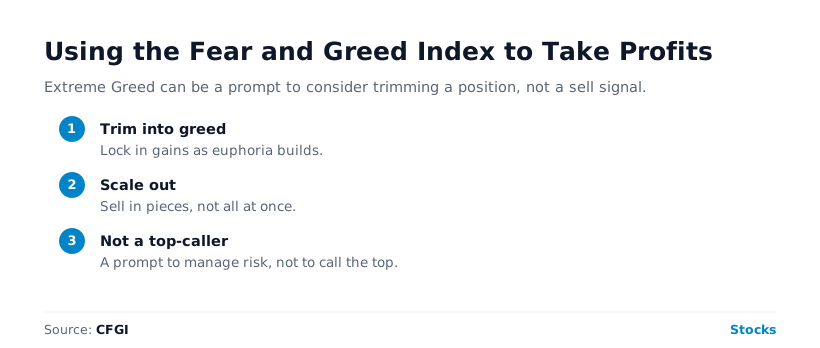
Taking profits is one of the hardest parts of investing, because greed tells you to hold for more. The Fear and Greed Index can help by flagging when the crowd, and probably you, are most euphoric. A reading deep in Extreme Greed is a prompt to ask whether some profit should come off the table, not an automatic sell. Scaling out in stages beats trying to call the exact top, and the decision stays yours; the index just counters the emotion. This is education, not financial advice.
CFGI data
Greed is when profit-taking feels worst and may matter most. CFGI flags it: the equity score reaching greed highs near 83, or an asset pinned in Extreme Greed, is the kind of reading that prompts a disciplined investor to review, not chase. The index counters the urge to hold for ever-more.
Source: CFGI dataset, 2021 to June 2026.
Key takeaways
- Greed makes taking profits feel wrong, which is the danger.
- Several biases make us hold winners too long.
- Extreme Greed is a prompt to review, not an auto-sell.
- Scaling out in stages beats trying to call the top.
- The decision stays yours; the index counters the emotion.
Why Profit-Taking Is Hard
When a position is winning and the mood is euphoric, every instinct says hold for more. That is greed at work, and it is exactly when the risk of giving gains back is highest. Disciplined investors counter it with a plan: deciding in advance to trim into strength rather than ride a position all the way up and back down. A Fear and Greed Index makes the euphoria measurable. When it reads deep Extreme Greed, it is a useful nudge to revisit that plan, an objective signal arriving at exactly the subjective moment you are least inclined to act on it.
The Psychology of Holding Too Long
Understanding why we struggle to sell winners is the first step to doing it better, and several well-documented biases conspire against us. Greed and FOMO whisper "what if it keeps going up?", making any sale feel like leaving money on the table. "Anchoring" fixes our minds on an ever-higher price target, so a gain that once seemed wonderful now feels insufficient. The "endowment effect" makes us value something more simply because we own it, inflating our sense of how high it must go. And paradoxically, loss aversion plays a role even here: the imagined regret of selling early and watching it climb further can loom larger than the real risk of holding on and watching it fall. The combined effect is that investors routinely ride a winning position all the way to the top and a long way back down, turning a great gain into a mediocre one, or a loss. The old trader’s wisdom that "nobody ever went broke taking a profit", while an overstatement, exists precisely to counter this deep, universal reluctance to bank a win.
Why We Ride Winners Down
FOMO, anchoring to a higher target, the endowment effect and the regret of selling early all push us to hold winners too long, turning great gains into mediocre ones. Recognising the bias is the first defence.
How to Use It for Trimming
- Decide your profit-taking rules in calm times, not in the heat of a rally.
- Treat deep Extreme Greed as a prompt to review whether to trim, not a command to sell all.
- Consider scaling out in parts rather than trying to call the exact top.
- Pair the reading with your own targets, valuation and plan.
- Remember the index can stay greedy longer than expected, so it is context, not timing.
A Prompt, Not a Trigger
Extreme Greed does not mean sell now. It means check whether your plan says to take some profit. The index counters emotion; it does not make the decision. This is education, not financial advice.
Scaling Out Beats Calling the Top
The single most useful technique for taking profits is to abandon the impossible goal of selling at the exact top and instead scale out in stages. Nobody can reliably call the precise peak, and trying to leads to one of two regrets: selling everything too early and missing further gains, or holding everything too long and giving it all back. Scaling out, taking partial profits in tranches as the position rises and as greed builds, elegantly sidesteps both. The classic version is "sell half": banking a portion of a big winner locks in real gains and reduces your risk, while leaving the rest invested to keep some upside if the rally continues. This approach also tames the emotion, because whichever way the market then goes, you win in part, if it falls, you are glad you trimmed; if it rises, you are glad you held some, so neither outcome triggers paralysing regret. Used with a Fear and Greed Index, the practical rhythm is to trim a little more each time sentiment pushes deeper into Extreme Greed, turning profit-taking from a single nerve-wracking decision into a calm, staged process.
A Prompt, Not a Trigger
Finally, keep the index in its proper place: it is a prompt to review your plan, not a command to sell. A deep Extreme Greed reading does not mean "sell now", and acting on it mechanically would ignore that greed can persist and markets can keep climbing well past the point that feels reasonable. What the reading does is valuable in a quieter way: it provides an objective, external counterweight to the powerful internal emotion that stops investors banking gains, arriving precisely when that emotion is strongest. The decision, how much to trim, against what targets, in light of your own plan and the asset’s valuation, remains entirely yours. Used this way, as a disciplined nudge to revisit a profit-taking plan you set in calmer times rather than a trigger to act on impulse, the Fear and Greed Index helps with one of investing’s genuinely hardest tasks: knowing when, and how, to take the money off the table. This is education, not financial advice.
Frequently asked questions
Can the Fear and Greed Index tell me when to take profits?
Not exactly. Deep Extreme Greed is a prompt to review whether to trim a position, not an automatic sell signal. It provides an objective counterweight to the emotion that stops investors banking gains, but the decision stays with you and your plan.
Why is taking profits so hard?
Because several biases push us to hold winners too long: FOMO ("what if it keeps going?"), anchoring to an ever-higher target, the endowment effect, and the regret of selling early. The result is that investors often ride a gain to the top and back down.
Should I sell everything at Extreme Greed?
No. Calling the exact top is impossible, so many investors scale out in stages instead, the classic "sell half", banking some gains while keeping some upside. This tames regret whichever way the market then goes, and the index can stay greedy longer than expected.
How do I use the index for trimming?
Decide your profit-taking rules in calm times, treat deep Extreme Greed as a prompt to review (not sell all), scale out in parts rather than calling the top, and pair the reading with your own targets and plan. It is context, not timing. This is education, not financial advice.
CFGI.io, Market sentiment research
The CFGI research team builds and maintains the CFGI Fear and Greed Index: a 0 to 100 sentiment score from 10 sub-indicators across hundreds of crypto assets and the equity market, refreshed every 15 minutes. We have tracked market emotion through multiple full crypto and equity cycles.
Think we missed something?
Spotted a gap, disagree with a take, or think we should cover a new topic? Message us and we'll act on your input.
Message us on TelegramKeep reading
This article is educational and is not financial advice. Crypto and equities are volatile and you can lose money. See our disclaimer.