Stocks
Using Fear and Greed for Risk Management
Quick answer
The steadiest way to use the Fear and Greed Index is for risk management, not market timing. Extreme Greed is a prompt to reduce exposure or rebalance, because risk is highest when everyone is confident. Extreme Fear is a prompt to slow down and avoid panic selling. The index manages how much you risk, rather than predicting where price goes, which is the role it plays most reliably. This is education, not financial advice.
CFGI data
Risk is highest when sentiment is most one-sided, and CFGI equity readings since 2021 show how stretched that gets, from an extreme-fear 3 on 8 April 2025 to 83 on 19 December 2023. Trimming into greed and pausing in fear is a way to act on those extremes without claiming to predict them.
Source: CFGI dataset, 2021 to June 2026.
Key takeaways
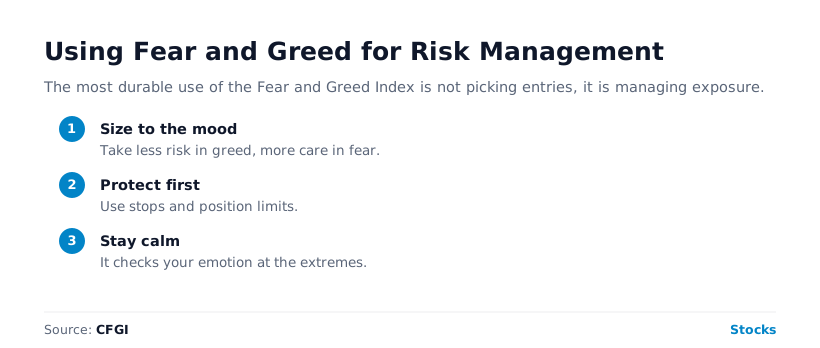
- Use it to manage exposure, not to time entries.
- Risk management is about protecting capital first.
- Extreme Greed: a prompt to reduce risk or rebalance.
- Extreme Fear: a prompt to avoid panic selling.
- Risk is highest when sentiment is most one-sided.
A Better Question Than "When"
Most people ask the Fear and Greed Index when to buy or sell. A more durable question is how much to risk. Sentiment forecasts price poorly, but it does flag when the crowd is crowded, and that is exactly when a position is most exposed to a sharp reversal. This shift in question, from "when" to "how much", is the single most reliable way to get value from a sentiment gauge, because it plays to the index’s genuine strength (reading current conditions) rather than its weakness (predicting the future).
What Risk Management Is
Risk management is the discipline of protecting your capital, the unglamorous but decisive half of investing that determines whether you survive long enough to let your good decisions pay off. Its tools are well known: sizing positions so no single one can do catastrophic damage, using stop-losses or predefined exit rules, diversifying so you are not betting everything on one outcome, and never risking more than you can afford to lose. The guiding principle is captured in Warren Buffett’s famous rules: "Rule number one, never lose money; rule number two, never forget rule number one." The point is not that losses are avoidable, they are not, but that controlling the downside is what keeps you in the game. A spectacular gain means nothing if a later, oversized loss wipes it out. Good risk management is what turns investing from a gamble into a sustainable process, and a sentiment gauge can be one useful input into it.
Managing Exposure With Sentiment
| Reading | Zone | Risk action many take |
|---|---|---|
| 80 to 100 | Extreme Greed | Trim, rebalance, tighten stops |
| 60 to 79 | Greed | Avoid adding on hype |
| Under 20 | Extreme Fear | Avoid panic selling; check the thesis |
Sentiment as a risk dial, not a timing signal.
The logic is simple: take less risk when everyone is confident and the reward for being right is small, and avoid forced decisions when everyone is panicking and the price of being wrong is high. None of this requires predicting the next move, only adjusting your exposure to match how stretched the crowd has become.
Why Risk Is Highest At the Extremes
The reason this works is that risk and sentiment are deeply linked, in a way that feels counterintuitive. Risk feels lowest at the moment of Extreme Greed, when everything is rising and confidence is universal, but that is precisely when it is highest: the market is crowded, fully invested and often leveraged, so there are few new buyers left and a great many people who could be forced to sell, making it fragile and primed for a sharp reversal. Conversely, risk feels highest at the moment of Extreme Fear, when everyone is panicking, yet much of the damage has often already been done and forced selling is close to exhausting itself. So the greatest danger to your capital tends to lurk in euphoria, not in panic, the opposite of how it feels. Using sentiment to take less risk when the crowd is greediest, and to avoid rash decisions when it is most fearful, is a way of aligning your exposure with where the real, rather than the felt, risk lies.
Risk Feels Lowest When It Is Highest
Extreme Greed feels safe but is fragile and crowded, the conditions reversals start from. Extreme Fear feels dangerous but the damage is often mostly done. Real risk and felt risk are often opposites.
The Honest Caveat
It is important to be honest about what this can and cannot do. Managing risk with sentiment reduces your exposure at extremes; it does not predict tops or bottoms, and it comes with a real cost: trimming into greed can mean leaving gains on the table if the trend keeps running, because markets can stay greedy for a long time. That is the trade-off at the heart of all risk management, you give up some potential upside in exchange for steadier, more survivable outcomes and a lower chance of a ruinous loss. Whether that trade is worth it depends on your own goals, time horizon and tolerance for risk, which is why you should set your own rules in advance and size every position to what you can genuinely afford to lose. The index is a useful input into that process, not a substitute for it. This is education, not financial advice.
Frequently asked questions
How does the Fear and Greed Index help with risk management?
It flags when the crowd is most one-sided, which is when positions are most exposed. Many investors trim or rebalance in Extreme Greed and avoid panic selling in Extreme Fear, using it as a risk dial rather than a timing signal.
What is risk management?
The discipline of protecting your capital: sizing positions so no single one is catastrophic, using stops, diversifying, and never risking more than you can afford to lose. Controlling the downside is what keeps you in the game long enough for good decisions to pay off.
Why is risk highest at Extreme Greed?
Because the market is then crowded, fully invested and often leveraged, with few new buyers and many potential forced sellers, making it fragile and primed for a reversal. Risk feels lowest in euphoria but is actually highest, the opposite of how it feels.
Can this cost me gains?
Yes. Trimming into greed leaves upside on the table if the trend continues, because markets can stay greedy for a long time. Risk management trades some potential return for steadier, more survivable outcomes. This is education, not financial advice.
CFGI.io, Market sentiment research
The CFGI research team builds and maintains the CFGI Fear and Greed Index: a 0 to 100 sentiment score from 10 sub-indicators across hundreds of crypto assets and the equity market, refreshed every 15 minutes. We have tracked market emotion through multiple full crypto and equity cycles.
Think we missed something?
Spotted a gap, disagree with a take, or think we should cover a new topic? Message us and we'll act on your input.
Message us on TelegramKeep reading
This article is educational and is not financial advice. Crypto and equities are volatile and you can lose money. See our disclaimer.