Stocks
Is Extreme Greed a Sell Signal?
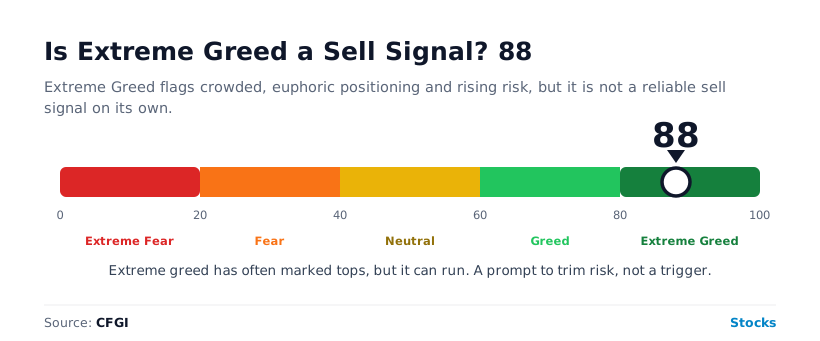
Quick answer
Extreme Greed is not a reliable sell signal on its own. A reading of 80 or above means the crowd is euphoric and positioning is crowded, which raises the risk of a sharp reversal, but greed can persist through a long, strong run. In fact, selling at the first sign of greed is trickier than buying at the first sign of fear, because powerful bull markets stay greedy for ages. Most investors treat Extreme Greed as a prompt to manage risk, trim or rebalance, rather than as a signal to sell outright. This is education, not financial advice.
CFGI data
Extreme Greed is rare in CFGI equity data since 2021, euphoria stays scarce. The stock score reached 83 on 19 December 2023, near the top of its range, but reaching greed is not the same as marking a top: the index forecasts the next day only about half the time, so it flags rising risk, not an exact moment to sell.
Source: CFGI dataset, 2021 to June 2026.
Key takeaways
- Extreme Greed flags crowded, euphoric positioning and rising risk.
- It is not a reliable sell signal: greed can persist in a strong market.
- Selling greed is harder than buying fear, because rallies can run long.
- Most investors use it to trim and rebalance, not to sell outright.
- It reads the present and rising risk, not the exact top.
Why It Is Not a Sell Signal Alone
Extreme Greed, a reading of 80 or above, means almost everyone is bullish. The risk is real: when the crowd is fully positioned, there are few buyers left to push prices higher, so when the mood turns the reversal can be sharp. But here is the catch that trips people up: strong markets can stay greedy for a very long time, and selling at the first whiff of greed often means leaving large gains on the table while the rally rolls on without you.
Why Greed Is Harder to Trade Than Fear
There is a genuine asymmetry between the two extremes. Buying into Extreme Fear and holding has historically been the more reliable side, because panic tends to exhaust itself quickly and prices snap back. Greed is different: euphoria can build and persist for months or even years during a powerful bull market, climbing a "wall of worry" higher than anyone expects. So a strategy of selling at the first Extreme Greed reading and waiting for the next fear signal to buy back has a poor record, it can leave you sitting in cash through some of the best gains. CFGI’s own data underlines the limit: the score reached 83 in December 2023 without that marking any kind of definitive top.
The Key Asymmetry
Fear is sharp and short; greed is slow and stubborn. That is why "be greedy when others are fearful" is easier to act on than "be fearful when others are greedy", and why greed signals call for trimming, not bailing.
What Extreme Greed Actually Signals
If it is not a sell signal, what is it? Extreme Greed is best read as a rising-risk warning rather than a timing trigger. It tells you that optimism is stretched, that positioning is crowded, and that the market has less cushion if bad news arrives, because the buyers are already in. Historically, these conditions have clustered nearer tops than bottoms, so the odds of a pullback are elevated. But "elevated odds of a pullback at some point" is very different from "the top is in now", and treating the two as the same is how people talk themselves out of perfectly good bull markets far too early.
How Investors Actually Use It
In practice, sensible investors respond to Extreme Greed by adjusting risk rather than flipping to cash.
- Treat Extreme Greed as a risk prompt, not a sell trigger.
- Consider trimming a little, rebalancing, or tightening stops rather than exiting entirely.
- Let winners keep running, but check that your position sizes have not quietly ballooned.
- Wait for momentum to actually fade before acting hard against a strong trend.
- Combine the reading with the chart, valuations and your own plan.
Trimming Versus Selling: The Disciplined Middle
The useful response to Extreme Greed lives between doing nothing and selling everything. Trimming, taking some profit off a position that has run hard, or rebalancing back to your target mix, lets you reduce risk and lock in gains without betting that you can call the exact top. It also imposes a quiet discipline: it mechanically sells some of what has become expensive and popular, which is exactly what the bandwagon makes most people reluctant to do. Used this way, an Extreme Greed reading becomes a prompt to take some profits and rebalance, not a dramatic all-or-nothing call.
Greed and the Bigger Picture
Extreme Greed means more when it is confirmed by the wider picture. Sustained euphoria tends to appear late in a market cycle, often alongside stretched valuations, a frenzy of new issuance, and the kind of universal optimism that leaves little room for good news to surprise. So the strongest caution comes not from the gauge alone but from greed plus those corroborating signs. On its own, an Extreme Greed reading is one input flagging that the crowd is one-sided; read alongside valuation, breadth and your own plan, it becomes a more meaningful nudge to manage risk.
Is the Market In Greed Now?
The live gauge shows where equity sentiment sits today. If it is deep in Extreme Greed, the message is not "sell now" but "check your risk": is your exposure where you want it, are your winners oversized, and would you be comfortable if the mood turned tomorrow? That calm, pre-planned response is what a sentiment reading is for, helping you act with discipline at the very moments the crowd is most carried away.
Frequently asked questions
Should I sell when the index hits Extreme Greed?
Not automatically. Extreme Greed raises risk, but greed can persist in a strong market, so selling at the first greedy reading can mean missing big gains. Most investors treat it as a prompt to manage risk, trimming or rebalancing, rather than a sell signal.
Why is selling greed harder than buying fear?
Because fear is sharp and short while greed is slow and stubborn. Panic tends to exhaust itself quickly, but euphoria can build for months or years in a bull market, so exiting at the first sign of greed often leaves gains behind.
What number is Extreme Greed?
A reading of 80 or above on the 0 to 100 scale. 60 to 79 is Greed; 80 and above is Extreme Greed.
Does Extreme Greed mark the top?
It clusters nearer tops but does not mark them precisely, and the index reads the present, not the next day. It signals elevated risk of a pullback, which is best read alongside valuation, breadth and your own plan. This is education, not financial advice.
CFGI.io, Market sentiment research
The CFGI research team builds and maintains the CFGI Fear and Greed Index: a 0 to 100 sentiment score from 10 sub-indicators across hundreds of crypto assets and the equity market, refreshed every 15 minutes. We have tracked market emotion through multiple full crypto and equity cycles.
Think we missed something?
Spotted a gap, disagree with a take, or think we should cover a new topic? Message us and we'll act on your input.
Message us on TelegramKeep reading
This article is educational and is not financial advice. Crypto and equities are volatile and you can lose money. See our disclaimer.