Markets
What Is Stagflation?
Quick answer
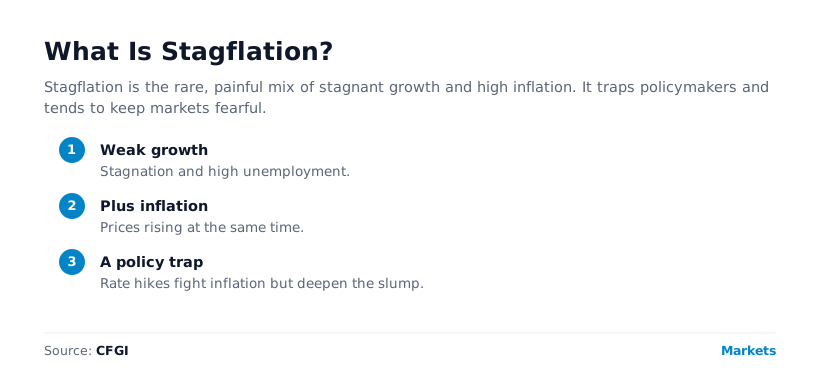
Stagflation is the unusual and painful combination of stagnant economic growth, high unemployment and high inflation at the same time. It is especially difficult because the usual cures conflict: fighting inflation with higher interest rates can deepen the slowdown, while supporting growth with cheaper money can worsen inflation. That trap leaves policymakers boxed in and tends to keep markets fearful and uncertain, often punishing both stocks and bonds at once. This is education, not financial advice.
CFGI data
Stagflation is a fear-heavy backdrop. With no easy policy fix, uncertainty lingers, and sentiment tends to sit on the fearful side for long stretches. A Fear and Greed Index reads how acute that fear is day to day on a 0 to 100 scale, even when the slow-moving macro picture barely changes from week to week.
Source: CFGI methodology and standard macroeconomics, to June 2026.
Key takeaways
- Stagflation is stagnant growth, high unemployment and high inflation together.
- It is usually triggered by a supply shock, like an oil crisis.
- It breaks the assumed trade-off between inflation and unemployment.
- The 1970s, with inflation above 13%, is the textbook case.
- It punishes both stocks and bonds, leaving few places to hide.
When the Cures Conflict
Normally, weak growth comes with low inflation, and a central bank can simply cut rates to help. Stagflation breaks that comfortable pattern: growth stalls while prices keep rising. The dilemma it creates is brutal. Raise rates to fight the inflation and you risk deepening the slump and pushing unemployment higher; cut rates to support growth and you risk pouring fuel on the inflation. The two main tools work against each other, which is what makes stagflation the macroeconomic nightmare it is.
What Causes It: Supply Shocks
The usual trigger is a "supply shock", a sudden blow to the economy’s ability to produce, rather than a fall in demand. A normal recession comes from weak demand, which drags prices down. A supply shock does the opposite and the dangerous thing at once: it makes things more expensive to produce and reduces how much gets made. A jump in the price of a critical input, classically oil, ripples through every business that uses energy, raising costs and prices while simultaneously choking output. That combination, higher prices and lower production, is the recipe for stagflation, and it is why it does not behave like an ordinary downturn.
The 1970S: The Textbook Case
The word itself, a blend of "stagnation" and "inflation", was coined by a British politician in the 1960s, but it was the 1970s that made it infamous. Inflation had been building, and then the 1973 oil crisis, when OPEC sharply restricted supply, sent energy prices soaring. The result was years of misery: US inflation reached 13.3% by 1979, while unemployment climbed to around 9% in 1975 and toward 11% by the early 1980s. Growth, prices and jobs all went the wrong way at once, shattering the era’s confidence that policymakers had the economy under control.
Breaking the Phillips Curve
Stagflation did more than hurt; it overturned economic theory. Economists had widely believed in the "Phillips curve", a reliable trade-off in which low unemployment came with higher inflation and vice versa, so you could not have both problems at once. The 1970s proved that wrong, with high inflation and high unemployment side by side. Economists Milton Friedman and Edmund Phelps had warned this could happen: once people come to expect high inflation, they bake it into wages and prices, and the supposed trade-off collapses. Expectations, they argued, were the missing piece, and stagflation was the costly proof.
Why This Still Matters
The lesson policymakers took away, that inflation expectations must be kept anchored, is exactly why modern central banks react so forcefully to any sign that high inflation is becoming "expected".
How It Ends: The Volcker Cure
Breaking 1970s stagflation took painful medicine. Under Paul Volcker, the US Federal Reserve raised interest rates into the high teens at the turn of the 1980s, deliberately crushing demand to wring inflation out of the system. It worked, but at a heavy cost: the policy triggered a sharp recession and pushed unemployment higher before inflation finally broke. The episode is the template for how stagflation tends to end, not with a clever fix, but with a central bank choosing to accept a recession as the price of restoring stable prices. It is a reminder that there is no painless exit.
Why It Is So Bad for Investors
Stagflation is uniquely punishing for portfolios because it attacks the two main asset classes at the same time. High inflation erodes the value of bonds and the fixed income they pay, while stagnant growth squeezes company earnings and weighs on stocks. The usual diversification of "stocks for growth, bonds for safety" offers little shelter when both are suffering at once. That is why stagflation is feared not just by economists but by investors: it is one of the rare environments where there are very few places to hide.
Stagflation and Sentiment
Uncertainty is the enemy of risk appetite, and stagflation is uncertainty distilled. With policymakers boxed in and no clean solution in sight, markets tend to stay defensive and fearful for extended periods. A Fear and Greed Index helps gauge how heavily that mood is weighing at any moment, on a 0 to 100 scale, even when the underlying macro story shifts only slowly. In a stagflationary backdrop, the gauge often lingers on the fearful side, and the rare relief rallies tend to fade quickly back toward caution.
Frequently asked questions
What is stagflation?
The rare combination of stagnant growth, high unemployment and high inflation at the same time. It is painful because the usual policy cures, raising or cutting interest rates, conflict with each other.
What causes stagflation?
Usually a supply shock, like a sharp rise in oil prices, that raises production costs and prices while simultaneously reducing output. The 1973 oil crisis is the classic example.
Why is stagflation so difficult to fix?
Because fighting inflation with higher rates can deepen the slowdown and raise unemployment, while supporting growth with cheaper money can worsen inflation. Breaking it, as Volcker did around 1980, usually means accepting a recession.
How does stagflation affect markets?
It tends to punish both stocks and bonds at once, leaving few places to hide, and keeps markets fearful and defensive because uncertainty is high. A Fear and Greed Index reads how acute that fear is. This is education, not financial advice.
CFGI.io, Market sentiment research
The CFGI research team builds and maintains the CFGI Fear and Greed Index: a 0 to 100 sentiment score from 10 sub-indicators across hundreds of crypto assets and the equity market, refreshed every 15 minutes. We have tracked market emotion through multiple full crypto and equity cycles.
Think we missed something?
Spotted a gap, disagree with a take, or think we should cover a new topic? Message us and we'll act on your input.
Message us on TelegramKeep reading
This article is educational and is not financial advice. Crypto and equities are volatile and you can lose money. See our disclaimer.