Markets
What Is Inflation?
Quick answer
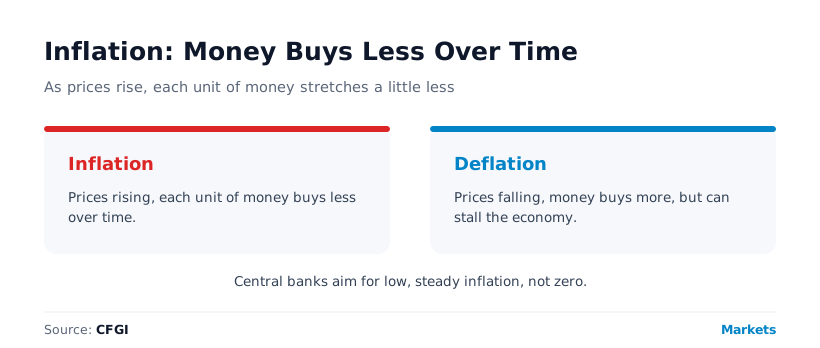
Inflation is the rate at which prices rise over time, which means each unit of money buys a little less. It is measured by indices like the CPI, and central banks usually target around 2%. A bit of inflation is normal; too much erodes savings and unsettles markets, while falling prices (deflation) bring their own dangers. Inflation matters for sentiment because it drives the interest-rate decisions that shift the crowd between risk appetite and caution. This is education, not financial advice.
CFGI data
Inflation news moves the crowd between greed and caution, and CFGI scores the result. Its 0 to 100 Fear and Greed reading, built from 10 indicators across crypto and equities since March 2022, captures how risk appetite shifts when the inflation and rate outlook changes, without you having to parse every data release.
Source: CFGI dataset, March 2022 to June 2026.
Key takeaways
- Inflation is the rate at which prices rise, eroding money’s value.
- It is measured by indices like the CPI; banks target around 2%.
- It is driven by demand-pull and cost-push forces.
- Both runaway inflation and deflation are dangerous.
- Inflation surprises swing risk appetite, and so sentiment.
What Is Inflation?
Inflation is the general rise in prices across an economy over time. If inflation is 3% a year, something that cost 100 now costs 103 a year later, and the same money buys slightly less. Mild, steady inflation is normal in a growing economy; rapid inflation is corrosive, because it eats savings and makes planning hard. The flip side is that inflation quietly erodes debts too, which is one reason a small, predictable amount of it is generally considered healthy rather than something to eliminate entirely.
How Inflation Is Measured
Inflation is tracked by price indices, the most famous being the Consumer Price Index, or CPI, which measures the change in the price of a representative basket of goods and services that households buy. Analysts often distinguish "headline" inflation, which includes everything, from "core" inflation, which strips out volatile food and energy prices to reveal the underlying trend. Most major central banks, including the US Federal Reserve, aim for inflation of around 2% a year. That target is deliberately a little above zero, partly to leave a safety margin against the danger of deflation. When a monthly CPI report lands above or below that path, it can move markets sharply, because it changes the outlook for interest rates.
What Causes Inflation
Economists group the causes of inflation into two main types.
| Type | What it is |
|---|---|
| Demand-pull | Too much demand chasing too few goods, prices bid up |
| Cost-push | Rising production costs, like an oil shock, push prices up |
The two main drivers of inflation.
Demand-pull is the classic "too much money chasing too few goods", often fuelled by cheap credit or rapid growth. Cost-push comes from the supply side, a spike in energy or raw-material costs that firms pass on. A rapid expansion of the money supply can drive inflation too, which is the long-run worry behind heavy "money printing".
Inflation’s Extremes: Hyperinflation and Deflation
Both ends of the spectrum are dangerous, which is why central banks aim for the calm middle. "Hyperinflation" is inflation spiralling out of control, with prices doubling in short periods and the currency collapsing, as in Weimar Germany or modern Zimbabwe, destroying savings and the basic ability to trade. At the other extreme, "deflation", falling prices, sounds pleasant but is insidious: when people expect goods to be cheaper later, they delay spending, which weakens the economy, while the real burden of debts grows heavier, a self-reinforcing downward spiral that is very hard to escape. This is why the goal is never zero inflation but a small, steady, predictable rate, enough to grease the economy without eroding trust in money.
The Goldilocks Middle
Runaway inflation destroys the value of money; deflation freezes the economy. A low, steady rate, around 2%, is the balance central banks chase precisely because both extremes are so damaging.
Why Do Markets Care About Inflation?
Because of what it triggers: interest rates. When inflation runs hot, central banks tend to raise rates to cool it, which makes borrowing dearer and safe savings more attractive, pulling money out of risky assets. When inflation cools, the reverse. So an inflation report is really a clue about the path of rates. There is also a direct effect: higher rates raise the "discount rate" used to value future earnings, which lowers what investors will pay for stocks today, hitting high-growth companies hardest. Inflation, in short, is the input that sets the price of money, and the price of money shapes the value of nearly everything.
How Does Inflation Move Sentiment?
Inflation surprises jolt the crowd. A hotter-than-expected reading can flip the mood from greed to caution in a single session, as investors brace for higher rates; a cooler reading can spark relief and risk-on buying. The fundamentals barely changed in a day; the expectations, and the emotion, did. This is why markets can lurch violently on a CPI release that moves the actual inflation rate by a fraction of a percent, the number reshapes the entire outlook for rates. CFGI does not forecast inflation, but it reads the net swing in mood it causes on the Fear and Greed Index, turning the crowd’s reaction to the data into a single, readable number.
Frequently asked questions
What is inflation?
The general rise in prices across an economy over time, which means each unit of money buys a little less. It is measured by indices like the CPI, and central banks usually target around 2% a year.
What causes inflation?
Mainly two forces: demand-pull, where too much demand chases too few goods and bids prices up, and cost-push, where rising production costs like an oil shock push prices higher. A rapid expansion of the money supply can also drive it.
Why is some inflation good but too much bad?
A small, steady rate greases a growing economy and erodes debts gently. But runaway inflation, or hyperinflation, destroys the value of money, while falling prices (deflation) freeze spending and deepen debts. Both extremes are dangerous, so banks aim for the calm middle.
How does inflation affect crypto and stocks?
Mainly through interest rates and expectations. Higher inflation tends to bring higher rates, which pulls money from risky assets and lowers the value of future earnings, hitting growth hardest. A single CPI release can swing the mood on a Fear and Greed Index. This is education, not financial advice.
CFGI.io, Market sentiment research
The CFGI research team builds and maintains the CFGI Fear and Greed Index: a 0 to 100 sentiment score from 10 sub-indicators across hundreds of crypto assets and the equity market, refreshed every 15 minutes. We have tracked market emotion through multiple full crypto and equity cycles.
Think we missed something?
Spotted a gap, disagree with a take, or think we should cover a new topic? Message us and we'll act on your input.
Message us on TelegramKeep reading
This article is educational and is not financial advice. Crypto and equities are volatile and you can lose money. See our disclaimer.