Stocks
What Is a Recession?
Quick answer
A recession is a significant, broad decline in economic activity that lasts more than a few months, often defined loosely as two consecutive quarters of shrinking output. It is an economic event, not a market one, but the two are linked: markets, driven by fear and looking ahead, usually fall well before a recession is confirmed, and sometimes start recovering before it ends. This is education, not financial advice.
CFGI data
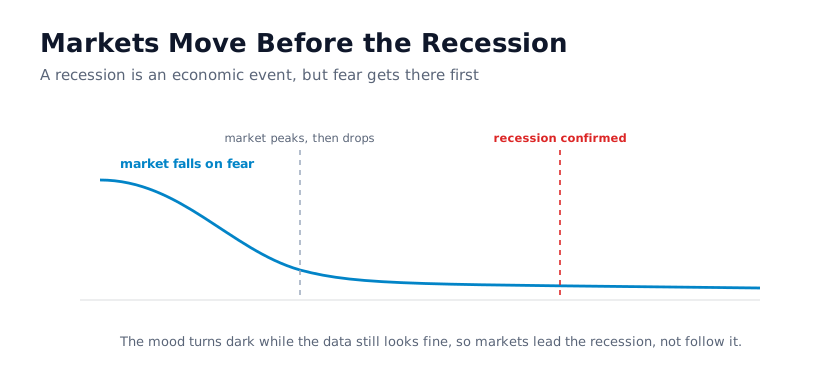
Markets price the fear of a recession long before it is confirmed, so the mood turns dark while the data still looks fine. CFGI scored that equity fear at an extreme-fear low of 3 on 8 April 2025, recession dread at its sharpest, on the Stock Fear and Greed Index, 0 to 100, updated daily since 2021.
Source: CFGI dataset, 2021 to June 2026.
Key takeaways
- A recession is a broad, sustained fall in economic activity.
- It is often defined as two quarters of shrinking output.
- Common causes include rate hikes, shocks and bursting bubbles.
- It is an economic event, not a market one, but they are linked.
- Markets usually fall on fear before a recession is confirmed.
What Is a Recession?
A recession is a meaningful, widespread slowdown in the economy: output falls, unemployment tends to rise, and spending drops. A common rule of thumb is two consecutive quarters of shrinking GDP, though official bodies look more broadly. It is about the real economy, jobs and production, not just markets. Recessions are a normal, if painful, part of the economic cycle, which expands and contracts over time, and while no two are identical, they share the common thread of a broad-based retreat in economic activity.
How a Recession Is Officially Defined
The popular "two consecutive quarters of negative GDP" rule is a handy shorthand, but the official picture is more nuanced. In the US, the body that formally dates recessions, the National Bureau of Economic Research, defines one as "a significant decline in economic activity spread across the economy, lasting more than a few months", and weighs several indicators, employment, income, production and spending, not GDP alone. It looks at three things in particular: depth (how severe the decline is), diffusion (how broadly it is spread across the economy) and duration (how long it lasts). One consequence is that recessions are usually only declared in hindsight, sometimes months after they have begun, because it takes time for the data to confirm the trend. So a recession can be well underway, and markets already reacting to it, long before anyone official puts a name to it.
What Causes a Recession?
Recessions can be triggered by several forces, often in combination. A common cause is an overheating economy met with rising interest rates: when a central bank lifts rates to fight inflation, it deliberately cools borrowing and spending, and sometimes cools them too far. Financial crises and credit crunches, where lending seizes up, are another classic trigger, as in 2008. Sudden external shocks, a pandemic, an oil-price spike, a war, can tip an economy into contraction abruptly. And the bursting of a bubble can drain wealth and confidence enough to drag the broader economy down. Underlying many of these is a simple loss of confidence: when businesses and consumers turn cautious and cut spending, that pullback can become self-fulfilling, less spending leads to less income, which leads to still less spending, in a downward spiral.
How Is a Recession Different From a Crash?
A market crash is a fast fall in prices; a recession is a slow decline in the economy. They often go together, but not always: markets can fall without a recession (a so-called "growth scare"), and a mild recession may not crash markets. The two operate on different clocks, a crash can happen in days, while a recession unfolds over quarters. Crucially, markets are forward-looking, so they tend to react to the fear of a recession before it officially begins, and the famous quip that "the stock market has predicted nine of the last five recessions" captures the catch: markets sometimes price in recession fears that never fully materialise, falling on dread that the economy then shrugs off.
The Market Leads the Economy
A crash is a fast price fall; a recession is a slow economic decline. Markets are forward-looking, so they often fall on the fear of a recession months before the data confirms one, and recover before it ends.
Why Do Markets Fall Before a Recession?
Because investors price the future, not the present. At the first signs of a slowdown, fear rises and money rotates toward safe havens, pulling stocks down while the official data still looks fine. By the time a recession is confirmed, the market has often already fallen, and sometimes already started to recover in anticipation of the eventual upturn. This is why the stock market is treated as a leading indicator of the economy, and why that anticipatory fear is exactly what a sentiment reading captures, often turning dark well before the headlines do. A deep dive into Extreme Fear, like CFGI’s equity low of 3, can reflect recession dread at its sharpest, the crowd bracing for a downturn the data has not yet confirmed. See the equity mood on the Stock Fear and Greed Index.
Frequently asked questions
What defines a recession?
A significant, broad and sustained decline in economic activity. A common rule of thumb is two consecutive quarters of shrinking GDP, but official bodies like the NBER weigh depth, diffusion and duration across employment, income, production and spending, not GDP alone.
What causes a recession?
Often a combination: an overheating economy met with rising interest rates, a financial crisis or credit crunch, a sudden shock like a pandemic or oil spike, a bursting bubble, or a self-reinforcing loss of confidence as spending falls.
Is a recession the same as a market crash?
No. A recession is an economic decline that unfolds over quarters; a crash is a fast fall in market prices over days. They often coincide, but a market can fall without a recession, and a recession need not crash markets.
Why do stocks drop before a recession is announced?
Because markets are forward-looking. Fear of a slowdown drives selling before the data confirms it, so prices often fall, and sometimes recover, ahead of the official call, which is usually made only in hindsight. This is education, not financial advice.
CFGI.io, Market sentiment research
The CFGI research team builds and maintains the CFGI Fear and Greed Index: a 0 to 100 sentiment score from 10 sub-indicators across hundreds of crypto assets and the equity market, refreshed every 15 minutes. We have tracked market emotion through multiple full crypto and equity cycles.
Think we missed something?
Spotted a gap, disagree with a take, or think we should cover a new topic? Message us and we'll act on your input.
Message us on TelegramKeep reading
This article is educational and is not financial advice. Crypto and equities are volatile and you can lose money. See our disclaimer.