Stocks
What Is After-Hours Trading?
Quick answer
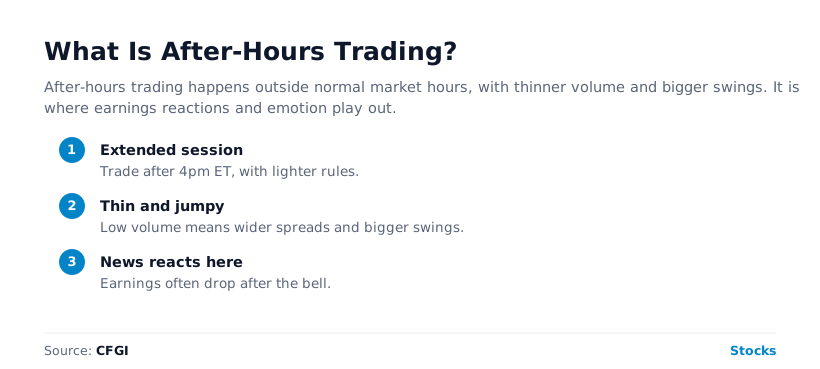
After-hours trading is the buying and selling of stocks outside the regular session, in the hours after the market closes, typically from 4:00pm to 8:00pm ET. Volume is much thinner, matched through electronic networks with no designated market maker, so prices can swing sharply on relatively small orders. It is where the first, often emotional, reactions to earnings and news play out, which makes it a place where fear and greed can move prices fast and unreliably. This is education, not financial advice.
CFGI data
After-hours moves are emotion with little liquidity to absorb it. A big earnings reaction can swing a stock violently before the broader crowd weighs in. A Fear and Greed Index reads the steadier, session-level mood on its 0 to 100 scale rather than the noise of thin after-hours trading.
Source: CFGI dataset and standard market-structure definitions, June 2026.
Key takeaways
- After-hours trading happens after the close, about 4pm to 8pm ET.
- It runs through ECNs with no market maker, so volume is thin.
- Thin liquidity means wide spreads and sharp price swings.
- It is where earnings reactions first hit, and often overreact.
- After-hours moves can fade or reverse by the next open.
Trading When the Lights Are Low
Most trading happens during regular hours, but electronic networks let investors trade after the close too. The catch is liquidity: far fewer participants are active, so spreads are wider and a modest order can push the price a long way. A stock can look very different after hours than it does once the full market reopens. This is, above all, where earnings reactions first hit: a company reports after the close, and the initial, emotional response, often an overreaction, plays out in thin after-hours trading.
When After-Hours Happens
In the US, after-hours trading generally runs from the 4:00pm close until around 8:00pm Eastern. The action is most intense in the first stretch right after the bell, especially on days when companies release earnings.
| Session | Hours | Driven by |
|---|---|---|
| Pre-market | 4:00 to 9:30am | Overnight and global news |
| Regular session | 9:30am to 4:00pm | Full liquidity |
| After-hours | 4:00 to 8:00pm | Earnings and afternoon news |
The extended-hours day (US Eastern time).
After-hours and pre-market are the two bookends of the extended-hours day, wrapping the regular session in thinner, more emotional trading.
How It Works: ECNs and Limit Orders
Like the pre-market, after-hours orders are matched through Electronic Communication Networks, or ECNs, which pair buyers and sellers directly without a traditional exchange floor. The key difference from regular hours is the absence of a designated market maker obliged to provide liquidity, which is exactly why trading is thin and jumpy: you rely on whoever happens to be active at that hour. For that reason, most brokers only accept limit orders after hours, a market order in such thin conditions could fill at a wildly bad price, so you set the price you are willing to accept and wait for a match.
Limit Orders Only
As in the pre-market, most brokers ban market orders after hours because thin liquidity could fill them terribly. A limit order keeps you in control of the price.
Why Earnings Land After Hours
There is a reason so many companies report after the close rather than during the session: it gives investors and analysts time to digest the numbers before regular trading resumes, instead of triggering chaos in the middle of the day. The result is that the biggest after-hours moves are earnings reactions. A company that beats expectations can leap 10% in seconds; one that warns on guidance can crater. But these first prints are formed by a handful of fast traders on thin volume, so they are the market’s raw, unfiltered first take, frequently sharper than the more considered move that follows once the full crowd weighs in the next morning.
The Risks: Thin Liquidity and the Gap
The conditions that make after-hours exciting also make it risky. Wide spreads mean you pay more to trade, and low volume causes slippage, where your own order moves the price against you. Most importantly, the after-hours price is an unreliable preview: a stock up 12% on an earnings beat at 4:15pm can open up just 4% the next morning, or even reverse entirely, once the broader market reprices the news more soberly. Chasing a dramatic after-hours move is one of the easier ways for inexperienced traders to buy a top, so the session generally rewards caution over excitement.
After-Hours Versus Pre-Market
Pre-market and after-hours trading are mirror images sharing the same DNA: thin volume, wide spreads, ECN matching and limit orders only. The difference is timing and trigger. After-hours, right after the 4:00pm close, is dominated by reactions to earnings reported that afternoon and to late-breaking news. Pre-market, the next morning, digests everything that happened overnight, including how the rest of the world traded. Together they ensure that by the time the opening bell rings, much of the reaction to fresh news has already, noisily, taken place in these quieter, riskier corners of the trading day.
After Hours and Sentiment
After-hours moves are emotion with little to absorb it, so they can exaggerate fear and greed. A violent earnings reaction is the response of a few fast traders, not the settled judgement of the market. A Stock Fear and Greed Index reads the broader, session-level mood on its 0 to 100 scale rather than the noise of a thin after-hours swing, which is usually the more reliable signal. When a dramatic after-hours move and the calmer session reading disagree, it is often the steadier session mood that proves the better guide.
Frequently asked questions
What is after-hours trading?
Buying and selling stocks outside the regular session, after the 4:00pm close until about 8:00pm ET, matched through ECNs on thin volume. Prices can swing sharply on small orders.
Why is after-hours trading more volatile?
Because far fewer participants are active and there is no designated market maker, spreads are wider and modest orders move prices a long way. First reactions to earnings often overreact in this thin trading.
Why do companies report earnings after hours?
To give investors and analysts time to digest the numbers before regular trading resumes, rather than triggering chaos mid-session. That is why the biggest after-hours moves are earnings reactions.
Should I trust after-hours moves?
Treat them cautiously. They are emotion with little liquidity to absorb it and can fade or reverse by the next open. Use limit orders, and read a Fear and Greed Index for the steadier session-level mood. This is education, not financial advice.
CFGI.io, Market sentiment research
The CFGI research team builds and maintains the CFGI Fear and Greed Index: a 0 to 100 sentiment score from 10 sub-indicators across hundreds of crypto assets and the equity market, refreshed every 15 minutes. We have tracked market emotion through multiple full crypto and equity cycles.
Think we missed something?
Spotted a gap, disagree with a take, or think we should cover a new topic? Message us and we'll act on your input.
Message us on TelegramKeep reading
This article is educational and is not financial advice. Crypto and equities are volatile and you can lose money. See our disclaimer.