Stocks
What Is Earnings Season?
Quick answer
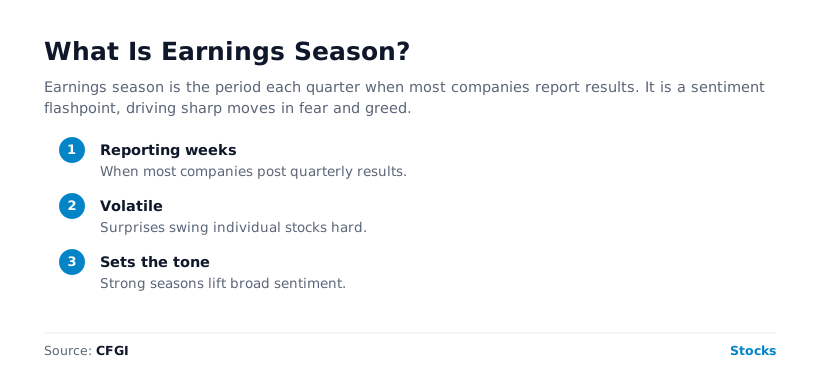
Earnings season is the stretch each quarter, usually a few weeks after the quarter ends, when most public companies report their results. It is one of the busiest, most volatile periods for stocks because results either confirm or upend expectations, and crucially, prices move against expectations, not raw numbers. A company can beat and still fall if it missed the unofficial "whisper number" or cut its guidance. Earnings season is a sentiment flashpoint that swings individual stocks and the wider mood between fear and greed. This is education, not financial advice.
CFGI data
Earnings season concentrates sentiment shifts. A run of beats can lift the mood toward greed; a wave of misses can tip it toward fear. CFGI’s 15-minute refresh across timeframes captures those swings on its 0 to 100 scale as they unfold, rather than after the fact.
Source: CFGI dataset, 2021 to June 2026.
Key takeaways
- Earnings season is when most companies report quarterly results.
- It runs about six weeks after each quarter, kicked off by the big banks.
- Prices move on beating or missing expectations, not absolute numbers.
- Forward guidance often matters more than the quarter just reported.
- Surprises swing both individual stocks and overall sentiment.
Four Times a Year, the Scorecard
Public companies report earnings every quarter, and most cluster their reports into the same few weeks, creating earnings season. Investors compare each result against expectations: beat them and the stock often jumps, miss and it can drop, sometimes sharply, even if the absolute numbers look fine. Because so many reports land at once, and because guidance about the future often matters more than the past quarter, earnings season tends to be a high-volatility window for the whole market.
When Earnings Season Happens
There are four earnings seasons a year, each beginning a few weeks after a quarter ends, so the busiest months are January, April, July and October. A season runs about six weeks and tends to roll out in a predictable order, traditionally kicked off by the big banks like JPMorgan, Bank of America and Wells Fargo.
| Weeks after quarter-end | Who reports |
|---|---|
| Weeks 2 to 3 | Major banks and financials kick it off |
| Weeks 3 to 4 | Industrials and healthcare giants |
| Weeks 4 to 5 | Technology and consumer brands |
| Weeks 5 to 6 | Retailers and smaller companies |
How a typical earnings season rolls out.
The banks are watched closely because, as lenders to the whole economy, their results set the tone for the season that follows.
Beat Or Miss: It Is All About Expectations
The single most important thing to understand is that stocks move on results relative to expectations, not on the raw numbers. Wall Street analysts publish a "consensus" estimate for revenue and earnings, and that figure is already baked into the price before the report. So a company can post record profits and still fall if those profits came in below what the market expected, and a struggling company can rally if it loses less than feared. This is why a "good" quarter and a rising stock are not the same thing: the bar is the expectation, and clearing it, or not, is what moves the price.
The Whisper Number: Why Beats Can Fall
There is a subtler bar still: the "whisper number", an unofficial estimate of likely earnings that circulates among traders and analysts ahead of the report. Because it captures the market’s true, latest expectation, it is often more accurate than the published consensus, one study found whisper numbers missed actual results by about 21% versus 44% for official consensus estimates. The practical consequence is the most confusing thing in earnings season: a stock can beat the official consensus and still drop, because it fell short of the higher whisper number the market was quietly betting on. When a "beat" sells off, an unmet whisper is often why.
Why a "Beat" Can Drop
Beating the published estimate is not enough if the market secretly expected more. The whisper number is the real bar, which is why good headlines sometimes meet falling prices.
Guidance Matters More Than the Quarter
Markets price the future, not the past, so what a company says about the quarters ahead, its forward guidance, frequently moves the stock more than the results just reported. A company can beat on the past quarter yet sink if it lowers its outlook, warning of slower growth ahead. Conversely, beating expectations and raising guidance is the classic recipe for a sharp rally, because it tells investors the good news is set to continue. So when watching an earnings report, the outlook and the management commentary on the earnings call are often the part that really matters, not just the headline numbers for the period that has already passed.
Why Earnings Season Is So Volatile
The clustering of reports amplifies everything. Individual stocks can gap violently the morning after they report, since the news lands outside regular hours and first trades in thin pre-market and after-hours sessions. When dozens of large companies report in the same week, sector funds swing, correlations rise, and many investors hedge or cut exposure, which adds to the turbulence. The result is that earnings season reliably lifts market volatility, a concentrated burst of surprises, repricings and emotional reactions packed into a handful of weeks, four times a year.
Earnings Season and Sentiment
Earnings season is sentiment in fast-forward. A string of strong results and upbeat guidance can push the mood toward greed; a wave of disappointing reports and cut outlooks can tip it toward fear, often within days. A Stock Fear and Greed Index is a useful gauge of how the crowd is digesting the flood of results, smoothing the noise of any single report into a read on the overall mood. When the whole market’s temperature swings during a busy reporting week, the gauge is where that shift shows up first.
Frequently asked questions
What is earnings season?
The period each quarter when most public companies report their results, usually beginning a few weeks after the quarter ends and lasting about six weeks. It is one of the most volatile times for stocks.
When does earnings season happen?
Four times a year, with the busiest reporting in January, April, July and October. It is traditionally kicked off by the big banks like JPMorgan, then rolls through industrials, tech, consumer brands and smaller companies.
Why do stocks fall on an earnings beat?
Because prices move on expectations, not raw numbers. A stock can beat the published consensus but miss the higher unofficial "whisper number" the market quietly expected, or beat on the quarter while cutting future guidance, and fall either way.
How does earnings season affect sentiment?
A run of beats and upbeat guidance can lift the mood toward greed; a wave of misses and cut outlooks can tip it toward fear. A Fear and Greed Index captures those swings as they happen. This is education, not financial advice.
CFGI.io, Market sentiment research
The CFGI research team builds and maintains the CFGI Fear and Greed Index: a 0 to 100 sentiment score from 10 sub-indicators across hundreds of crypto assets and the equity market, refreshed every 15 minutes. We have tracked market emotion through multiple full crypto and equity cycles.
Think we missed something?
Spotted a gap, disagree with a take, or think we should cover a new topic? Message us and we'll act on your input.
Message us on TelegramKeep reading
This article is educational and is not financial advice. Crypto and equities are volatile and you can lose money. See our disclaimer.