Markets
What Is a Commodity?
Quick answer
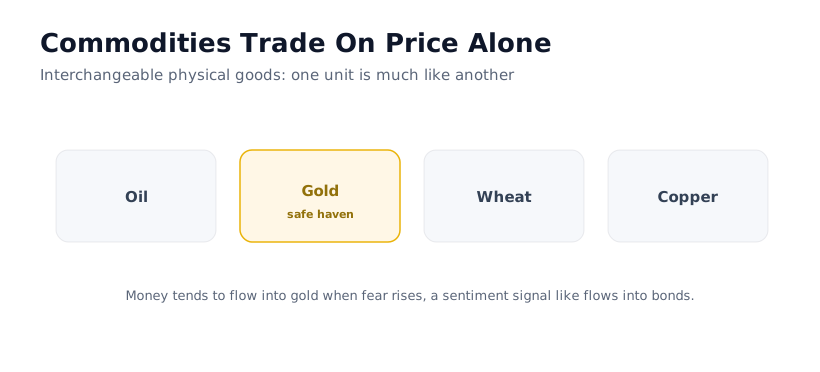
A commodity is a basic physical good that is interchangeable with others of its kind, like oil, gold, wheat or copper. One barrel of a given grade of oil is much like another, so commodities trade on price alone. They split into hard commodities (mined or extracted) and soft ones (grown or raised), trade mostly through futures contracts, and can hedge inflation. Some, gold above all, double as safe havens: money tends to flow into them when fear rises and out when greed returns. This is education, not financial advice.
CFGI data
Gold is the classic safe haven, and safe-haven demand is one of the signals CFGI reads. It feeds a 0 to 100 Fear and Greed score across crypto and equities, tracked since March 2022, so the rotation between risk assets and safety registers in the reading.
Source: CFGI methodology and dataset, March 2022 to June 2026.
Key takeaways
- A commodity is an interchangeable physical good, like oil or gold.
- Hard commodities are mined; soft ones are grown or raised.
- They trade mostly through futures contracts.
- Commodities can hedge inflation; gold is the classic safe haven.
- Flows into gold are a sentiment signal, like flows into bonds.
What Is a Commodity?
A commodity is a raw material or basic good that is essentially the same wherever it comes from. Energy (oil, gas), metals (gold, copper), and agricultural goods (wheat, coffee) are the big categories. Because one unit is interchangeable with another, a property economists call "fungibility", there is little to compete on but price. This is what sets commodities apart from, say, stocks: one share of Apple differs from one share of Tesla, but one ounce of pure gold is identical to any other, so the market simply settles on a single price for the lot.
The Types of Commodity
Commodities are usually split into two broad families, "hard" and "soft".
| Type | How it is produced | Examples |
|---|---|---|
| Hard | Mined or extracted | Gold, copper, oil, natural gas |
| Soft | Grown or raised | Wheat, coffee, sugar, livestock |
The two families of commodity.
Hard commodities are natural resources dug or pumped out of the ground, and split further into precious metals like gold and silver and industrial metals like copper. Soft commodities are agricultural products that are farmed. The categories behave differently: industrial metals and energy track the health of the economy, while precious metals often move on fear and the value of money.
How Commodities Are Traded
Few investors want barrels of oil or sacks of wheat delivered, so commodities are mostly traded through "futures" contracts, agreements to buy or sell a set amount at a set price on a future date. Futures let producers and buyers lock in prices to hedge their real-world risk, and let speculators bet on price moves without ever touching the physical good. For ordinary investors, the simpler routes are buying shares in commodity-producing companies, like oil firms or gold miners, whose fortunes rise and fall with the commodity, or buying a commodity ETF that tracks the price. Gold can also be held physically, as bars or coins, the most direct way to own a commodity outright.
Commodities and Inflation
Commodities play a distinctive role in a portfolio because they tend to behave differently from stocks and bonds, and in particular they often rise when inflation is accelerating. Since inflation is, at root, the rising price of goods, and commodities are the raw goods themselves, their prices climb as money loses value, which is why they are prized as an "inflation hedge". Gold is the classic example, a real asset that holds its purchasing power as paper currencies erode, but energy and agricultural commodities can serve too. This is why investors often add a slice of commodities for diversification: they can hold up, or even gain, in the very conditions, high inflation, that hurt conventional stocks and bonds.
Real Assets In an Inflation
Because commodities are the physical goods whose prices inflation measures, they often rise as money loses value, making them one of the few assets that can hold up when inflation hurts stocks and bonds.
Why Is Gold Special?
Gold is more than a commodity; it is the oldest safe haven. It pays no interest and does nothing, yet it has held value for thousands of years, which is exactly why people trust it when they trust little else. In a panic, money often rushes into gold alongside bonds and the dollar, as investors seek something that will still be worth something whatever happens to the financial system. That deep, almost primal trust gives gold a dual nature: it is both an industrial-and-jewellery commodity and a monetary safe haven, and it is the second role that makes it such a useful barometer of fear. When gold is surging while everything else falls, the world is frightened.
How Do Commodities Signal Sentiment?
Through the same flight-to-safety flow. When fear rises, demand for gold tends to climb as the crowd seeks shelter; when greed returns and risk appetite is high, that demand can fade. So a sharp move into gold is, like a rush into bonds, a sign that fear is in charge. CFGI reads safe-haven demand as one of the signals behind the Fear and Greed Index, so the rotation between risk assets and safe havens like gold is part of what shapes the score. When the gauge plunges toward Extreme Fear, you can often see the same story told in commodity markets, money fleeing risk and pouring into the timeless safety of gold.
Frequently asked questions
What is a commodity?
A basic physical good that is interchangeable with others of its kind, like oil, gold, wheat or copper. Because one unit is much like another, commodities trade mainly on price.
What is the difference between hard and soft commodities?
Hard commodities are natural resources that are mined or extracted, like gold, copper, oil and gas; soft commodities are agricultural products that are grown or raised, like wheat, coffee, sugar and livestock.
Are commodities a good inflation hedge?
Often, yes. Because commodities are the physical goods whose prices inflation measures, they tend to rise as money loses value, making them one of the few assets that can hold up when inflation hurts stocks and bonds. Gold is the classic example.
Why is gold a safe haven?
Because it holds value when confidence in other assets fails. It pays no yield, but its long history of trust makes it the place money hides in a crisis. A rush into gold is a flight to safety that signals fear. This is education, not financial advice.
CFGI.io, Market sentiment research
The CFGI research team builds and maintains the CFGI Fear and Greed Index: a 0 to 100 sentiment score from 10 sub-indicators across hundreds of crypto assets and the equity market, refreshed every 15 minutes. We have tracked market emotion through multiple full crypto and equity cycles.
Think we missed something?
Spotted a gap, disagree with a take, or think we should cover a new topic? Message us and we'll act on your input.
Message us on TelegramKeep reading
This article is educational and is not financial advice. Crypto and equities are volatile and you can lose money. See our disclaimer.