Markets
Fear and Greed Index vs Market Breadth
Quick answer
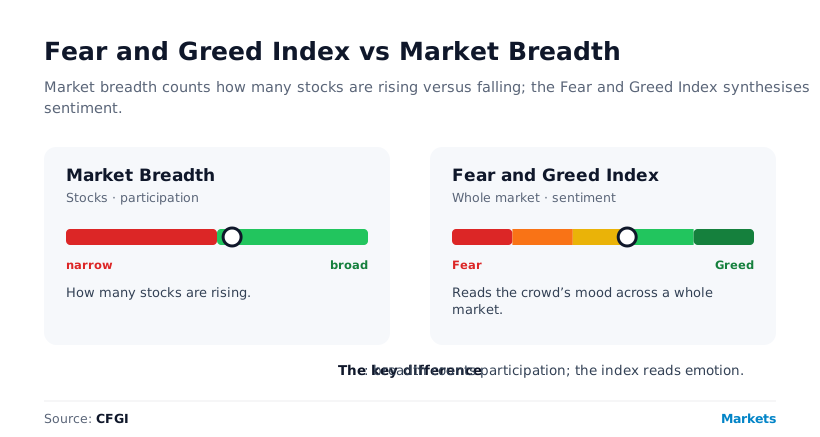
Market breadth measures how many stocks are participating in a move, for example advancers versus decliners or how many are above their moving averages. It reveals whether a rally is broad or narrow, and narrow rallies are a classic late-cycle warning. The Fear and Greed Index goes further, folding breadth-style signals together with volatility, momentum and more into a single 0 to 100 sentiment score. Breadth is one ingredient; the index is the finished read. This is education, not financial advice.
CFGI data
Breadth is one of the signals a good sentiment index uses. CFGI blends 10 indicator groups into one 0 to 100 score across timeframes since 2021 for equities, so participation is weighed alongside volatility and momentum rather than read in isolation.
Source: CFGI dataset and standard market-breadth definitions, June 2026.
Key takeaways
- Market breadth counts how many stocks are rising versus falling.
- It is measured by the advance-decline line, % above moving averages and more.
- It shows whether a move is broad or narrow.
- Narrow rallies are a classic late-cycle warning.
- Breadth is one input; the index is the synthesised read.
Participation vs Synthesised Sentiment
Breadth answers a specific question: is the whole market moving, or just a few large stocks? Measures like the advance-decline line or the percentage of stocks above their 200-day average show how widely a trend is shared. Narrow breadth, a few giants pulling the index up while most stocks lag, is a classic late-cycle warning. The Fear and Greed Index uses breadth-style signals as one of its inputs, but it does not stop there. It combines them with volatility, momentum and demand measures into a single 0 to 100 score, so you read the overall mood rather than one slice of it.
| Market breadth | Fear and Greed Index | |
|---|---|---|
| Measures | How many stocks participate | Overall sentiment |
| Reveals | Broad vs narrow moves | Fear to greed, 0 to 100 |
| Scope | One dimension | 10 indicator groups |
| Role | An input to sentiment | The synthesised read |
| Best as | A participation check | A balanced gauge |
Market breadth versus the Fear and Greed Index.
How Market Breadth Is Measured
Breadth is not a single number but a family of indicators, each counting participation in a slightly different way. The best known is the "advance-decline line", a running total of the number of stocks rising minus the number falling each day, which shows whether gains are broadly shared. Another common measure is the percentage of stocks trading above a key moving average, like their 50-day or 200-day, a high percentage means most stocks are in uptrends. Traders also watch the number of stocks making new 52-week highs versus new lows, and up-volume versus down-volume, while more technical gauges like the McClellan Oscillator distil breadth into a single momentum reading. What all of these share is a focus on participation, the question of how many stocks are taking part in a move, rather than what the headline index is doing, which can be a very different and more revealing thing.
Why Narrow Rallies Are Fragile
The reason breadth matters so much is that the health of a rally depends on how broadly it is shared. A "broad" rally, where most stocks are rising together, reflects widespread participation and tends to be durable. A "narrow" rally, where a handful of giant stocks drive the index higher while the majority of stocks stagnate or fall, is a warning sign, often described as "the generals leading without the troops". Because major indices like the S&P 500 are weighted by company size, a few mega-caps can lift the headline number even as the broader market quietly weakens beneath the surface, masking the deterioration. This "breadth divergence", the index making new highs while breadth measures fade, has preceded many significant market tops, because it reveals that the rally is running on an ever-narrower base. Breadth, in short, is a way of checking whether the index’s strength is real and widely supported or a fragile illusion propped up by a shrinking group of leaders.
Generals Without Troops
A rally led by a few mega-caps while most stocks lag is narrow and fragile. When the index makes new highs but breadth fades, the strength is an illusion propped up by a shrinking group of leaders.
Using Them Together
They reinforce each other. A rally at Extreme Greed but with narrowing breadth is more fragile than one where breadth is broad, because it tells you the euphoria is concentrated in a few names rather than widely shared. The index gives the mood; breadth tells you how many stocks actually share it. Reading both adds a layer the score alone does not show: you can distinguish a healthy, broad-based advance that happens to be greedy from a hollow, narrow one that is greedy and brittle. Since a Fear and Greed Index already incorporates breadth-style signals, the two naturally agree much of the time, but watching breadth directly lets you spot the specific, dangerous condition, greed plus deteriorating participation, that marks so many late-stage rallies, an early-warning detail worth having alongside the headline mood.
Frequently asked questions
What is market breadth?
A family of measures of how many stocks are participating in a move, such as the advance-decline line, the percentage of stocks above their 200-day average, new highs versus new lows, and up-volume versus down-volume. It shows whether a move is broad or narrow.
What is narrow breadth?
When only a few large stocks drive an index higher while most stocks lag, "the generals leading without the troops". Because indices are size-weighted, mega-caps can lift the headline number even as the broader market weakens. It is a classic late-cycle warning.
Is market breadth a sentiment indicator?
It is one component of sentiment. Breadth shows how widely a move is shared, but not the full emotional picture. A Fear and Greed Index folds breadth in with volatility, momentum and other signals into one score.
Should I use breadth or the Fear and Greed Index?
Both. Breadth checks participation; the index reads overall mood. A greedy reading with narrowing breadth is more fragile than one with broad participation, a dangerous late-stage condition worth watching directly. This is education, not financial advice.
CFGI.io, Market sentiment research
The CFGI research team builds and maintains the CFGI Fear and Greed Index: a 0 to 100 sentiment score from 10 sub-indicators across hundreds of crypto assets and the equity market, refreshed every 15 minutes. We have tracked market emotion through multiple full crypto and equity cycles.
Think we missed something?
Spotted a gap, disagree with a take, or think we should cover a new topic? Message us and we'll act on your input.
Message us on TelegramKeep reading
This article is educational and is not financial advice. Crypto and equities are volatile and you can lose money. See our disclaimer.