Crypto
What Are Diamond Hands and Paper Hands?
Quick answer
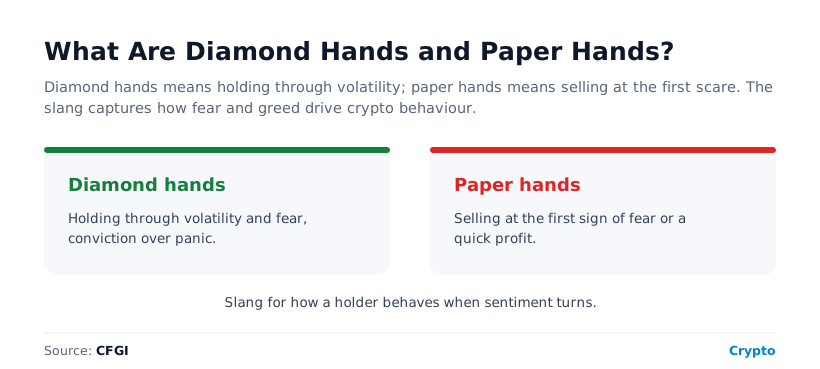
Diamond hands and paper hands are crypto and meme-stock slang for two responses to volatility. Diamond hands means holding a position through big swings without selling, out of conviction or stubbornness. Paper hands means selling quickly at the first sign of trouble, out of fear. The terms exploded out of WallStreetBets during the 2021 GameStop saga. They are really about how individuals handle the fear and greed that a sentiment index measures across the whole crowd, and neither is automatically the wise choice. This is education, not financial advice.
CFGI data
The slang describes, at the individual level, what CFGI measures at the market level. When the crowd is paper-handing, selling in fear, the score sits in Extreme Fear; CFGI has tracked those extremes across hundreds of assets on its 0 to 100 scale since March 2022, the collective version of the same behaviour.
Source: CFGI dataset, March 2022 to June 2026.
Key takeaways
- Diamond hands: holding through volatility without selling.
- Paper hands: selling quickly at the first scare.
- The terms come from WallStreetBets and the 2021 GameStop saga.
- Neither is automatically right: holding can be denial, selling can be discipline.
- A Fear and Greed Index measures the same behaviour across the crowd.
Two Ways to Handle a Swing
Crypto is volatile, so how you handle a drawdown matters. Diamond hands, the holder who does not flinch, can mean disciplined conviction, or it can mean ignoring a broken thesis out of stubbornness. Paper hands, the quick seller, can mean prudent risk control, or it can mean panic selling at the bottom. Neither is automatically right. The slang is mostly used to praise holding and mock selling, but selling can be the correct call, and holding can be a costly mistake. The labels describe behaviour, not wisdom.
Where the Terms Come From
The phrases, often written with a diamond and hands emoji, grew out of the r/WallStreetBets community and its irreverent trading culture, then exploded into the mainstream during the early-2021 short squeeze in GameStop and AMC, when retail traders egged each other on to hold ("diamond hands") rather than sell ("paper hands") against the hedge funds betting against them. The idea built on crypto’s older "HODL" meme, born from a 2013 Bitcoin forum post in which a user drunkenly typed "hodl" instead of "hold". Where HODL started as "I am holding because I am stuck", diamond hands reframed it as a badge of pride: "I am holding because I am tougher than the market."
The Psychology Behind Them
At heart, the two labels describe how a person copes with the emotional pain of a falling position. Paper hands give in to that pain: a few red days, a 10% drop, and the anxiety becomes unbearable enough to sell, often right at the moment of maximum fear. Diamond hands override it, suppressing the urge to flee and holding through the discomfort. This is really a contest with loss aversion, the deep human tendency to feel losses far more than gains. The "diamond hands" ideal is essentially the boast of having mastered that instinct, which is why it is worn as a badge of honour in communities built around riding out brutal volatility.
When Diamond Hands Are Wrong
The slang glorifies holding, but conviction and stubbornness look identical until the end. "Diamond-handing" a genuinely broken project, a failed protocol, an outright scam, a coin whose thesis has collapsed, is not strength; it is denial, often fuelled by the sunk cost fallacy and an unwillingness to admit a mistake. Plenty of investors have proudly held assets all the way to zero, mocking the "paper hands" who sensibly got out. Real conviction is grounded in an ongoing judgement that the asset is still worth owning; blind diamond-handing is just refusing to re-examine that judgement no matter what changes. The badge of honour can quietly become a trap.
Conviction Is Not the Same As Stubbornness
Holding because the thesis still holds is conviction. Holding because you cannot admit you were wrong is denial. The slang flatters both, but only one is wise.
When Paper Hands Are Right
Just as often, the mockery of "paper hands" is unfair. Selling can be exactly the right decision: cutting a loss before it grows, taking profits after a big run, or exiting a position whose reason for existing has changed. Disciplined risk management, using stops, trimming winners, respecting position limits, can look like "paper hands" to a crowd that treats any sale as weakness, yet it is precisely what protects capital over the long run. The trader who quietly sold near the top while everyone bragged about diamond hands often had the better outcome. Reducing risk in the face of real danger is not cowardice; it is the unglamorous discipline that keeps you in the game.
The Crowd Version
What diamond hands and paper hands describe for one person, a Fear and Greed Index measures for everyone. A market full of paper hands selling in fear reads as Extreme Fear; one full of conviction and greed reads high. The index is the crowd-level view of these individual choices, the aggregate of millions of people deciding, in the same moment, whether to hold or fold. That makes it a useful mirror: when the gauge is pinned in Extreme Fear, you can see that the crowd is collectively paper-handing, which is exactly the kind of capitulation contrarians watch for, and exactly the moment the loudest "diamond hands" boasts tend to go quiet.
Frequently asked questions
What does diamond hands mean?
Holding a position through big price swings without selling, out of conviction or stubbornness. It is crypto and meme-stock slang, often used as praise for not panicking, that grew out of WallStreetBets and the 2021 GameStop saga.
What does paper hands mean?
Selling quickly at the first sign of trouble, usually out of fear. It is often used as criticism, though selling can equally be prudent risk management, cutting a loss or taking a profit.
Where do the terms come from?
They exploded out of the r/WallStreetBets community during the early-2021 GameStop and AMC short squeeze, building on crypto’s older "HODL" meme, which itself came from a 2013 Bitcoin forum typo of "hold".
Are diamond hands always better?
No. Holding can be conviction or a costly refusal to admit a broken thesis, even to zero; selling can be panic or prudent risk control. The terms describe behaviour, not wisdom. This is education, not financial advice.
CFGI.io, Market sentiment research
The CFGI research team builds and maintains the CFGI Fear and Greed Index: a 0 to 100 sentiment score from 10 sub-indicators across hundreds of crypto assets and the equity market, refreshed every 15 minutes. We have tracked market emotion through multiple full crypto and equity cycles.
Think we missed something?
Spotted a gap, disagree with a take, or think we should cover a new topic? Message us and we'll act on your input.
Message us on TelegramKeep reading
This article is educational and is not financial advice. Crypto and equities are volatile and you can lose money. See our disclaimer.