Crypto
What Does Extreme Fear Mean On the Fear and Greed Index?
Quick answer
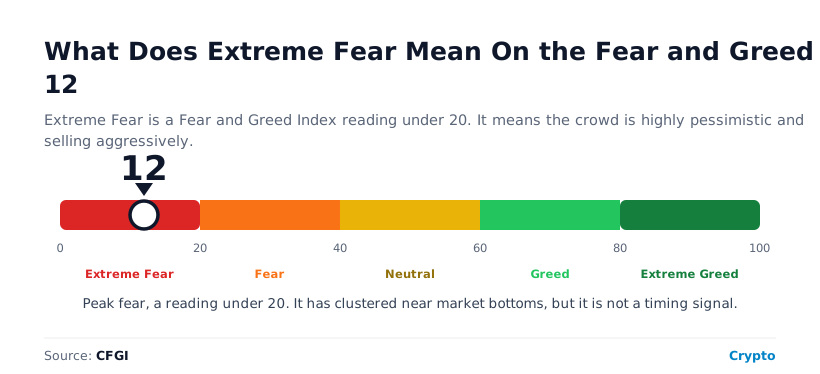
Extreme Fear is a Fear and Greed Index reading under 20, the bottom zone of the 0 to 100 scale. It means investors are highly pessimistic and risk-averse, often selling aggressively to protect capital. Historically, Extreme Fear has clustered near market lows, because the crowd is most one-sided when it is most stretched, and it is the basis of the contrarian idea of being "greedy when others are fearful". But it is context, not a guaranteed bottom: fear can stay extreme through a long decline. This is education, not financial advice.
CFGI data
In CFGI data since March 2022, Extreme Fear readings cluster near turning points without marking them precisely. The stock score hit an extreme-fear 3 on 8 April 2025, fear that arrives fast, which is why deep-fear readings draw attention even though the index forecasts the next day only 49% of the time. The crypto low of 17 on 12 May 2022 is the canonical example of fear at its most extreme.
Source: CFGI dataset, March 2022 to June 2026.
Key takeaways
- Extreme Fear is any reading under 20 on the 0 to 100 scale.
- It means the crowd is highly pessimistic and selling aggressively.
- Contrarians watch it because much of the selling may already be done.
- It has clustered near lows historically, but does not guarantee one.
- It is context to weigh with the trend and a plan, not a buy trigger.
What Extreme Fear Tells You
On the Fear and Greed Index, a reading under 20 is Extreme Fear. It means the signals the index reads, volatility, momentum, volume and the rest, all point to a pessimistic, risk-off crowd. People are protecting capital rather than chasing returns: selling, hedging, and stepping to the sidelines. Extreme Fear is not a mild caution; it is the market in something close to a panic, and it tends to feel as bad as it looks.
Why Contrarians Watch It
The reason Extreme Fear draws so much attention is the contrarian logic captured in the old advice to be "greedy when others are fearful". The thinking is simple: by the time fear is truly extreme, much of the selling may already be done, because the people who wanted out have largely got out. With fewer sellers left and prices beaten down, the conditions for a recovery quietly build. Historically, deep-fear readings have clustered near important lows. The most vivid crypto example came on 12 May 2022, during the Terra collapse, when CFGI’s crypto score fell to 17, a moment of maximum fear that, in hindsight, marked a significant low.
What Extreme Fear Does Not Mean
It is just as important to know what the reading does not promise. Extreme Fear is not a guaranteed bottom and not an automatic buy signal. Fear can stay extreme for a long time through a sustained downtrend, and prices can keep falling while the gauge sits in the basement, the classic "catching a falling knife" risk. CFGI’s own data is honest about this: the index forecasts the next day’s direction only about 49% of the time, a coin flip. So Extreme Fear is a reason to pay close attention and to resist panic, not a green light to back up the truck on the strength of the number alone.
The Honest Framing
Extreme Fear improves the odds that you are near a low and lowers the odds you are near a top. It does not tell you the bottom is in. Use it to be brave carefully, not recklessly.
Capitulation: Fear At Its Deepest
The most extreme fear often coincides with capitulation, the moment a falling market gives up. Capitulation is panic selling at its peak: holders who swore they would never sell finally do, often forced out by liquidations and cascading losses. It is emotionally brutal and statistically interesting, because that final flush of selling can mark the exhaustion of the downtrend, the point where there is simply no one left to sell. This is why the deepest Extreme Fear readings, as awful as they feel in the moment, have so often appeared near the lows that later looked like the best opportunities.
How to Use an Extreme Fear Reading
Treat Extreme Fear as context, not a command. Read it alongside the trend and your own plan rather than acting on the number in isolation. If you do see opportunity in deep fear, the disciplined approach is usually to add gradually rather than all at once, since you cannot know the exact bottom, and to keep your position sizing within limits you can stomach. Above all, its greatest value may be defensive: when the gauge screams Extreme Fear and you feel the urge to sell everything, that is precisely the moment history suggests you should be slowing down, not panicking with the crowd.
Where Extreme Fear Sits On the Scale
| Score | Zone |
|---|---|
| 0 to 19 | Extreme Fear |
| 20 to 39 | Fear |
| 40 to 59 | Neutral |
| 60 to 79 | Greed |
| 80 to 100 | Extreme Greed |
The five zones of the 0 to 100 scale.
Frequently asked questions
What number is Extreme Fear?
Any reading under 20 on the 0 to 100 Fear and Greed scale. Under 20 is Extreme Fear; 20 to 39 is Fear.
Is Extreme Fear good or bad?
Neither on its own. It means the crowd is very pessimistic. Contrarians see possible value there, because much of the selling may be done, but fear can persist in a downtrend, so it is context rather than a buy signal.
What is capitulation?
The peak of panic selling, when even committed holders give up, often forced out by liquidations. It coincides with the deepest Extreme Fear and can mark the exhaustion of a downtrend, since there is little selling left to do.
Should I buy during Extreme Fear?
Not automatically. Extreme Fear has clustered near lows historically but does not guarantee one, and the index calls the next day only about 49% of the time. Use it with the trend, your own analysis and risk limits, adding gradually if at all. This is education, not financial advice.
CFGI.io, Market sentiment research
The CFGI research team builds and maintains the CFGI Fear and Greed Index: a 0 to 100 sentiment score from 10 sub-indicators across hundreds of crypto assets and the equity market, refreshed every 15 minutes. We have tracked market emotion through multiple full crypto and equity cycles.
Think we missed something?
Spotted a gap, disagree with a take, or think we should cover a new topic? Message us and we'll act on your input.
Message us on TelegramKeep reading
This article is educational and is not financial advice. Crypto and equities are volatile and you can lose money. See our disclaimer.