Stocks
What Is an Earnings Call?
Quick answer
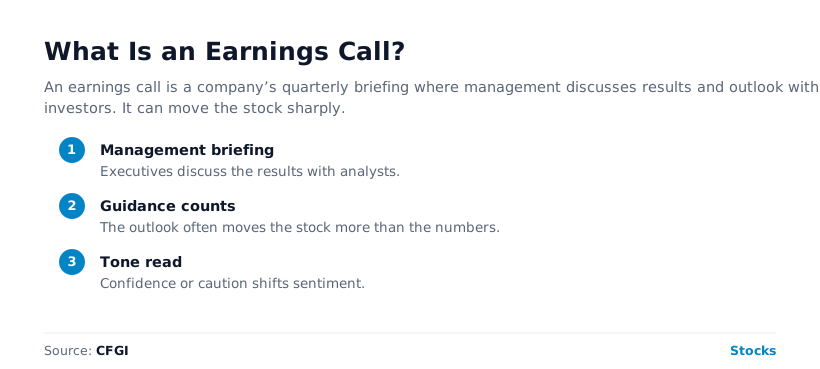
An earnings call is a scheduled conference, usually held each quarter, where a company’s management presents its latest results and then answers analysts’ questions live. It is where the numbers get their context: executives explain the quarter, give guidance on what is coming, and set a tone. Earnings calls can swing a stock hard, often harder than the report itself, because the outlook and the unscripted answers frequently matter more than the figures already on the page.
CFGI data
Earnings calls are among the most volatile moments in a stock’s life, and volatility is one of the things a Fear and Greed Index reads. CFGI scores the market on a 0 to 100 scale and refreshes its stock reading daily, so a wave of cautious or confident guidance during earnings season tends to show up as choppier, more emotional readings.
Source: CFGI methodology, 10-input 0 to 100 model.
Key takeaways
- An earnings call is a company’s quarterly results briefing with analysts.
- It has three parts: a disclaimer, scripted remarks, and a live Q&A.
- The unscripted Q&A often reveals more than the prepared remarks.
- Guidance about the future usually moves the stock more than the results.
- Tone and hedging carry real information beyond the headline numbers.
Numbers Plus Context
Each quarter, public companies report their earnings in a formal filing. The earnings call is the live event built around that report: executives walk through the results, explain what drove them, and then field questions from the analysts who cover the stock. It turns a page of numbers into a narrative, and it is that narrative, more than the raw figures, that the market reacts to.
How a Call Is Structured
Almost every call follows the same three-part shape, and knowing it helps you listen for what matters.
- The disclaimer. A short legal "safe harbour" notice warning that forward-looking statements may not pan out. Easy to skip, but it frames everything that follows as opinion, not promise.
- Prepared remarks. Roughly the first 20 to 30 minutes, the CEO and CFO read a scripted, lawyer-reviewed walk-through of the quarter, presenting the most favourable honest version of events.
- Analyst Q&A. The rest of the call, when analysts from major banks ask pointed, unscripted questions. This is usually where the real information lives.
Why the Q&A Matters Most
The prepared remarks are polished by design, written and reviewed to control the story. The Q&A is where that control slips. Analysts probe for the things the script glossed over, competitive pressure, a weak segment, a vague number, and management has to answer on its feet. A confident, specific answer reassures; a hedge, a deflection or a "we’ll take that offline" can do more to move a stock than anything in the scripted section. Experienced investors often skip straight to the questions.
Guidance: Why the Future Beats the Past
The single most powerful thing on most calls is guidance, management’s forecast for coming quarters. Because a share price reflects expected future profits, the market reaction to guidance is frequently larger than the reaction to the results just reported. The pattern surprises beginners every season: a company can beat its estimates and still fall hard because it cut its outlook, or miss its estimates and rally because it raised guidance. The market is not grading the quarter that ended. It is repricing the quarters ahead.
The Mental Model
Reported results tell you where the company has been. Guidance tells you where management thinks it is going. The stock trades on the second one.
Reading the Tone
Beyond the words, the manner carries information. The questions executives dodge, the hedging language a CFO reaches for, and especially the topics they quietly stop mentioning compared with last quarter, all leak signal. This is now a field of its own: investors and algorithms parse call transcripts for tone, counting hesitant or confident language and tracking how it shifts over time. You do not need software to do a lighter version yourself, simply noticing whether management sounds more or less sure than three months ago is a useful read.
How to Listen and Use It
Earnings calls are public. Most companies stream them by webcast, often with a phone line, and publish a full transcript shortly after, so any investor can hear or read management’s commentary for free. A sensible habit is to read the guidance and the Q&A rather than chase the first few minutes of price action, which is often a knee-jerk reaction to a headline number that the call itself may complicate. The call is where you find out whether a beat was high quality or a miss was a blip.
Earnings Calls and Market Sentiment
Calls cluster together during earnings season, and that stretch is reliably one of the most emotional in the market. A run of confident guidance can tip the mood toward greed; a string of cautious outlooks can spread fear across a whole sector. That swing is what the Stock Fear and Greed Index tracks on a 0 to 100 scale. Reading a single company’s call against the market’s broader mood helps separate a company-specific story from a wider wave of investor sentiment.
Frequently asked questions
What is an earnings call?
A scheduled conference, usually quarterly, where a company’s management presents its latest results and answers analysts’ questions live, providing context and forward guidance around the reported numbers.
What are the parts of an earnings call?
Three: a short legal disclaimer, around 20 to 30 minutes of scripted prepared remarks from the CEO and CFO, and a live analyst Q&A. The unscripted Q&A is usually the most revealing part.
Why do earnings calls move stocks?
Because guidance and tone often matter more than the headline numbers. A company can beat results but fall on weak guidance, or miss but rally on a bright outlook, since prices reflect expected future profits.
Who can listen to an earnings call?
Anyone. They are typically open to the public via webcast or phone, and transcripts are published afterward, so any investor can hear management’s commentary. This is education, not financial advice.
CFGI.io, Market sentiment research
The CFGI research team builds and maintains the CFGI Fear and Greed Index: a 0 to 100 sentiment score from 10 sub-indicators across hundreds of crypto assets and the equity market, refreshed every 15 minutes. We have tracked market emotion through multiple full crypto and equity cycles.
Think we missed something?
Spotted a gap, disagree with a take, or think we should cover a new topic? Message us and we'll act on your input.
Message us on TelegramKeep reading
This article is educational and is not financial advice. Crypto and equities are volatile and you can lose money. See our disclaimer.