Markets
What Is a Soft Landing?
Quick answer
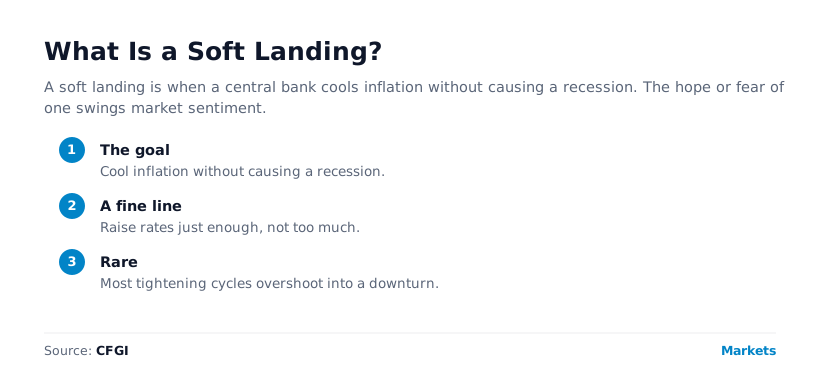
A soft landing is the outcome where a central bank raises interest rates enough to bring inflation down, but without tipping the economy into recession, growth slows gently rather than crashing. It is the opposite of a hard landing, a recession, and it is difficult and rare, often said to have been cleanly achieved only once in the US in the past 60 years. That is why the question of which landing is coming drives waves of hope and fear through markets. This is education, not financial advice.
CFGI data
The soft-versus-hard-landing debate is a sentiment driver. Hopes of a soft landing tend to lift the mood toward greed; fears of a hard one tip it toward fear. A Fear and Greed Index reads how the crowd is leaning on its 0 to 100 scale as the data shifts the odds.
Source: CFGI dataset and standard macroeconomic definitions, June 2026.
Key takeaways
- A soft landing cools inflation without causing a recession.
- The alternative is a hard landing, a recession.
- It is hard because rate hikes act with a long lag.
- It is rare: cleanly achieved only once in the US in 60 years (1994).
- Hope or fear of one swings market sentiment.
Threading the Needle
When inflation runs hot, the Federal Reserve raises rates to cool demand. The danger is overdoing it and causing a recession, a hard landing. A soft landing is the delicate alternative: rates high enough to tame inflation, but not so high that growth collapses. Slowing the economy without stalling it is genuinely hard, and because the outcome is uncertain and matters enormously, every inflation and jobs report becomes a referendum on which landing is coming, which is why the debate moves markets so much.
Soft Versus Hard Landing
The "landing" metaphor captures the range of outcomes when a central bank tries to bring an overheating economy down to earth.
| Outcome | What happens |
|---|---|
| Soft landing | Inflation falls, no recession, growth slows gently |
| Hard landing | Tightening overshoots, the economy tips into recession |
| No landing | The economy stays hot and inflation refuses to fall |
The possible landings.
A soft landing is the goldilocks result, not too hot, not too cold. A hard landing is the feared one. Forecasters also talk of a "no landing", where growth and inflation simply stay stubbornly high, forcing rates to stay higher for longer.
Why It Is So Hard, and So Rare
The core difficulty is timing under a blindfold. Interest-rate changes work with "long and variable lags", taking many months to fully filter through to spending, hiring and prices, so a central bank is effectively steering a huge ship while only seeing where it was, not where it is. Raise rates too little and inflation lingers; raise them too much, or for too long, and you crush the economy into recession before the earlier hikes have even fully landed. Add the ever-present risk of an external shock, an oil spike, a crisis, a war, and threading the needle becomes extraordinarily difficult. By common reckoning, the Fed has achieved a clean soft landing only once in roughly the past 60 years, which tells you just how rare success is.
Steering With a Lag
Rate hikes take months to bite, so a central bank acts on old information. That delay is why overshooting into a hard landing is so easy, and a clean soft landing so rare.
The 1994 Soft Landing
The benchmark for a successful soft landing is 1994 to 1995, under Federal Reserve chairman Alan Greenspan. With the economy in its third year of recovery, the Fed pre-emptively raised interest rates by about 3 percentage points in a little over a year, an aggressive campaign, yet it cooled the economy and headed off inflation without triggering a recession. Former Fed vice chairman Alan Blinder called it the "perfect soft landing", and it remains the textbook case precisely because it is so unusual. Every modern tightening cycle is measured against 1994: pundits ask whether the Fed can "repeat 1994", because that year showed a soft landing is possible, even as history shows how seldom it actually happens.
Soft Landings and Sentiment
The soft-landing question is, at heart, a sentiment story. Data that raises the odds of a gentle slowdown, cooling inflation alongside a still-healthy jobs market, tends to feed greed and lift risk assets; data that points toward a hard landing, or toward inflation that simply will not fall, tends to feed fear. This is why markets can swing violently on a single inflation or employment report: each one nudges the perceived odds between the landings. A Fear and Greed Index is a useful read of how the crowd is leaning at any moment, capturing in one number whether hope of a soft landing or fear of a hard one currently has the upper hand.
Frequently asked questions
What is a soft landing?
When a central bank raises rates enough to bring inflation down without tipping the economy into recession, so growth slows gently rather than crashing. It is the goldilocks outcome of a tightening cycle.
What is the difference between a soft and hard landing?
A soft landing tames inflation without a recession; a hard landing is when tightening overshoots and causes one. There is also a "no landing", where growth and inflation stay stubbornly high. The uncertainty between them drives market sentiment.
Why is a soft landing so rare?
Because rate changes act with long, variable lags, so the central bank steers on old information and easily overshoots, and external shocks can derail it. By common reckoning the Fed has achieved a clean soft landing only once in about 60 years, in 1994 to 1995.
Why does the soft-landing debate move markets?
Because the outcome is uncertain and matters hugely. Each inflation or jobs report shifts the perceived odds, so hopes of a soft landing feed greed and fears of a hard one feed fear. A Fear and Greed Index reads the lean. This is education, not financial advice.
CFGI.io, Market sentiment research
The CFGI research team builds and maintains the CFGI Fear and Greed Index: a 0 to 100 sentiment score from 10 sub-indicators across hundreds of crypto assets and the equity market, refreshed every 15 minutes. We have tracked market emotion through multiple full crypto and equity cycles.
Think we missed something?
Spotted a gap, disagree with a take, or think we should cover a new topic? Message us and we'll act on your input.
Message us on TelegramKeep reading
This article is educational and is not financial advice. Crypto and equities are volatile and you can lose money. See our disclaimer.