Markets
Can the Fear and Greed Index Predict a Crash?
Quick answer
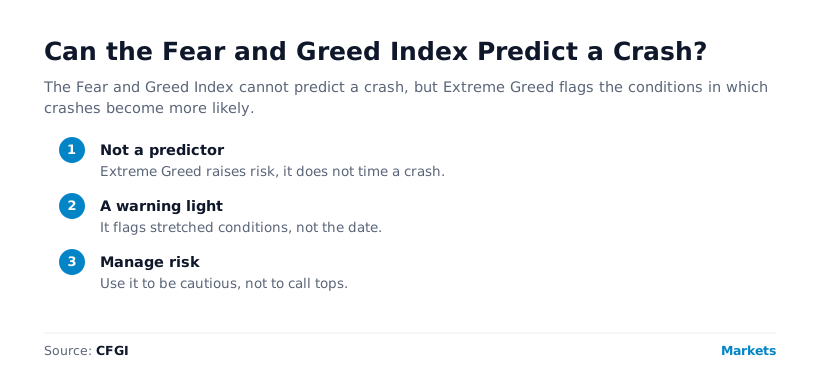
No, the Fear and Greed Index cannot predict a crash. It reads current sentiment, not future price. What it can do is flag the conditions a crash tends to start from: Extreme Greed, when the crowd is euphoric, leveraged and crowded. That raises the risk of a sharp fall, but greed can persist for a long time and the trigger is unpredictable, so it warns rather than predicts. Treat it as a read on risk, not on timing. This is education, not financial advice.
CFGI data
Extreme readings mark stretched conditions, not timing. In CFGI data since March 2022, sentiment matches same-day market direction 79% of the time and the next day only 49%, so even at Extreme Greed the index cannot tell you a crash is imminent, only that risk is elevated.
Source: CFGI dataset, March 2022 to June 2026.
Key takeaways
- It cannot predict a crash; it reads the present, not the future.
- Extreme Greed flags the fragile conditions crashes start from.
- No tool can time a crash, because the trigger is unpredictable.
- It measures elevated risk, not imminent timing.
- Use it to manage exposure, not to forecast a date.
Why It Cannot Predict a Crash
A crash is a future event, and the Fear and Greed Index measures the present. No sentiment indicator forecasts price reliably, and the data is clear on it: the index agrees with the next day only about half the time. So it cannot call a top or a crash in advance. Anyone claiming a sentiment gauge predicts crashes is misreading what it does, it is a thermometer for the crowd’s current mood, not a crystal ball for tomorrow’s price.
What It Can Flag: Fragility
What it does flag is fragility. Crashes tend to start from Extreme Greed, where the crowd is euphoric, positioning is crowded and leverage is high, so there are few new buyers left and a lot of people who can be forced to sell if the mood turns. The index does not say a crash is coming, but it tells you the market is in the kind of state where one becomes more likely. Think of it as measuring how dry the forest is, not whether lightning will strike: a market pinned in Extreme Greed is tinder-dry, which raises the stakes if a spark arrives, even though the gauge cannot tell you whether or when one will.
The Honest Read
Treat Extreme Greed as a reason to manage risk, trim, rebalance, tighten stops, not as a prediction. Greed can stay extreme for weeks while price climbs. This is education, not financial advice.
Why No Tool Can Time a Crash
The deeper reason crashes cannot be timed is that they are usually triggered by something unpredictable. The fragility, stretched valuations, crowded positioning, high leverage, can build for months and be plainly visible, but the spark that finally sets off the collapse, a shock, a failure, a piece of bad news, is by nature a surprise, often a black swan no one was positioned for. You can know the conditions are dangerous without knowing the moment of ignition. This is also why markets can stay irrational, and greedy, far longer than seems reasonable: euphoria can persist for a long time, and selling early because the gauge is "too high" can mean missing big gains. Knowing risk is elevated is genuinely useful; pretending to know the date is not.
Risk Versus Timing
The key is to separate two very different questions: "is risk elevated?" and "is a crash imminent?" The Fear and Greed Index can help answer the first and cannot answer the second, and confusing them is the source of most disappointment with it. A useful analogy is a doctor telling you your risk of a heart attack is high: that is valuable, actionable information, prompting you to change your habits, even though it cannot tell you it will happen next Tuesday. Extreme Greed is the market’s version of that warning. The right response is not to predict the crash but to act on the elevated risk, the same way you would respond to any credible warning that conditions have become dangerous, by reducing your exposure to the danger.
How to Use It Around Risk
In practice, that means treating an Extreme Greed reading as a prompt to manage risk rather than to make a dramatic bet. Sensible responses include trimming positions that have run hard, rebalancing back toward your targets, tightening stops, or simply checking that your exposure has not quietly ballooned, all calm, defensive moves that reduce the damage if a crash does come, without requiring you to call its timing. What it does not mean is selling everything or trying to short the top, because greed can persist and those bets are notoriously dangerous. Combined with valuation and breadth, and weighed alongside your own plan, the index becomes a useful component of risk management, which is the realistic and valuable role it plays around crashes, not predicting them, but helping you prepare for them.
Frequently asked questions
Can the Fear and Greed Index predict a crash?
No. It reads current sentiment, not future price, and agrees with the next day only about half the time. It cannot call a crash in advance, because crashes are triggered by unpredictable shocks.
What can it tell you about crash risk?
It flags fragility. Crashes tend to start from Extreme Greed, where the crowd is euphoric, crowded and leveraged, so there are few new buyers and many who can be forced to sell. The index shows how "dry the forest" is, not whether lightning will strike.
Why can’t any tool time a crash?
Because the fragility can build visibly for months, but the spark that triggers the collapse is by nature a surprise, often a black swan. You can know conditions are dangerous without knowing the moment of ignition, and greed can persist far longer than seems reasonable.
How should I use it around risk?
Separate "is risk elevated?" from "is a crash imminent?" It answers the first, not the second. Treat Extreme Greed as a prompt to manage exposure, trim, rebalance, tighten stops, not to predict a date or short the top. This is education, not financial advice.
CFGI.io, Market sentiment research
The CFGI research team builds and maintains the CFGI Fear and Greed Index: a 0 to 100 sentiment score from 10 sub-indicators across hundreds of crypto assets and the equity market, refreshed every 15 minutes. We have tracked market emotion through multiple full crypto and equity cycles.
Think we missed something?
Spotted a gap, disagree with a take, or think we should cover a new topic? Message us and we'll act on your input.
Message us on TelegramKeep reading
This article is educational and is not financial advice. Crypto and equities are volatile and you can lose money. See our disclaimer.