Crypto
What Is Crypto Winter?
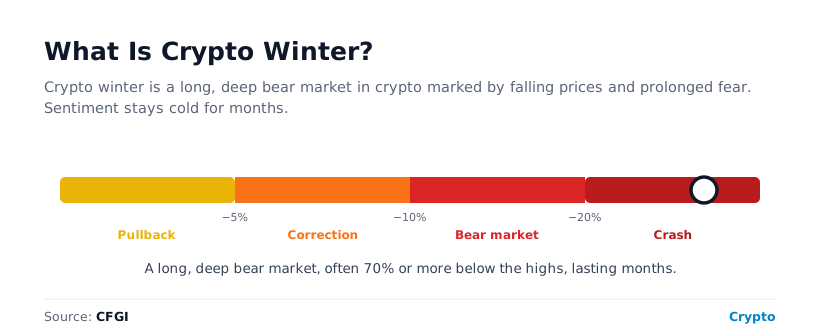
Quick answer
Crypto winter is the term for a prolonged, severe downturn in cryptocurrency markets, a deep bear market that can last many months or even years, with prices far below their highs and interest fading. The defining feature is not just lower prices but persistent, grinding fear: the mood stays cold long after the initial crash. Crypto has lived through several, each following a euphoric peak, and a Fear and Greed Index tends to sit in the fear zone for extended stretches throughout. This is education, not financial advice.
CFGI data
Crypto winters are long stretches in the fear zone. Rather than the sharp, reverting fear of a single crash, CFGI can read low for months during a winter. The history since March 2022 captures these prolonged cold spells, distinct from brief panics.
Source: CFGI dataset, March 2022 to June 2026.
Key takeaways
- Crypto winter is a long, deep crypto bear market.
- It can last many months or years, defined by duration.
- Each has followed a euphoric peak, part of the cycle.
- Weak projects fail while survivors build quietly.
- Sentiment sits in the fear zone for extended stretches.
A Long Cold Spell
A crypto bear market can be sharp and short, but a crypto winter is the extended version: prices stuck far below their peaks, trading volumes low, projects failing, and public attention drifting away. What makes it a winter rather than a dip is duration, the cold lingers. For believers, winters are when building happens quietly and future cycles are seeded. For the crowd, they are a test of patience, as the excitement of the last bull market gives way to long stretches of disinterest and doubt.
Crypto Winters In History
Crypto has endured several winters, each following a euphoric top and each lasting roughly a year or more.
| Winter | Followed | Character |
|---|---|---|
| 2014 to 2015 | The 2013 boom and Mt. Gox | Deep, attention faded |
| 2018 to 2019 | The 2017 ICO mania | Roughly 80% drawdown |
| 2022 to 2023 | The 2021 peak, Terra and FTX | Bitcoin fell ~78% |
The major crypto winters.
In each case, a roaring bull market gave way to a grinding decline of 70 to 80% or more, a year or two of disinterest, and widespread declarations that "crypto is dead", before the cycle eventually turned again.
What Happens During a Winter
A crypto winter is a brutal but cleansing shakeout. The speculative excess of the prior boom is wrung out: over-leveraged traders are liquidated, weak and fraudulent projects run out of money and collapse, and the rug pulls and hype coins of the mania quietly die. Retail interest evaporates, prices grind sideways at low levels, and the headlines turn from euphoria to obituary. Yet beneath the surface, serious builders often keep working through the cold, developing the technology and infrastructure that, historically, has powered the next cycle. This is the origin of the crypto saying that winters are "for building", the noise of speculation fades, leaving the genuine work to continue away from the spotlight.
Winters are also psychologically gruelling in a way a fast crash is not. A crash is over quickly; a winter asks investors to hold through months or years of disappointment, dead-cat bounces that fail, and a steady drumbeat of bad news, all while the asset they believed in does nothing. That slow erosion of conviction is what finally shakes out the last weak hands, and it is precisely why those who endure a winter, or accumulate through it, have historically been positioned for the recovery, if and when it comes.
Winter and the Cycle
Crypto winters are not random; they are the down-phase of a recurring boom-and-bust cycle, often linked loosely to Bitcoin’s four-year halving rhythm. A euphoric peak gives way to a crash, then a long winter, then a slow accumulation phase, and eventually a new bull run. So far, every crypto winter has been followed by a recovery to fresh all-time highs, which is why believers treat them as accumulation opportunities while skeptics see proof the whole thing is doomed. The honest position holds both: winters have always ended historically, but "this cycle will repeat" is a pattern, not a law, and no past recovery guarantees the next.
Winters Are for Building
The crypto adage holds that bull markets are for earning and winters are for building. Speculation goes quiet, but the work that seeds the next cycle tends to happen in the cold.
Crypto Winter and Sentiment
The signature of a crypto winter on a Fear and Greed Index is persistence: rather than a sharp spike of fear that quickly reverts, the score sits in the fear zone for long stretches, sometimes months on end. This is what distinguishes a winter from a brief scare. A single crash produces a deep, fast fear reading that snaps back; a winter produces a sustained, grinding cold, where even relief rallies fail to lift the mood out of fear for long. Watching how long sentiment stays cold, not just how low it goes, helps tell the two apart, and a gauge that has been mired in fear for months is one of the clearest signs that a true winter, rather than a passing dip, has set in.
Frequently asked questions
What is crypto winter?
A prolonged, severe downturn in crypto markets, a deep bear market that can last months or years, with prices far below their highs and persistent, grinding fear. It is defined by duration, not just depth.
When have crypto winters happened?
After each major boom: 2014 to 2015 following the 2013 peak and Mt. Gox, 2018 to 2019 following the 2017 ICO mania, and 2022 to 2023 following the 2021 peak and the Terra and FTX collapses. Each saw drawdowns of 70 to 80% or more.
How is a crypto winter different from a crash?
A crash is a sharp, sudden drop; a winter is the long cold spell that can follow, defined by duration. The fear lingers for months rather than spiking and reverting quickly, and even relief rallies fail to lift the mood for long.
How does it show on the Fear and Greed Index?
As persistence: the score sits in the fear zone for extended stretches rather than spiking and recovering. Watching how long sentiment stays cold, not just how low it goes, helps identify a winter. This is education, not financial advice.
CFGI.io, Market sentiment research
The CFGI research team builds and maintains the CFGI Fear and Greed Index: a 0 to 100 sentiment score from 10 sub-indicators across hundreds of crypto assets and the equity market, refreshed every 15 minutes. We have tracked market emotion through multiple full crypto and equity cycles.
Think we missed something?
Spotted a gap, disagree with a take, or think we should cover a new topic? Message us and we'll act on your input.
Message us on TelegramKeep reading
This article is educational and is not financial advice. Crypto and equities are volatile and you can lose money. See our disclaimer.