Crypto
What Is a Rug Pull?
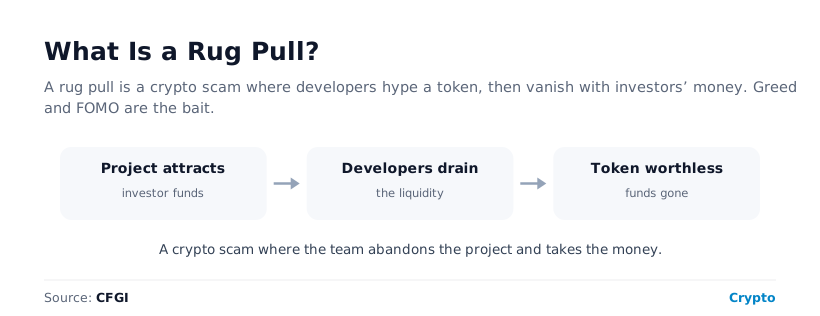
Quick answer
A rug pull is a type of crypto scam where the creators of a token promote it heavily to attract buyers, then suddenly abandon the project and disappear with the money, leaving holders with a worthless coin. The name comes from pulling the rug out from under investors. There are hard, soft and liquidity rug pulls, and they all feed on greed and the fear of missing out, which is why they cluster around hype-driven manias. Knowing the red flags is the best defence. This is education, not financial advice.
CFGI data
Rug pulls exploit greed at its peak. They thrive when FOMO is highest, often when a coin is pinned in Extreme Greed on per-asset sentiment. CFGI’s per-asset scoring can flag when a single token is running on pure hype, the environment scammers rely on, across hundreds of assets.
Source: CFGI dataset and public information on crypto scams, June 2026.
Key takeaways
- A rug pull is a scam where developers vanish with investors’ money.
- Types include hard, soft and liquidity rug pulls.
- Red flags include anonymous teams and unlocked liquidity.
- Greed and FOMO are the bait.
- They cluster around hype-driven manias.
How a Rug Pull Works
A team launches a new token, markets it aggressively, often with promises of huge returns and a fast-growing community, and draws in buyers. Once enough money has flowed in, they drain the liquidity or sell their own holdings all at once, collapsing the price to near zero and vanishing. The buyers are left holding a worthless coin. Rug pulls are most common among anonymous teams and brand-new meme coins with no track record, and the warning signs are often visible to those not blinded by FOMO.
Types of Rug Pull
Rug pulls come in a few distinct flavours, fast and slow.
| Type | How it works |
|---|---|
| Liquidity pull | Devs drain the trading pool, so no one can sell |
| Hard rug pull | A sudden disappearance with all the funds |
| Soft rug pull | A slow, quiet sell-off while feigning progress |
The main kinds of rug pull.
The liquidity pull is the most common: on a decentralised exchange, developers remove all the paired funds from the token’s pool once the price is high, leaving holders with a token that can no longer be sold for anything. A "soft" rug is sneakier, the team simply offloads its tokens gradually and lets the project quietly die, which can be hard to distinguish from ordinary failure.
The Red Flags
Most rug pulls share a recognisable set of warning signs, and spotting even a few should give you pause.
- Anonymous team: founders who hide their identities have nothing to lose by vanishing.
- Unlocked liquidity: if the project’s liquidity is not locked, developers can pull it at any moment.
- Unrealistic promises: guaranteed or absurd returns are a classic lure.
- No audit: unaudited smart-contract code can hide the ability to drain funds.
- Vague or copied whitepaper: little real substance behind the hype.
- Frantic, hype-only marketing: urgency designed to stop you thinking.
None of these alone proves a scam, but together they paint a picture of a project built to extract money, not to last. The cruel part is that rug pulls often look most attractive precisely when they are most dangerous, a vertical price chart and a roaring community are the bait, not reassurance, and the louder the hype, the more important it is to run through this checklist before committing a single dollar.
How to Protect Yourself
The defence against rug pulls is unglamorous diligence. Favour projects with a public, accountable team, a credible third-party audit, and verifiably locked liquidity, since locked liquidity removes the single easiest way for developers to run. Read the contract permissions where you can: be wary if the team retains the power to mint unlimited tokens or freeze trading. Treat guaranteed returns as a guarantee of a scam, and never invest more than you can afford to lose entirely in a new, unproven token. Above all, resist the urgency, the manufactured fear of missing out is the scammer’s sharpest tool, and slowing down to ask questions is what they least want you to do.
Locked Liquidity Is the Key Check
If a project’s liquidity is not locked, developers can drain it whenever they like. Verifiable locked liquidity is one of the simplest, strongest signs a token is not built to rug.
Rug Pulls and Greed
Scammers rely on greed overpowering caution. When a token is pumping and the crowd is euphoric, people stop asking questions, which is exactly when a rug pull strikes. A Crypto Fear and Greed Index reading of extreme greed on a hyped token is a reminder to slow down, not pile in. CFGI’s per-asset scoring is useful here: a tiny, obscure coin pinned in euphoric Extreme Greed, running far ahead of the broader market, is exactly the hot, question-free environment rug pulls are designed to exploit. The same euphoria that makes a scam feel like an opportunity is the signal to be most careful.
Frequently asked questions
What is a rug pull?
A crypto scam where developers hype a token to attract buyers, then abandon the project and disappear with the money, leaving holders with a worthless coin. The name comes from pulling the rug out from under investors.
What are the types of rug pull?
A liquidity pull (draining the trading pool so no one can sell, the most common), a hard rug pull (a sudden disappearance with all funds), and a soft rug pull (a slow, quiet sell-off while pretending the project is progressing).
How do you avoid a rug pull?
Favour projects with a public team, a credible audit and verifiably locked liquidity, read the contract permissions, treat guaranteed returns as a red flag, and never invest more than you can afford to lose in a new token.
Why do rug pulls happen during manias?
Because they feed on greed and FOMO. When a token is pumping and the crowd is euphoric, people stop asking questions, which is exactly when scammers strike. A Fear and Greed reading of extreme greed on a hyped coin is a reminder to slow down. This is education, not financial advice.
CFGI.io, Market sentiment research
The CFGI research team builds and maintains the CFGI Fear and Greed Index: a 0 to 100 sentiment score from 10 sub-indicators across hundreds of crypto assets and the equity market, refreshed every 15 minutes. We have tracked market emotion through multiple full crypto and equity cycles.
Think we missed something?
Spotted a gap, disagree with a take, or think we should cover a new topic? Message us and we'll act on your input.
Message us on TelegramKeep reading
This article is educational and is not financial advice. Crypto and equities are volatile and you can lose money. See our disclaimer.