Crypto
What Is a Crypto Correction?
Quick answer
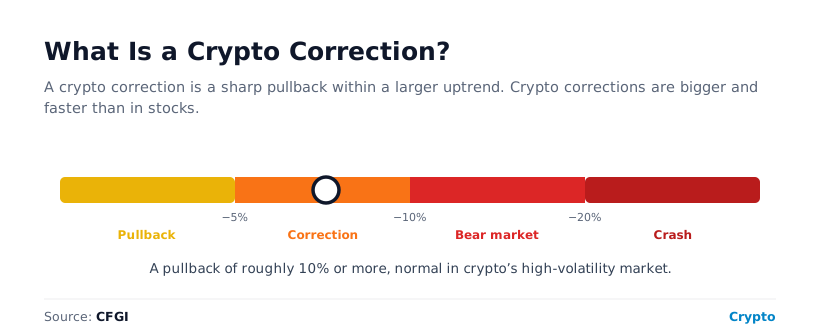
A crypto correction is a meaningful decline within an ongoing uptrend, often defined as a fall of 10% or more from a recent high, though in crypto the moves are far larger and faster than in stocks, routinely 20% to 40%. Corrections are a normal part of crypto’s volatile cycles, releasing built-up greed without necessarily ending a bull run. They typically swing sentiment sharply from greed toward fear. This is education, not financial advice.
CFGI data
Crypto corrections are violent sentiment resets. A 10% stock pullback might be a 30% crypto correction, and the swing in CFGI is proportionally sharper on its 0 to 100 scale. Watching whether the score merely cools or plunges into Extreme Fear helps tell a correction from a deeper turn.
Source: CFGI dataset, March 2022 to June 2026.
Key takeaways
- A crypto correction is a sharp pullback within an uptrend.
- Crypto corrections are bigger and faster than in stocks, often 20% to 40%.
- Leverage and 24/7 trading make them violent.
- They release built-up greed without always ending a bull run.
- They swing sentiment sharply from greed toward fear.
Corrections, Crypto-Style
The idea is the same as a stock correction, a decline within a larger uptrend, but the scale is different. Crypto’s volatility means a routine correction can be 20% or 30%, happening in days rather than weeks. To a newcomer it can feel like a crash; to a veteran it is a normal part of the cycle. Corrections are often healthy: they flush out excess leverage and greed, reset overheated prices, and can lay the groundwork for the next leg up, without the bull market necessarily being over.
How Big Is a Crypto Correction?
The technical threshold, a 10% drop, is the same as in stocks, but in practice crypto corrections are far deeper. It is entirely normal for Bitcoin to fall 30% or more during an ongoing bull market and then go on to new highs, and smaller altcoins routinely swing further still.
| Decline | In stocks | In crypto (typical) |
|---|---|---|
| A "pullback" | 3% to 5% | 10% to 20% |
| A "correction" | 10% to 20% | 20% to 40% |
| A bear market | 20%+ | 50% to 80%+ |
The same label, very different scale.
A drop that would be a frightening crash for an equity index is, in crypto, often just a routine correction within a still-intact uptrend. Adjusting your expectations for that scale is half of surviving the asset class.
Why Crypto Corrections Are So Violent
Several features of crypto turn ordinary pullbacks into stomach-churning drops. The market trades 24 hours a day with no circuit breakers to pause a slide, so selling can run unchecked. Heavy leverage means that as prices fall, over-extended traders are force-liquidated, and those forced sales push prices down further, triggering yet more liquidations in a cascade. Liquidity is thinner than in major stock markets, so the same selling moves prices more. And the crowd skews toward emotional retail investors prone to panic selling. Stack these together and a modest wobble can snowball into a 30% correction within hours, far faster and deeper than equities typically move.
Correction Versus Bear Market
The line between a correction and a full bear market is blurry in crypto, but depth and duration separate them. A correction is a sharp but contained pullback within an uptrend, the price recovers and the bull run continues. A crypto bear market, or "crypto winter", is a far deeper and longer decline, historically 50 to 80% from the top and lasting a year or more, in which the prevailing trend genuinely turns down. The 2021 to 2022 collapse, when Bitcoin fell roughly 78%, was a bear market, not a correction. In real time the two can be hard to tell apart, which is exactly why sentiment is worth watching as the decline unfolds.
Why Corrections Can Be Healthy
As painful as they feel, corrections do real work for a bull market. By wiping out the over-leveraged traders who piled in with borrowed money, they reset the market on a sounder footing. They cool overheated prices and stretched sentiment back toward something sustainable, shake out the weakest and most speculative hands, and hand patient buyers a chance to accumulate at lower prices. A market that only ever rose would build up dangerous excess and become ever more fragile; periodic corrections are part of what lets an uptrend last. The healthiest bull markets are not the ones without corrections, but the ones that keep surviving them.
Corrections and Sentiment
A crypto correction is a sentiment reset in fast-forward. As prices drop sharply, a Crypto Fear and Greed Index typically swings hard from greed toward fear. Whether it merely cools to neutral or plunges into Extreme Fear is a useful clue to whether it is a healthy correction or something deeper, a shallow dip in sentiment suggests the uptrend is intact, while a collapse into deep, sustained fear hints at a more serious turn. Because crypto moves so fast, the gauge often registers these swings within hours, giving you a real-time read on whether the crowd is simply cooling off or genuinely capitulating.
Frequently asked questions
What is a crypto correction?
A meaningful decline within an ongoing uptrend, often a fall of 10% or more, though in crypto the moves are far larger and faster than in stocks, routinely 20% to 40%. Corrections are a normal part of the cycle.
How big are crypto corrections?
Much bigger than in stocks. A drop of 30% or more during a crypto bull market is normal, where a similar fall in equities would be a frightening crash. Altcoins routinely swing even further.
Why are crypto corrections so violent?
Because crypto trades 24/7 with no circuit breakers, carries heavy leverage that triggers liquidation cascades, has thinner liquidity, and is driven by emotional retail flows. These turn modest pullbacks into rapid, deep drops.
How do corrections affect crypto sentiment?
They swing a Fear and Greed Index sharply from greed toward fear. Whether it cools to neutral or plunges into Extreme Fear hints at whether it is a healthy correction or the start of a bear market. This is education, not financial advice.
CFGI.io, Market sentiment research
The CFGI research team builds and maintains the CFGI Fear and Greed Index: a 0 to 100 sentiment score from 10 sub-indicators across hundreds of crypto assets and the equity market, refreshed every 15 minutes. We have tracked market emotion through multiple full crypto and equity cycles.
Think we missed something?
Spotted a gap, disagree with a take, or think we should cover a new topic? Message us and we'll act on your input.
Message us on TelegramKeep reading
This article is educational and is not financial advice. Crypto and equities are volatile and you can lose money. See our disclaimer.