Crypto
What Is a Bear Trap?
Quick answer
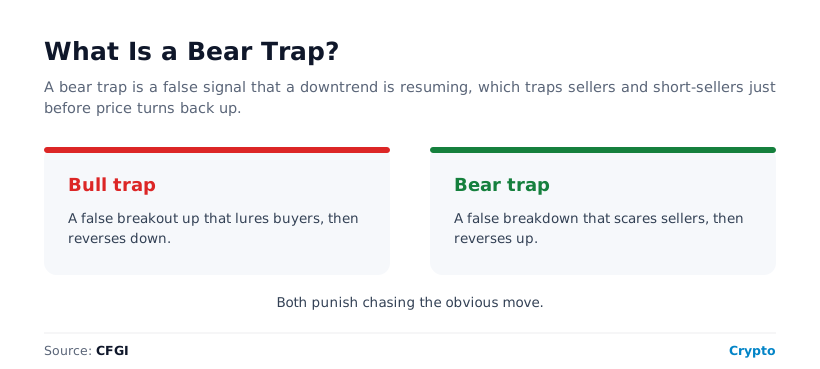
A bear trap is a false breakdown: price looks like it is starting a new leg down, convincing traders to sell or short, and then it reverses sharply upward, trapping them. It is the mirror of a bull trap, and it is especially dangerous for short-sellers, whose buy-to-cover orders can accelerate the reversal into a mini short-squeeze. Bear traps often form when fear is at an extreme, because that is when the most sellers have already committed and the fewest are left to push price lower. This is education, not financial advice.
CFGI data
Bear traps tend to cluster with Extreme Fear, where the crowd is most one-sided. CFGI marks Extreme Fear as a score under 20, and in its data since March 2022 such readings sit near turning points, the exact conditions in which a breakdown can fail and snap back.
Source: CFGI dataset, March 2022 to June 2026.
Key takeaways
- A bear trap is a false breakdown that reverses upward.
- It traps sellers and short-sellers who acted on the fake move.
- Short-covering can accelerate the reversal into a squeeze.
- It often forms at extremes of fear, when sellers are exhausted.
- It is the opposite of a bull trap.
How a Bear Trap Works
Price breaks below a level traders were watching, like a recent low or support. That looks like a signal to sell or open a short, so bears pile in. But the breakdown fails: buyers step in, price reverses back above the level, and everyone who sold the breakdown is now offside. They are trapped, and their buying to cover adds fuel to the move up. It is the exact mirror of a bull trap, a false signal at a key level that springs in the opposite direction to the one traders bet on.
Why Bear Traps Punish Short-Sellers
Bear traps are especially costly for short-sellers, because of how shorting works. A trader who shorts a breakdown profits if price falls, but must buy the asset back to close the position, and will typically place a protective stop just above the level they shorted. When the breakdown fails and price climbs back through that level, all those stops trigger as forced buy orders at once, a wave of "short-covering" that pushes price up even faster. The trap thus feeds on its own victims: the more shorts pile into the false breakdown, the more violent the squeeze when it reverses. This is why a failed breakdown in a heavily-shorted, fearful market can snap back with surprising speed.
How to Spot a Bear Trap
Like bull traps, bear traps leave clues for those who look past the price.
- Weak volume: a genuine breakdown sells off on heavy volume; a trap breaks down on thin, fading volume.
- Bullish divergence: if price makes a lower low but the RSI makes a higher low, downside momentum is quietly building back up.
- A sharp recovery candle: a strong bullish reversal right after the break signals buyers have overwhelmed the sellers.
- Exhausted selling: the move comes after a long decline, when most sellers have likely already acted.
The common thread is that a real breakdown is backed by conviction and volume, while a trap is a hollow move into a market that has run out of sellers.
How to Avoid One
The defence is the same patience that beats a bull trap: wait for the breakdown to confirm before acting on it. Rather than shorting the first dip below a level, experienced traders wait for a full candle to close decisively below it on real volume, since brief spikes that leave long wicks below a level frequently reverse. Many wait for a failed retest, where price bounces back to the broken level and is rejected, before trusting the move. None of this guarantees safety, markets are uncertain, but demanding confirmation filters out a great many false breakdowns that pure fear would have you sell into, and it keeps you from handing your stop-loss to the very trap that is hunting it.
Wait for the Close
A wick below a level is not a breakdown; a candle closing below it on real volume is closer to one. The same patience that avoids bull traps avoids bear traps.
Why Fear and Bear Traps Go Together
Bear traps are most common when sentiment is already fearful. By the time the Fear and Greed Index reads Extreme Fear, much of the selling is done, so a final push lower can quickly run out of sellers and reverse, the textbook setting for a trap. The crypto score’s deep-fear readings, like the 17 during the Terra collapse, came near exactly the kind of exhausted-selling lows where breakdowns fail. That does not make every extreme-fear reading a bear trap, but it is the backdrop they tend to form against, which is why pairing the chart with a sentiment read, and being wary of shorting a breakdown when fear is already extreme, can keep you out of the snare.
Frequently asked questions
What is a bear trap in trading?
A false breakdown: price drops below a key level, convincing traders to sell or short, then reverses upward and traps them. It is the opposite of a bull trap.
Why are bear traps dangerous for short-sellers?
Because shorts must buy back to close and usually place stops just above the level they shorted. When the breakdown fails, those stops trigger as forced buy orders, a wave of short-covering that accelerates the reversal into a squeeze.
How do you spot a bear trap?
Look beyond price: weak or fading volume on the breakdown, bullish RSI divergence (price lower lows but RSI higher lows), a sharp recovery candle, and selling that looks exhausted after a long decline.
How is it related to fear and greed?
Bear traps often form at Extreme Fear, under 20, because most sellers have already acted, leaving few to push price lower before it snaps back. Waiting for a breakdown to confirm and noting whether fear is already extreme can reduce the odds of being trapped. This is education, not financial advice.
CFGI.io, Market sentiment research
The CFGI research team builds and maintains the CFGI Fear and Greed Index: a 0 to 100 sentiment score from 10 sub-indicators across hundreds of crypto assets and the equity market, refreshed every 15 minutes. We have tracked market emotion through multiple full crypto and equity cycles.
Think we missed something?
Spotted a gap, disagree with a take, or think we should cover a new topic? Message us and we'll act on your input.
Message us on TelegramKeep reading
This article is educational and is not financial advice. Crypto and equities are volatile and you can lose money. See our disclaimer.