Crypto
Bitcoin vs Ethereum Fear and Greed
Quick answer
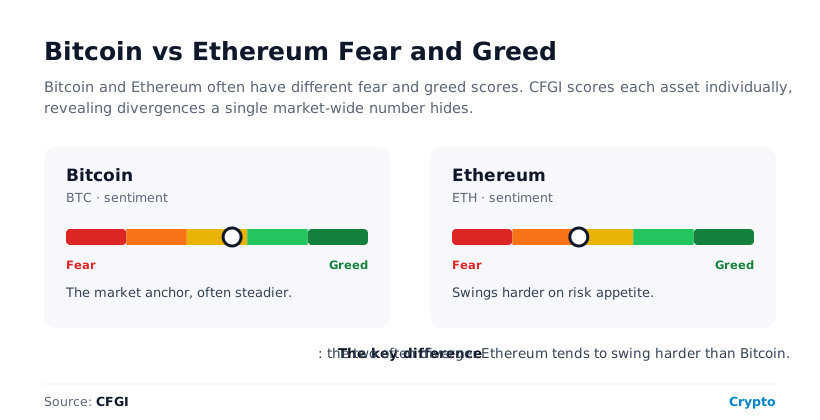
Bitcoin and Ethereum are the two largest cryptocurrencies, but they do not always feel the same. Their sentiment can diverge sharply, one in greed while the other sits in fear, because they respond to different forces: Bitcoin to macro and institutional flows, Ethereum to on-chain activity and the broader altcoin narrative. Because CFGI scores each asset individually rather than producing one market-wide number, it can show exactly when Bitcoin and Ethereum sentiment split apart, and that gap is itself a signal. This is education, not financial advice.
CFGI data
A single market number would blur Bitcoin and Ethereum together; CFGI scores each on its own 0 to 100 scale. With per-asset history since March 2022 and divergences as wide as 61 points between major coins on 23 May 2024, the split between BTC and ETH sentiment is exactly what this approach is built to reveal.
Source: CFGI dataset, March 2022 to June 2026.
Key takeaways
- Bitcoin and Ethereum sentiment can diverge sharply.
- Bitcoin reacts to macro and institutional flows; Ethereum to on-chain activity.
- The ETH/BTC rotation is a classic crypto-cycle tell.
- CFGI scores each asset individually, so the gap is visible.
- The divergence itself is the signal a market number hides.
Why the Two Can Split
Bitcoin and Ethereum respond to different forces. Bitcoin often leads early in a cycle and reacts to macro and institutional flows; Ethereum is more tied to on-chain activity, upgrades and the broader altcoin narrative. So their sentiment can move out of step, one cooling into fear while the other heats into greed. A single market-wide index averages these away; CFGI’s per-asset approach keeps them separate, so the divergence is visible rather than hidden.
What Drives Bitcoin’s Mood
Bitcoin increasingly trades like a macro asset. Its sentiment swings on interest-rate expectations, the strength of the dollar, institutional and spot-ETF flows, and its "digital gold" store-of-value narrative. As the largest and most liquid crypto, it is usually the first place big money arrives when risk appetite returns, which is why Bitcoin often leads early in a cycle while the rest of the market is still fearful. When you see Bitcoin greed building before anything else moves, it frequently reflects fresh institutional money testing the waters at the safest, most established end of the crypto spectrum.
What Drives Ethereum’s Mood
Ethereum’s sentiment is wired differently. It responds to on-chain usage, gas activity, network upgrades, and the health of the ecosystems built on it, decentralised finance, NFTs, staking and layer-2 networks. Ethereum also behaves more like "high-beta" crypto: it tends to move with risk appetite, lagging Bitcoin early in a cycle and then outperforming sharply once confidence spreads beyond the majors. So Ethereum greed heating up while Bitcoin stays calm is often a sign that risk-taking is broadening out from the safest coin into the wider market, the early shape of an altcoin-led phase.
| Driver | Bitcoin | Ethereum |
|---|---|---|
| Leads on | Macro, ETF and institutional flows | On-chain usage, upgrades, DeFi |
| Cycle role | Leads early | Outperforms later |
| Behaves like | Digital gold, store of value | High-beta risk asset |
Different coins, different sentiment drivers.
The ETH/BTC Rotation
The divergence between the two is at the heart of a classic crypto pattern: capital rotating down the risk curve. A typical cycle sees money flow first into Bitcoin, then into Ethereum, then into smaller altcoins, as risk appetite grows. The Ethereum-to-Bitcoin ratio is watched closely as a gauge of this rotation: a rising ratio, with Ethereum sentiment outrunning Bitcoin’s, suggests the crowd is moving out along the risk curve into "altseason"; a falling ratio suggests a flight back to the relative safety of Bitcoin. Reading the two fear and greed scores side by side gives you an early, behavioural read on exactly where in that rotation the market sits.
Reading the Gap
Comparing the two scores adds information a single number cannot. When Ethereum runs hot while Bitcoin stays calm, it can signal the start of an altcoin-led phase; when Bitcoin holds greed while Ethereum lags, it can signal a more cautious, Bitcoin-first market. The gap itself, which reached 61 points across major coins on 23 May 2024, is the signal, not noise to be averaged away. A wide divergence tells you the crowd is treating the two assets very differently, and that difference often carries more information than either score alone.
The Gap Is the Signal
When BTC and ETH sentiment split far apart, that divergence is telling you something about rotation and risk appetite. A single market-wide score would erase exactly the information worth having.
Per-Asset Scoring: The CFGI Difference
This is why CFGI scores hundreds of crypto assets individually, each on its own 0 to 100 scale, rather than collapsing the whole market into one figure. The classic single-number approach is fine for a quick read on the overall mood, but it cannot tell you that Bitcoin is greedy while Ethereum is fearful, the very split that reveals what is happening beneath the surface. Per-asset scoring turns "how does crypto feel?" into the far more useful "how does each coin feel, and how do they compare?", which is where the genuine, tradable insight tends to live.
Frequently asked questions
Do Bitcoin and Ethereum have different fear and greed scores?
Yes, often. Because CFGI scores each asset individually, Bitcoin and Ethereum can show very different readings, one in greed while the other sits in fear. The gap reached 61 points across major coins in May 2024.
Why do their sentiments diverge?
They respond to different forces: Bitcoin to macro, ETF and institutional flows, Ethereum to on-chain activity, upgrades and the altcoin narrative. Bitcoin tends to lead early in a cycle, while Ethereum outperforms later.
What is the ETH/BTC rotation?
A classic crypto pattern where capital flows first into Bitcoin, then Ethereum, then smaller altcoins as risk appetite grows. Ethereum sentiment outrunning Bitcoin’s often signals this rotation into "altseason".
Why does comparing them help?
The gap is information. Ethereum running hot while Bitcoin is calm can signal an altcoin-led phase. A market-wide number averages this away; per-asset scoring shows it. This is education, not financial advice.
CFGI.io, Market sentiment research
The CFGI research team builds and maintains the CFGI Fear and Greed Index: a 0 to 100 sentiment score from 10 sub-indicators across hundreds of crypto assets and the equity market, refreshed every 15 minutes. We have tracked market emotion through multiple full crypto and equity cycles.
Think we missed something?
Spotted a gap, disagree with a take, or think we should cover a new topic? Message us and we'll act on your input.
Message us on TelegramKeep reading
This article is educational and is not financial advice. Crypto and equities are volatile and you can lose money. See our disclaimer.