Stocks
What Is the VIX?
Quick answer
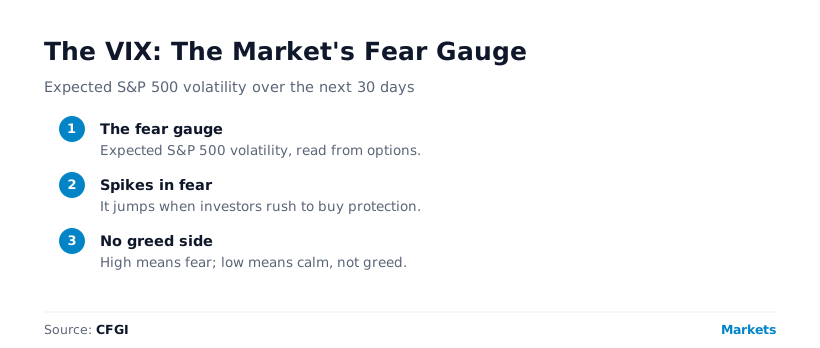
The VIX measures the volatility that options traders expect in the S&P 500 over the next 30 days, derived from options prices. It is widely called the "fear gauge", because it spikes when investors are nervous and falls when they are calm. A high VIX means the market expects big swings; a low one signals complacency. It measures the size of expected moves, not their direction, and it is one of the clearest fear signals in equities. This is education, not financial advice.
CFGI data
The VIX is the equity market’s fear gauge, and volatility is one of the signals behind a sentiment reading. CFGI folds it into the Stock Fear and Greed Index, a 0 to 100 score updated daily since 2021, so the market’s nervousness becomes part of one number.
Source: CFGI methodology and dataset, 2021 to June 2026.
Key takeaways
- The VIX measures expected S&P 500 volatility over 30 days.
- It is built from options prices, the market’s "insurance bill".
- It is the "fear gauge": it spikes when investors are nervous.
- A low VIX can signal complacency; a high one often nears bottoms.
- It is one slice of a fuller sentiment reading.
What Is the VIX?
The VIX is an index that tracks how much volatility traders expect in the S&P 500 over the next month, derived from the prices of options. It does not predict direction, only the size of expected moves. Think of it as a measure of the market’s nervousness: when the VIX is low, the market expects calm; when it is high, it expects big swings, which is why a spike in the VIX is the classic signature of fear taking hold.
How the VIX Is Built
Under the hood, the VIX measures "implied volatility", the amount of movement that options prices are pricing in for the next 30 days. Options are essentially insurance against price moves, so when investors grow nervous they bid up the cost of that protection, and the VIX reflects it. This makes the VIX forward-looking, unlike most measures that describe what already happened, it captures what the market collectively expects to happen next, expressed through what people are willing to pay to protect themselves. In effect, it reads the market’s anxiety straight from its insurance bill: rising premiums for protection mean rising fear, and the VIX puts a number on it.
How to Read the VIX
There are rough, widely-used bands for the VIX, though they are guides, not rules.
| VIX | What it suggests |
|---|---|
| Under ~15 | Calm, often complacency |
| ~15 to 25 | Normal conditions |
| Over ~30 | Fear and stress, big moves expected |
A rough guide to VIX levels.
Broadly, a low VIX tends to coincide with greed and rising prices, while a high VIX coincides with fear and falling prices, and extreme spikes happen during outright panics. So a rising VIX is read as fear creeping in, and a falling one as confidence returning. There is a rough rule of thumb hidden in the number, too: the VIX roughly translates into the daily move the market expects, a VIX of 16, for example, implies the S&P 500 is priced to move about 1% on a typical day. The higher the VIX, the bigger the daily swings the options market is bracing for.
The VIX Paradox
The most useful insight about the VIX is that it is often best read against the grain of how it feels. A very low VIX feels reassuring, but deep calm usually means investors are relaxed and fully invested, with little protection in place, the complacency that can precede a shock, the "calm before the storm". A very high VIX feels frightening, but spikes of extreme fear have historically clustered nearer market bottoms than tops, because panic exhausts itself. The VIX is also strongly mean-reverting: extreme spikes tend to collapse back toward the average within weeks. So contrarians treat a soaring VIX as a sign that fear may be near exhaustion, and an unusually low one as a quiet warning, the opposite of the immediate emotional reaction.
Read It Against the Grain
A high VIX feels dangerous but often comes near bottoms; a low VIX feels safe but can precede shocks. The fear gauge is most useful read against how it feels.
How the VIX Fits a Sentiment Reading
The VIX captures one slice of mood, expected volatility, which is a core part of fear, but only a part. A full sentiment reading combines it with other signals: market breadth, safe-haven demand, momentum and more. CFGI folds volatility, the VIX’s domain, into the broader Stock Fear and Greed Index, so you get a fuller picture than the fear gauge alone. The two make natural partners: the VIX gives a clean, focused read on how much fear is priced into options, while the Fear and Greed Index surrounds it with the rest of the sentiment context, which is why reading them together is more revealing than either by itself.
Frequently asked questions
What is the VIX?
An index that measures the volatility traders expect in the S&P 500 over the next 30 days, derived from options prices. It is widely called the "fear gauge" and measures the size of expected moves, not their direction.
Why is the VIX called the fear gauge?
Because it rises when investors expect turbulence and pay up for protective options, and falls when they expect calm. A spiking VIX signals fear; a low VIX signals complacency.
Does a high VIX mean the market will fall?
Not necessarily. The VIX measures the size of expected moves, not their direction. High readings tend to coincide with fear and falling prices, but spikes of extreme fear have often clustered nearer market bottoms than tops.
Is the VIX the same as the Fear and Greed Index?
No. The VIX measures one thing, expected volatility. A Fear and Greed Index combines volatility with other signals like breadth and safe-haven demand into a fuller sentiment score, so the two work best read together. This is education, not financial advice.
CFGI.io, Market sentiment research
The CFGI research team builds and maintains the CFGI Fear and Greed Index: a 0 to 100 sentiment score from 10 sub-indicators across hundreds of crypto assets and the equity market, refreshed every 15 minutes. We have tracked market emotion through multiple full crypto and equity cycles.
Think we missed something?
Spotted a gap, disagree with a take, or think we should cover a new topic? Message us and we'll act on your input.
Message us on TelegramKeep reading
This article is educational and is not financial advice. Crypto and equities are volatile and you can lose money. See our disclaimer.