Markets
Fear and Greed Index vs the VIX
Quick answer
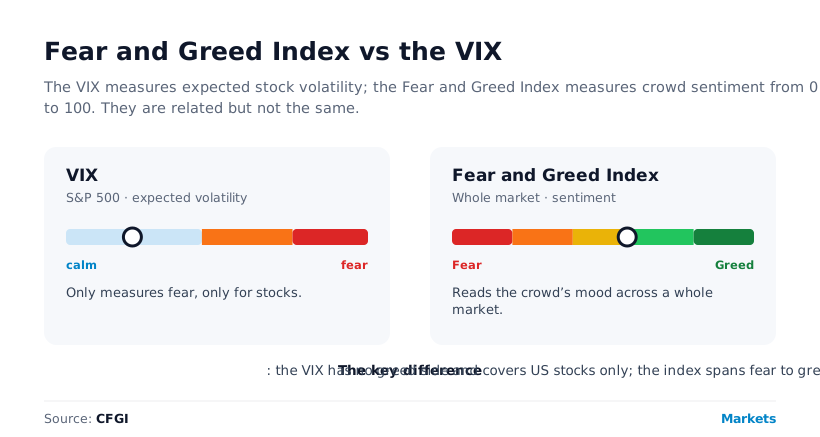
The VIX measures the expected 30-day volatility of the S&P 500 from options prices: it rises when investors fear bigger swings, which is why it is called the "fear gauge". The Fear and Greed Index measures crowd sentiment on a 0 to 100 scale, capturing both fear and greed from several signals. The key difference is that the VIX really only measures the fear side, while a Fear and Greed Index reads both ends. This is education, not financial advice.
CFGI data
The VIX is a single volatility number for US stocks; CFGI rolls volatility together with 9 other indicators into a 0 to 100 sentiment score, for crypto and equities, refreshed every 15 minutes for crypto since March 2022. Volatility is one signal CFGI reads, not the whole story.
Source: CFGI dataset, March 2022 to June 2026.
Key takeaways
- The VIX measures expected S&P 500 volatility from options, the "fear gauge".
- It rises with fear and falls with calm, but has no real greed side.
- The Fear and Greed Index scores crowd sentiment from 0 to 100, both ends.
- The VIX covers US stocks only; sentiment indexes can cover both markets.
- Volatility is one of the indicators a Fear and Greed Index reads, not the whole.
What Does Each One Measure?
The VIX is the implied 30-day volatility of S&P 500 options. It rises when traders expect bigger price swings, which usually means fear, and falls when they expect calm. It is a volatility number, not a direct fear-to-greed scale. A Fear and Greed Index measures sentiment itself, on a 0 to 100 scale, from several signals at once. It reads both ends: a low score is fear, a high score is greed. Volatility is one input it uses, alongside momentum, breadth, safe-haven demand and more.
How the VIX Works
The VIX is derived from the prices investors are paying for options on the S&P 500, which makes it a measure of "implied volatility", the amount of future movement the market is collectively pricing in. When investors grow nervous and rush to buy protective options to hedge against a fall, those options become more expensive, and the VIX rises; when the market is calm and complacent, demand for protection fades and the VIX drifts lower. This is why it is nicknamed the "fear gauge" or "fear index": it spikes dramatically during crashes and panics, as the scramble for downside protection drives option prices up. As a rough guide, a VIX below about 15 signals calm, the high teens to twenties is normal, and readings above 30 signal real fear and stress. Because it reads the options market’s forward-looking expectations, the VIX is one of the most closely watched real-time gauges of stock-market anxiety in the world.
VIX vs the Fear and Greed Index, Side by Side
| VIX | Fear and Greed Index | |
|---|---|---|
| Measures | Expected S&P 500 volatility | Crowd sentiment, 0 to 100 |
| Captures greed | No, fear/calm only | Yes, both fear and greed |
| Inputs | Options prices | Several signals (CFGI uses 10) |
| Coverage | US stocks | Crypto and equities (CFGI) |
| Reading | A volatility level | A 0 to 100 mood score |
How the VIX and a Fear and Greed Index differ.
They are closely related, the VIX is one of the clearest fear signals there is, but a Fear and Greed Index is the broader instrument, with the VIX-style volatility read folded in as just one of its components.
The Key Difference: The VIX Has No Greed Side
The most important conceptual difference is that the VIX is essentially a one-directional gauge, while a Fear and Greed Index is two-directional. The VIX measures fear and its absence: a high VIX clearly signals fear, but a low VIX does not signal greed, it signals calm, which is not the same thing. This is a subtle but important limitation, because a low, complacent VIX can persist for a long time in a happily rising market without ever telling you the crowd has become dangerously euphoric. A Fear and Greed Index, by contrast, explicitly measures both ends of the emotional spectrum, so it can flag Extreme Greed, the overconfident, overbought conditions that often precede a top, just as clearly as it flags Extreme Fear. In effect, the VIX answers "how frightened is the market?" while a Fear and Greed Index answers the fuller question "how fearful or greedy is the market?" capturing the euphoric extreme that a pure volatility gauge, by its nature, leaves out.
A Low VIX Is Calm, Not Greed
The VIX measures fear and calm, not greed, a low reading means complacency, not euphoria. A Fear and Greed Index explicitly captures both ends, flagging the dangerous greed extreme the VIX cannot.
Do They Work Together?
Yes. They are complementary, not rivals. A spiking VIX and an Extreme Fear sentiment reading at the same time is a strong sign the crowd is genuinely risk-off, two independent confirmations of the same panic. CFGI uses volatility as one of its 10 indicators, so the VIX signal is already folded into the equity score, alongside the rest. For a stock-focused trader, watching the VIX directly gives a sharp, real-time read of fear in the options market, while the Fear and Greed Index surrounds that with the broader mood, including the greed side the VIX misses, and extends the same idea to crypto. Used together, the specialist volatility gauge and the broad sentiment index give a fuller picture of where the crowd’s emotions stand than either could alone.
Frequently asked questions
What is the VIX?
The implied 30-day volatility of the S&P 500, derived from options prices. It measures how much future movement the market is pricing in, rising when investors buy protection in fear and falling in calm. It is nicknamed the "fear gauge" and spikes during crashes.
Is the VIX a fear and greed index?
Not quite. The VIX is the fear gauge for US stocks: it measures expected volatility, which rises with fear. A Fear and Greed Index measures sentiment directly on a 0 to 100 scale and captures greed as well as fear, using volatility as just one input.
Why does the VIX have no greed side?
Because it measures volatility (fear and calm), not the full emotional spectrum. A high VIX signals fear, but a low VIX signals only complacency, not euphoria. A Fear and Greed Index explicitly captures both ends, flagging the dangerous greed extreme the VIX cannot.
Does the Fear and Greed Index use the VIX?
For stocks, yes: volatility, including the VIX, is one of the indicators that feed a stock Fear and Greed score. CFGI reads volatility as one of 10 signals rather than the whole picture, and adds the greed side the VIX leaves out. This is education, not financial advice.
CFGI.io, Market sentiment research
The CFGI research team builds and maintains the CFGI Fear and Greed Index: a 0 to 100 sentiment score from 10 sub-indicators across hundreds of crypto assets and the equity market, refreshed every 15 minutes. We have tracked market emotion through multiple full crypto and equity cycles.
Think we missed something?
Spotted a gap, disagree with a take, or think we should cover a new topic? Message us and we'll act on your input.
Message us on TelegramKeep reading
This article is educational and is not financial advice. Crypto and equities are volatile and you can lose money. See our disclaimer.