Stocks
What Is a Stock Ticker?
Quick answer
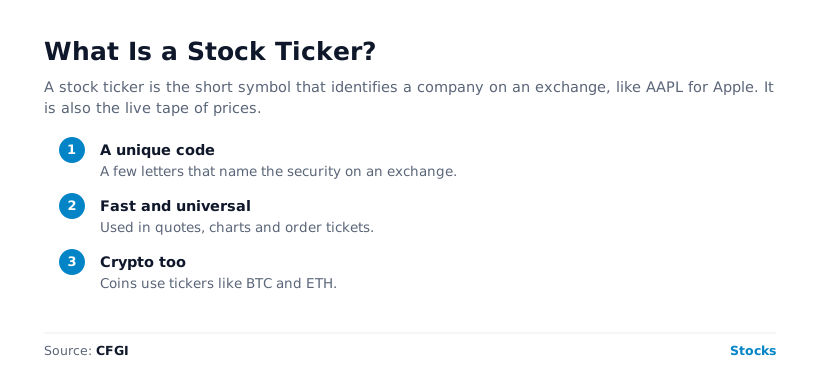
A stock ticker is the short, unique symbol used to identify a publicly traded company on an exchange, such as AAPL for Apple or TSLA for Tesla. The term also refers to the live, scrolling tape of those symbols and their latest prices. Tickers date back to the 1867 ticker-tape machine, follow exchange conventions (NYSE often three letters or fewer, Nasdaq usually four), and watching the tape is one of the oldest ways investors feel the market’s shifting mood. This is education, not financial advice.
CFGI data
The ticker tape is raw price flickering by; a Fear and Greed Index is the mood behind it, distilled. CFGI turns the same flow of prices and activity into one 0 to 100 read, so you sense the crowd’s emotion rather than chasing each tick.
Source: CFGI dataset and standard market definitions, June 2026.
Key takeaways
- A ticker is the short symbol identifying a company, like AAPL.
- It also means the live scrolling tape of prices.
- It dates to the 1867 ticker-tape machine.
- NYSE tickers are often three letters or fewer; Nasdaq usually four.
- A Fear and Greed Index distils the tape into a mood.
The Market’s Shorthand
Every company on an exchange has a ticker symbol, usually one to five letters, that uniquely identifies it: AAPL for Apple, MSFT for Microsoft, TSLA for Tesla. The name comes from the old ticker-tape machines that printed a continuous stream of symbols and prices. Today the ticker is the scrolling band of live quotes you see on financial screens. Watching the tape, seeing which symbols are rising or falling and how fast, has always been a way investors take the market’s temperature, the unfiltered flow of price.
Where the Ticker Came From
The ticker has a surprisingly rich history. In 1867, an American inventor named Edward Calahan built the first stock ticker, a modified telegraph that printed a running stream of stock symbols and prices onto a thin strip of paper, the "ticker tape", making a distinctive ticking sound as it ran. Before it, prices had to be carried by messenger, so the ticker was revolutionary: for the first time, investors far from the exchange floor could follow prices almost as they happened. The technology shaped a century of trading, and left its mark on language and culture, from "ticker-tape parades", where the spent paper was thrown from windows in celebration, to the very word "ticker" we still use for a stream of live data today.
How Ticker Symbols Work
Ticker symbols follow loose conventions that hint at where a stock trades. Historically, companies on the New York Stock Exchange tend to have shorter symbols of one to three letters, Ford is simply "F", while those on the Nasdaq usually have four, like "AAPL". Symbols are often chosen to be memorable or to echo the company name, and additional letters can carry meaning, a suffix may denote a particular share class, for instance. Tickers are not unique to stocks, either: funds, ETFs, indices and even cryptocurrencies all use them, so "BTC" for Bitcoin works the same way as "AAPL" for Apple. The symbol is simply the market’s universal shorthand for naming and trading any security.
A Symbol, a Stock, a Price
A ticker is just a name tag, but a universal one: type AAPL anywhere and the whole market knows you mean Apple. It is the shared shorthand that lets prices be quoted and trades placed unambiguously.
Reading the Tape
Beyond naming a stock, the ticker tape, the live, scrolling flow of symbols and prices, is itself something investors read. In the days of paper tape, skilled traders practised "tape reading", inferring the market’s mood from the pace and pattern of the prints: a fast, frantic tape with prices jumping meant excitement or panic, while a slow, quiet one meant calm. The modern electronic ticker is the same idea on a screen, and watching which names are surging or sinking, and how furiously, remains a way to feel the market’s pulse in real time. The tape is the rawest possible read on the market, every trade, as it happens, with no interpretation, just the unfiltered flow of price and activity.
From Tape to Mood
The ticker shows prices; it does not interpret them. A Stock Fear and Greed Index does the interpreting, turning that same flow of prices and activity into a single read of whether the crowd is fearful or greedy. The tape is the raw data; the index is the emotion within it. In a sense, the Fear and Greed Index is the modern descendant of old-fashioned tape reading: where a veteran trader once sensed panic in the frantic chatter of the paper tape, the index distils the same underlying signals, price, volume, volatility, into one number you can read at a glance. It turns the unfiltered flicker of the ticker into a clear statement about the crowd’s mood.
Frequently asked questions
What is a stock ticker?
The short, unique symbol that identifies a company on an exchange, like AAPL for Apple. It also refers to the live, scrolling tape of symbols and their latest prices.
Why is it called a ticker?
The name comes from the first stock ticker, built by Edward Calahan in 1867, a modified telegraph that printed stock symbols and prices onto paper tape, making a ticking sound. The scrolling band of live quotes inherited the name.
How do ticker symbols work?
They are short arrangements of letters, often hinting at the exchange: NYSE tickers tend to be one to three letters (Ford is "F"), Nasdaq usually four ("AAPL"). They are often chosen to echo the company name, and funds, ETFs and even cryptocurrencies use them too.
How does the ticker relate to fear and greed?
The ticker is raw price; a Fear and Greed Index distils that same flow into a single read of the crowd’s mood, the modern descendant of old "tape reading", so you sense the emotion rather than chasing each tick. This is education, not financial advice.
CFGI.io, Market sentiment research
The CFGI research team builds and maintains the CFGI Fear and Greed Index: a 0 to 100 sentiment score from 10 sub-indicators across hundreds of crypto assets and the equity market, refreshed every 15 minutes. We have tracked market emotion through multiple full crypto and equity cycles.
Think we missed something?
Spotted a gap, disagree with a take, or think we should cover a new topic? Message us and we'll act on your input.
Message us on TelegramKeep reading
This article is educational and is not financial advice. Crypto and equities are volatile and you can lose money. See our disclaimer.