Markets
What Is Recency Bias In Investing?
Quick answer
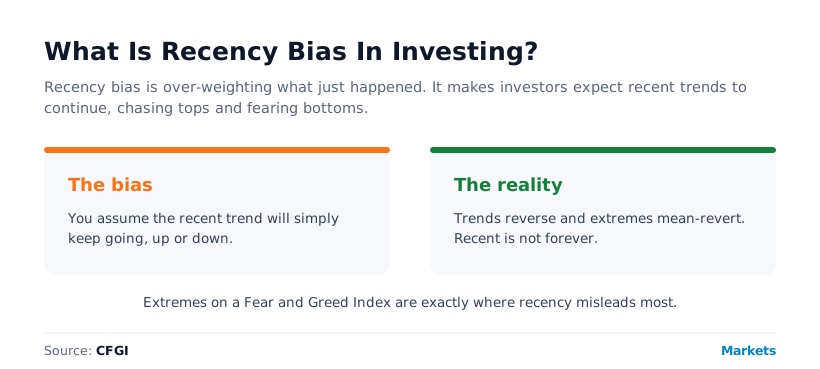
Recency bias is the tendency to give too much weight to recent events and assume they will continue. After a rally, it makes investors expect more gains and pile in near the top; after a crash, it makes them expect more pain and sell near the bottom. It is the force behind performance-chasing, and a major reason crowds reach extremes of greed and fear at exactly the wrong moments. Widening your time frame and rebalancing mechanically are the main defences. This is education, not financial advice.
CFGI data
Recency bias pushes sentiment to extremes: a run of green days breeds greed, a run of red breeds fear. CFGI captures the result, the score climbs with recent gains and collapses with recent losses on its 0 to 100 scale, which is why extremes, like the equity 3 on 8 April 2025, tend to form after sharp recent moves.
Source: CFGI dataset, 2021 to June 2026.
Key takeaways
- Recency bias over-weights what just happened.
- It is a shortcut: recent, vivid events feel more likely.
- It drives performance-chasing, buying tops and selling bottoms.
- It helps inflate bubbles and deepen panics.
- Widening the time frame and rebalancing counter it.
Why the Recent Past Feels Like the Future
Recency bias is a mental shortcut: the brain treats the latest information as the most important, so a recent trend feels like it will continue. After a strong rally, last week’s gains make more gains feel inevitable. After a crash, last week’s losses make more losses feel certain. The danger is timing. Recency bias is strongest right at the extremes, when a trend has run far enough to feel permanent, which is often exactly when it is about to turn.
The Shortcut Behind It
Recency bias is rooted in how memory works. Recent and vivid events are simply easier to recall than older or duller ones, and the brain quietly treats "easy to remember" as "likely to happen", a mental shortcut psychologists call the availability heuristic. A market that has risen for months floods your memory with green, so green feels normal and permanent; a few brutal red weeks make a crash feel like the new reality. The bias is not stupidity, it is an efficient rule of thumb that usually works in everyday life but misfires badly in markets, where the recent trend carries far less information about the future than it feels like it should.
Recency Bias In Action: Chasing Performance
The clearest symptom is performance-chasing. Investors pour money into whatever fund, stock or sector has done best lately, assuming the hot streak will roll on, and the legally required warning that "past performance is no guarantee of future results" exists precisely because so many people behave as if it were a guarantee. The cost is real and measurable: studies of investor returns repeatedly find that ordinary investors earn less than the very funds they own, because they buy in after big gains and sell out after big losses. That gap, the price of always arriving late, is recency bias billing you directly, year after year.
Why the Warning Exists
"Past performance is no guarantee of future results" is a direct response to recency bias. The recent winner is often tomorrow’s laggard, yet the recent track record is exactly what draws the crowd in.
How It Builds Bubbles and Panics
Scaled up across millions of investors, recency bias is an engine of the market cycle. During a long rise, the crowd extrapolates recent gains ever further into the future, optimism builds on optimism, and prices inflate into a bubble on the assumption that the good times simply cannot stop. When the trend breaks, the same bias slams into reverse: recent losses get projected forward into endless decline, and fear feeds on fear until the selling exhausts itself in panic. In both directions, the crowd is most certain the trend will continue at the precise moment it is most stretched, which is why recency bias reliably helps push markets to euphoric tops and despairing bottoms.
How to Counter It
The antidote is to deliberately widen your view. Look at long-run history rather than last week, a chart of decades, not days, reminds you how often "permanent" trends reversed. Set an investment plan in advance and follow it, so recent moves cannot hijack your decisions in the heat of the moment. Most powerfully, rebalance on a schedule: trimming what has surged and topping up what has lagged is, by design, the exact opposite of what recency bias urges, and it mechanically forces you to sell high and buy low. Whenever a recent trend feels certain to continue, treat that feeling itself as a signal to slow down and question it.
Recency Bias and Sentiment Extremes
A Fear and Greed Index partly measures recency bias in action: a string of good days breeds greed, a string of bad days breeds fear, and the score climbs and collapses with the recent trend. That is genuinely useful, because it means an extreme reading is often a sign that recency bias has gripped the crowd, that everyone is extrapolating the latest move. Knowing the bias exists turns the gauge into a prompt: when it hits an extreme, the disciplined question is not "how do I ride this trend further?" but "is the crowd simply assuming the recent past will continue?" Treating extreme sentiment as a reason to check, rather than to extrapolate, is recency bias turned to your advantage.
Frequently asked questions
What is recency bias?
The tendency to over-weight recent events and assume they will continue. In investing, it makes recent trends feel permanent, which leads to buying near tops and selling near bottoms.
Why does recency bias happen?
Because recent, vivid events are easier to recall, and the brain treats "easy to remember" as "likely to happen", a shortcut called the availability heuristic. It usually works in daily life but misfires in markets.
How does recency bias cost investors money?
Mainly through performance-chasing. Investors pile into what has done best lately and sell what has done worst, buying high and selling low. Studies find this makes them earn less than the very funds they own.
How do you counter it?
By widening the time frame to long-run history, following a written plan, and rebalancing on a schedule, which mechanically forces you to sell high and buy low. Treat a "certain" recent trend as a prompt to question it. This is education, not financial advice.
CFGI.io, Market sentiment research
The CFGI research team builds and maintains the CFGI Fear and Greed Index: a 0 to 100 sentiment score from 10 sub-indicators across hundreds of crypto assets and the equity market, refreshed every 15 minutes. We have tracked market emotion through multiple full crypto and equity cycles.
Think we missed something?
Spotted a gap, disagree with a take, or think we should cover a new topic? Message us and we'll act on your input.
Message us on TelegramKeep reading
This article is educational and is not financial advice. Crypto and equities are volatile and you can lose money. See our disclaimer.