Markets
What Is Confirmation Bias?
Quick answer
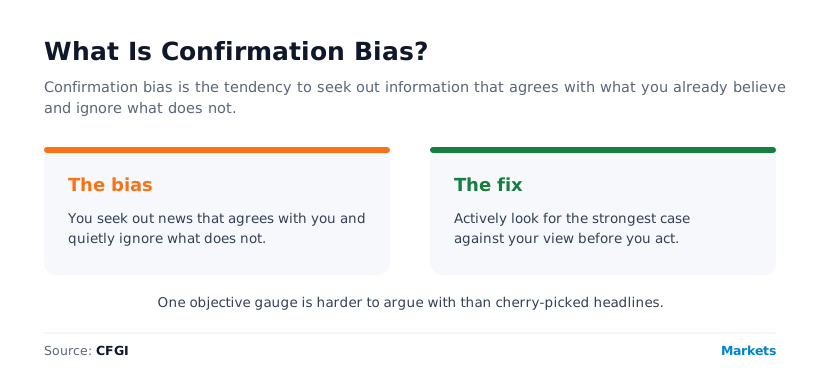
Confirmation bias is the tendency to notice and trust information that supports what you already believe, while ignoring or dismissing anything that contradicts it. In investing, it makes you read only the bullish takes when you are bullish, so you miss the warning signs, hold losing positions too long, and underestimate the risk. It works through how you search for, interpret and remember information, and it is amplified by social-media echo chambers. A neutral, measurable sentiment reading is one antidote: it does not take your side. This is education, not financial advice.
CFGI data
Confirmation bias is what a neutral score is built to counter. CFGI computes its 0 to 100 reading from 10 indicators, not opinion, so it can flag that the crowd, possibly including you, is one-sided even when every take you have read agrees with you.
Source: CFGI methodology, 0 to 100 sentiment model.
Key takeaways
- Confirmation bias is favouring information that fits your existing view.
- It works through how you search for, interpret and remember information.
- It makes investors ignore evidence against their position.
- Social-media echo chambers amplify it.
- Seeking the opposite case, and a neutral indicator, help counter it.
Only Hearing What You Want to Hear
Once you hold a view, confirmation bias makes you a poor judge of new information. If you are bullish on an asset, you click the bullish articles, follow the bullish voices and brush aside the bearish case as noise. The evidence against you is still there, you just stop seeing it. This is part of behavioural finance, the study of how psychology skews financial decisions, and it is one of the most pervasive biases there is, precisely because it feels like simply being well-informed.
The Three Ways It Works
Confirmation bias is not one habit but three, operating at different stages of thinking. In how you search, you go looking for sources that agree with you and avoid those that do not. In how you interpret, you read ambiguous news as supportive, a mixed earnings report becomes "actually bullish" if you already own the stock. And in how you remember, you recall the calls you got right and quietly forget the ones you got wrong, which inflates your confidence over time. Because the bias touches every stage, gathering, judging and recalling, it can feel like rigorous analysis while being the opposite: a closed loop that only ever confirms what you started with.
A Closed Loop
Search, interpret, remember, confirmation bias bends all three toward your existing view. That is why it masquerades so easily as "doing your research".
Confirmation Bias In Investing
The market damage is concrete. When a company you own misses its earnings, you fixate on the upbeat management commentary and wave away the declining margins or rising competition. When you open a long position, every small tick up feels like proof you are right, while the larger bearish signals on the chart get dismissed. The net effect is that you systematically underestimate downside risk and stay in losing trades far too long, because you have filtered out the very information that would tell you to get out. Confirmation bias also feeds crowded trades: when everyone in your corner of the internet agrees, the warning that the trade is one-sided is the first thing the bias hides.
The Echo-Chamber Problem
Modern markets supercharge confirmation bias. Social-media algorithms are engineered to show you more of what you already engage with, so the more bullish posts you click, the more bullish your feed becomes, until it looks as though "everyone" agrees with you. Online investing communities can harden into echo chambers where dissent is mocked and only the consensus view survives, which is especially dangerous in crypto and meme-stock circles built around a single trade. The cruel irony is that the platforms feel like research, an endless stream of confirming "evidence", while actually narrowing your view at the exact moment a wider one would protect you.
How to Fight It
Beating confirmation bias takes deliberate effort, because the instinct runs the other way. The single most powerful habit is to actively seek the opposing case and try to argue it honestly, to "steelman the bear" before you buy. Ask yourself, in writing, what specific evidence would prove you wrong, and then watch for it as carefully as you watch for confirmation. Follow thoughtful people you disagree with, not just those who echo you. And lean on neutral, quantitative signals that have no stake in your opinion. A measured indicator cannot be argued with the way a bearish commentator can be dismissed, which is part of what makes it valuable.
Confirmation Bias and Sentiment
Confirmation bias is strongest at the extremes, when you are most emotionally committed and the crowd is loudest, which is exactly where a Fear and Greed Index earns its keep. A measured reading does not care what you believe; built from ten objective indicators rather than opinion, it can quietly flag that the crowd, possibly including you, has become dangerously one-sided even when every article you have read agrees with you. That is the value of an external, unemotional number: it is one input your confirmation bias cannot easily explain away, a fact on the table when you have surrounded yourself with agreement.
Frequently asked questions
What is confirmation bias?
The tendency to seek out and trust information that supports what you already believe, while ignoring or dismissing anything that contradicts it. In investing it hides the warning signs against your position.
How does confirmation bias work?
Through three stages of thinking: how you search (seeking agreeing sources), how you interpret (reading ambiguous news as supportive), and how you remember (recalling your hits, forgetting your misses). All three bend toward your existing view.
How does it affect investing?
It keeps people in losing trades too long, adds to crowded positions and makes them underestimate downside risk, because they filter out contrary evidence. Social-media echo chambers amplify it.
How do you fight confirmation bias?
Deliberately seek and argue the opposite case, write down what would prove you wrong, follow people you disagree with, and lean on neutral, measured signals like a Fear and Greed reading that do not take your side. This is education, not financial advice.
CFGI.io, Market sentiment research
The CFGI research team builds and maintains the CFGI Fear and Greed Index: a 0 to 100 sentiment score from 10 sub-indicators across hundreds of crypto assets and the equity market, refreshed every 15 minutes. We have tracked market emotion through multiple full crypto and equity cycles.
Think we missed something?
Spotted a gap, disagree with a take, or think we should cover a new topic? Message us and we'll act on your input.
Message us on TelegramKeep reading
This article is educational and is not financial advice. Crypto and equities are volatile and you can lose money. See our disclaimer.