Crypto
What Is a Crypto Whale?
Quick answer
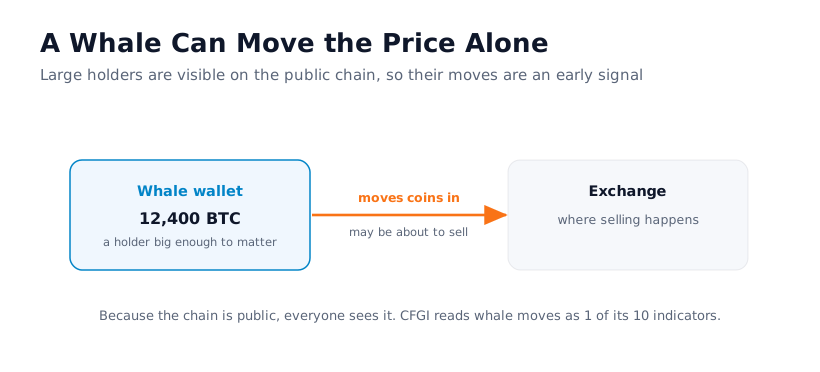
A crypto whale is an individual or entity that holds a very large amount of a coin, enough that their buying or selling can move the price on its own. Because the blockchain is public, whale moves are visible to everyone, which makes them one of the clearest early signals of where sentiment may be heading. Their size also gives them the power to sway, and sometimes manipulate, thinner markets, so whale-watching cuts both ways. This is education, not financial advice.
CFGI data
Whales move markets, and CFGI watches them. Whale movements are one of its 10 indicators, read straight off the public blockchain: large holders sending coins to exchanges leans fearful, while accumulation leans the other way. It feeds a 0 to 100 score tracked every 15 minutes since March 2022.
Source: CFGI methodology and dataset, March 2022 to June 2026.
Key takeaways
- A whale is a holder large enough to move the price alone.
- Their moves are visible because the blockchain is public.
- Whales sending coins to exchanges can signal incoming selling.
- Their size lets them sway, and sometimes manipulate, thin markets.
- CFGI uses whale movements as one of its 10 sentiment indicators.
What Is a Crypto Whale?
A whale is simply a very large holder, big enough that a single trade can shift the market. There is no exact cut-off, but a wallet holding a meaningful slice of a coin’s supply counts. Whales include early investors, funds and exchanges. Because a blockchain is public, their wallets and movements are visible to anyone watching, even though the names behind them usually are not, which is what makes whale-watching such a popular, and uniquely crypto, pastime.
How Big Is a Whale?
There is no official definition, and the threshold shifts from coin to coin, but the term is used loosely for the largest holders, often those with at least 1,000 of a major coin like Bitcoin, or any wallet controlling a noticeable percentage of a smaller coin’s supply. The bigger the holding, the more influence, and traders sometimes distinguish "whales" from even larger "humpbacks" or "mega-whales". The deeper point is concentration: in many cryptocurrencies, a surprisingly large share of the total supply sits in the hands of a small number of whales, which means the actions of a few wallets can carry outsized weight over the whole market, far more than any single shareholder typically holds in a large public company.
Why Do Whale Moves Matter?
When a whale moves, the market notices. A large transfer to a crypto exchange often signals that selling may be coming, since coins usually move onto exchanges to be sold, which can spread fear before the price even moves. Quiet accumulation into private "cold" wallets, by contrast, suggests a whale is holding for the long term and can signal conviction. Whales are watched precisely because their size makes their intent matter: in a thin market, a single large order can move the price by a meaningful amount, so the simple knowledge that a big holder is on the move can shift the mood of everyone else watching the same public chain.
Whales and Manipulation
There is a darker side to whale power. Because their holdings are so large relative to a thin market, whales can deliberately move prices in ways smaller traders cannot, and crypto’s lighter regulation makes this easier than in equities. A whale might place and cancel huge orders to create a false impression of demand ("spoofing"), trade with themselves to fake volume ("wash trading"), or coordinate a pump and dump, driving a coin up before dumping it on the crowd that piled in. They can also "shake out" weaker holders by triggering a sharp dip that scares people into selling, then buying their coins cheaply. The lesson is that following whales blindly is dangerous: their visible moves can be genuine, but they can also be bait, and their interests are rarely aligned with the small trader.
Visible Is Not the Same As Honest
A whale’s move is public, but its intent is not. The same transfer that looks like a signal can be a deliberate trap to spook or lure smaller traders. Follow with caution, not blind faith.
How Does CFGI Read Whales?
CFGI turns whale activity into part of its score. Whale movements are one of the 10 indicators behind the Crypto Fear and Greed Index, read directly from the chain alongside exchange flows, volume and volatility. So instead of tracking individual wallets yourself, you see the net effect in the single 0 to 100 reading: large holders moving coins to exchanges leans the score toward fear, while accumulation leans it the other way. This is a cleaner way to use whale data than chasing individual transfers, because it folds the noisy, sometimes deliberately misleading, signals of many large wallets into one balanced read of where the big money, collectively, seems to be leaning.
Frequently asked questions
What is a crypto whale?
An individual or entity that holds a very large amount of a coin, enough that their buying or selling can move the price on its own. Whales include early investors, funds and exchanges, and their moves are visible on the public blockchain.
How big does a holder have to be to be a whale?
There is no fixed threshold; it varies by coin. The term is used loosely for the largest holders, often 1,000+ of a major coin or a noticeable percentage of a smaller coin’s supply. The defining feature is influence: enough that a single move can affect the price.
Can whales manipulate the market?
Yes, especially in thin, lightly regulated crypto markets. Whales can spoof orders, wash-trade to fake volume, run pump-and-dumps, or shake out weaker holders with a sharp dip. Following whales blindly is risky, as their visible moves can be bait.
How does CFGI read whales?
Whale movements are one of the 10 indicators behind the Crypto Fear and Greed Index, read off the public chain. Coins moving to exchanges lean the score fearful; accumulation leans it greedy, so you see the net effect in one number. This is education, not financial advice.
CFGI.io, Market sentiment research
The CFGI research team builds and maintains the CFGI Fear and Greed Index: a 0 to 100 sentiment score from 10 sub-indicators across hundreds of crypto assets and the equity market, refreshed every 15 minutes. We have tracked market emotion through multiple full crypto and equity cycles.
Think we missed something?
Spotted a gap, disagree with a take, or think we should cover a new topic? Message us and we'll act on your input.
Message us on TelegramKeep reading
This article is educational and is not financial advice. Crypto and equities are volatile and you can lose money. See our disclaimer.