Crypto
Using the Fear and Greed Index for Day Trading
Quick answer
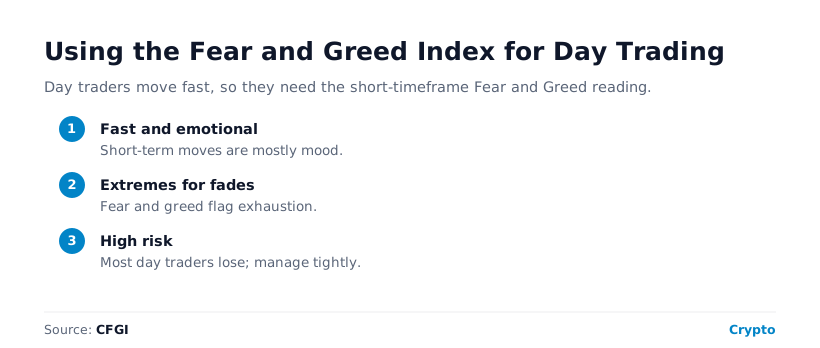
Day trading means opening and closing positions within a single day, so a day trader needs the shortest-timeframe sentiment reading, not the long-term one. Intraday fear and greed can flag when a move is getting crowded or stretched, but it shifts fast and is noisy. For day traders the index is best used as background context alongside price, volume and levels, never as a standalone entry or exit signal, and always with strict risk control. This is education, not financial advice.
CFGI data
Day traders need the fast read. CFGI refreshes every 15 minutes and offers a short-term timeframe, so intraday sentiment can be tracked as it shifts. The caution is noise: on the shortest horizon, the score moves quickly and is context, not a trigger.
Source: CFGI dataset, March 2022 to June 2026.
Key takeaways
- Day trading opens and closes positions within a day.
- Use the shortest-timeframe sentiment reading.
- Intraday sentiment is fast and noisy, with a low signal-to-noise ratio.
- It is best for flagging crowded, stretched moves, not entries.
- Use it as context, never as a standalone signal, with strict risk control.
Matching the Timeframe to the Trade
The biggest mistake a day trader can make with a sentiment index is reading the wrong timeframe. A long-term fear reading is irrelevant to a position you will close in hours; what matters intraday is the short-term gauge, which captures the mood of the current session. CFGI’s 15-minute refresh and short-term timeframe are built for exactly this. Even then, treat it carefully: on the shortest horizon, sentiment is noisy and can whipsaw, so it is most useful for flagging when an intraday move is getting crowded, not for pinpointing entries.
Why Intraday Sentiment Is Noisy
The shorter the timeframe, the lower the signal-to-noise ratio, and intraday is the shortest of all. A short-term sentiment reading can swing sharply on a single piece of news, a large order, or a brief burst of social-media chatter, then reverse within the hour. Much of that movement is genuinely random, the static of a fast market, rather than a meaningful shift in the crowd’s stance. This is the opposite of the long-term reading, which moves slowly and filters out the noise. For a day trader, the practical consequence is that you cannot treat every flick of the intraday gauge as information; reacting to each one is a recipe for overtrading and whipsaw losses. The skill is separating a genuine intraday extreme from the constant background jitter.
What It Is Actually Good for Intraday
Used well, the short-term gauge has real, if narrow, value for a day trader. Its best job is flagging when an intraday move has become stretched and crowded, when a session has rocketed into intraday Extreme Greed, the move may be running out of fresh buyers and vulnerable to a fade; when it has plunged into intraday Extreme Fear, a sharp flush may be close to exhausting itself. In other words, it can help you avoid chasing a move at its most euphoric or panicking at its most fearful, and it can add confidence to a counter-trend fade when price and volume agree. What it cannot do is tell you the exact moment to enter or exit, that always comes from price, levels and your own setup.
A Filter, Not a Trigger
Intraday sentiment is best at warning you off crowded extremes, not at timing entries. Let it filter your decisions; let price and risk management make them.
How to Use It Intraday
- Use the short-term timeframe, not the long-term one, for intraday decisions.
- Read it as background: is the session’s mood stretched toward fear or greed?
- Lean on price, volume and levels for actual entries and exits.
- Ignore the constant small flicks; act only on genuine intraday extremes.
- Keep strict risk control, since fast trading magnifies the cost of every mistake.
Followed consistently, this keeps the index in its proper supporting role and stops it from becoming a source of impulsive trades. A useful test is to ask, before acting, whether you would take the trade without the sentiment reading: if the price, levels and risk-reward already justify it, sentiment can add confidence; if they do not, a stretched gauge alone is not a reason to act.
The Day Trader’s Discipline
For a day trader, sentiment is background colour for the session, not a buy or sell button, and the broader discipline matters far more than any single indicator. Day trading is high-risk and most who attempt it underperform, so survival depends on strict risk management, position sizing, stops and not overtrading, not on a magic gauge. The Fear and Greed Index is one filter among several, useful for keeping you from chasing crowded moves and for checking your own emotion in the heat of a fast session, but price and risk management must always lead. Treated as a calm second opinion rather than a signal generator, it can make you a slightly more disciplined trader, which, over a year of trades, is worth more than any single call.
Frequently asked questions
Is the Fear and Greed Index useful for day trading?
It can be, but only the shortest-timeframe reading, and only as context. Intraday sentiment flags when a move is crowded or stretched, but it is noisy and should never be a standalone signal.
Which timeframe should a day trader use?
The short-term one, which captures the mood of the current session. A long-term fear reading is irrelevant to a position closed within hours. Match the timeframe to the trade.
Why is intraday sentiment so noisy?
Because the shorter the timeframe, the lower the signal-to-noise ratio. A short-term reading can swing on a single order or news flash and reverse within the hour, much of it random static, so you should act only on genuine intraday extremes, not every flick.
Can I day trade on the index alone?
No. It is background colour for the session and a filter against chasing crowded moves. Price, volume, levels and strict risk management lead the decisions, day trading is high-risk and demands discipline above all. This is education, not financial advice.
CFGI.io, Market sentiment research
The CFGI research team builds and maintains the CFGI Fear and Greed Index: a 0 to 100 sentiment score from 10 sub-indicators across hundreds of crypto assets and the equity market, refreshed every 15 minutes. We have tracked market emotion through multiple full crypto and equity cycles.
Think we missed something?
Spotted a gap, disagree with a take, or think we should cover a new topic? Message us and we'll act on your input.
Message us on TelegramKeep reading
This article is educational and is not financial advice. Crypto and equities are volatile and you can lose money. See our disclaimer.