Stocks
What Is Short Selling?
Quick answer
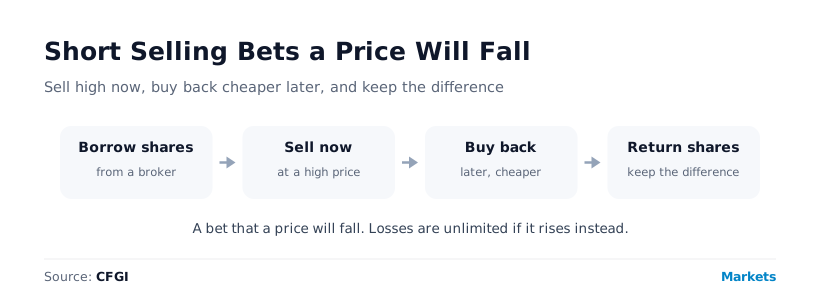
Short selling is betting that a price will fall. A trader borrows shares, sells them, and hopes to buy them back cheaper later, pocketing the difference. It is how you profit from a falling market, but the risk is unusual: losses can be unlimited if the price rises instead, which is what makes short squeezes so violent. Short sellers also play a real role in markets, providing liquidity and exposing overvalued companies. This is education, not financial advice.
CFGI data
Short squeezes flip fear into greed in hours as bearish bets are forced to buy back, a textbook sentiment whipsaw. CFGI scores the equity mood that frames these moves from 0 to 100 on the Stock Fear and Greed Index, updated daily since 2021.
Source: CFGI methodology and dataset, 2021 to June 2026.
Key takeaways
- Short selling is betting a price will fall.
- You borrow shares, sell them, and aim to buy back cheaper.
- Losses can be unlimited if the price rises instead.
- Short sellers add liquidity and can expose overvalued firms.
- A short squeeze can flip fear into greed violently.
What Is Short Selling?
Normally you buy low and hope to sell high. Short selling reverses the order. A trader borrows shares they do not own, sells them at today’s price, and plans to buy them back later, ideally cheaper, to return them. If the price falls, they keep the difference; if it rises, they lose. In essence, it is a way to profit from pessimism, to make money when a stock, or a whole market, goes down rather than up, which is why short sellers are sometimes called the market’s professional skeptics.
How a Short Works, Step by Step
The mechanics involve a few moving parts. First, the trader borrows the shares, usually from their broker, who lends them from its own holdings or another client’s, in exchange for a borrowing fee. They sell those borrowed shares immediately at the current price. Then they wait, hoping the price falls. To close the trade, they buy the shares back on the open market, an act called "covering", and return them to the lender, keeping the difference. A simple example: borrow and sell a share at 100, watch it fall to 70, buy it back at 70 and return it, and you have made 30 (minus fees). The whole trade requires a margin account, because the broker needs collateral to cover the borrowed shares, and that collateral requirement is where much of the danger begins.
Why Is Shorting So Risky?
Because the maths is lopsided. If you buy a stock, the most you can lose is what you paid; it can only fall to zero, capping your loss at 100%. If you short a stock, the price can rise without limit, so your losses can too, in theory, infinitely. That asymmetry, capped gains and uncapped losses, is the mirror image of normal investing and is why shorting is considered an advanced, high-risk strategy. There are further dangers stacked on top: you pay borrowing fees for as long as the short is open, a rising price can trigger a margin call forcing you to add cash or close out at a loss, you may be "bought in" if the lender wants the shares back, and you owe any dividends the stock pays. And the timing risk is brutal, a market can stay irrational, and a stock can stay overpriced, far longer than a short seller can stay solvent.
Capped Gain, Uncapped Loss
A long position can lose at most 100%; a short can lose far more, because a price can keep rising with no ceiling. That single asymmetry is why shorting is an expert, high-risk strategy. This is education, not financial advice.
Why Short Sellers Matter to the Market
Short sellers are often cast as villains, blamed for driving prices down, but they play several useful roles. They add liquidity, since every short sale is a sale that a buyer can meet, and they aid price discovery by expressing the bearish view that keeps prices honest, a market where only optimists could act would inflate far more easily. Famously, short sellers are often the ones who uncover fraud and overvaluation, doing the hard research to expose companies whose stories do not add up, because they have a profit motive to find the rot others miss. And in a falling market, shorts who need to cover become forced buyers, which can actually cushion a decline. The level of short interest in a stock is itself a useful sentiment signal, a crowded short can reveal deep pessimism, and set the stage for a squeeze.
What Is a Short Squeeze?
A short squeeze is sentiment fireworks. When a heavily shorted stock starts rising, short sellers rush to buy back shares to limit their losses, and that buying pushes the price up further, forcing yet more to cover. Fear among the shorts becomes fuel for a greedy spike. It is one of the fastest mood reversals in markets, exactly the kind of stretched, one-sided positioning fear and greed describes, and it is precisely because a short’s losses are uncapped that the scramble to cover can be so frantic and self-reinforcing. CFGI reads the broader equity mood that frames such moves on the Stock Fear and Greed Index.
Frequently asked questions
How do you make money short selling?
By borrowing shares, selling them at the current price, and buying them back later at a lower price to return them. The difference is your profit, if the price falls as you expected. You pay a borrowing fee and need a margin account.
Why can short selling lose unlimited money?
Because a price can rise without limit. When you short, a rising price means growing losses, unlike buying, where the most you can lose is your stake. Capped gains and uncapped losses make it an advanced, high-risk strategy.
Do short sellers serve any purpose?
Yes. They add liquidity, aid price discovery by expressing bearish views, and famously help expose fraud and overvaluation. In a falling market, shorts covering become forced buyers that can cushion a decline.
What is a short squeeze?
When a rising price forces short sellers to buy back shares to limit losses, which pushes the price up further and forces yet more to cover. It is a violent flip from fear to greed, one of the fastest mood reversals in markets. This is education, not financial advice.
CFGI.io, Market sentiment research
The CFGI research team builds and maintains the CFGI Fear and Greed Index: a 0 to 100 sentiment score from 10 sub-indicators across hundreds of crypto assets and the equity market, refreshed every 15 minutes. We have tracked market emotion through multiple full crypto and equity cycles.
Think we missed something?
Spotted a gap, disagree with a take, or think we should cover a new topic? Message us and we'll act on your input.
Message us on TelegramKeep reading
This article is educational and is not financial advice. Crypto and equities are volatile and you can lose money. See our disclaimer.