Stocks
What Is a Dead Cat Bounce?
Quick answer
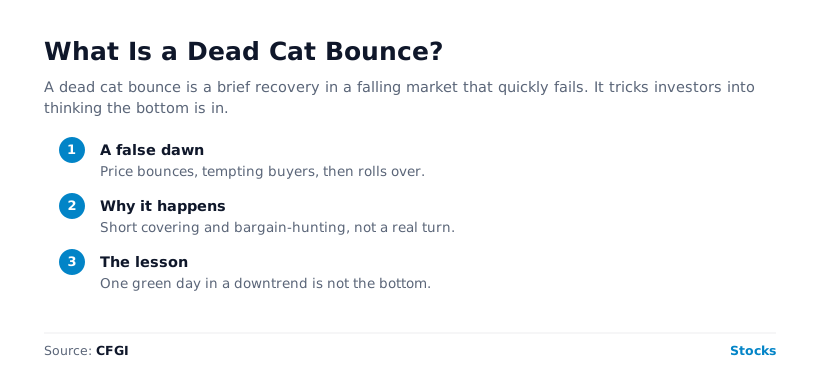
A dead cat bounce is a short-lived recovery during a sustained decline that fades and gives way to new lows. The grim name comes from the idea that even a dead cat bounces if it falls far enough. It is driven by oversold conditions and short-covering, and it tricks investors into thinking the bottom is in before the downtrend resumes. Sentiment context helps: a bounce that cannot lift the mood out of fear often fits the pattern. This is education, not financial advice.
CFGI data
A dead cat bounce shows as a brief lift that fails to escape the fear zone. CFGI sentiment frames it: against an equity market that hit an extreme-fear 3 on 8 April 2025, a bounce that nudges the score up but stays fearful resembles a dead cat bounce more than a turn.
Source: CFGI dataset, 2021 to June 2026.
Key takeaways
- A dead cat bounce is a brief recovery in a falling market that fails.
- It is driven by oversold conditions and short-covering.
- It tricks investors into thinking the bottom is in, then resumes falling.
- Weak volume and a quick fade are warning signs.
- A bounce that stays in the fear zone often fits the pattern.
A Bounce That Does Not Hold
During a sharp decline, prices rarely fall in a straight line. A dead cat bounce is one of those interruptions: a quick, sometimes sharp recovery that draws in bargain hunters and short covering, then runs out of steam and rolls over to new lows. It is closely related to a bear market rally, just shorter and shallower. The danger is psychological. The bounce feels like relief, like the worst is over, which is exactly when it traps buyers who mistake it for the turn.
Why Dead Cat Bounces Happen
A dead cat bounce is not random; it has mechanical causes even within a falling market. After a steep, fast drop, an asset becomes "oversold" in the short term, stretched far below its recent average, and mean reversion pulls it back toward that average in a reflexive bounce. Short-sellers add fuel: having profited from the fall, they buy back to lock in gains, and that buying lifts the price. Bargain-hunters and dip-buyers, sensing value, step in too early. Together these produce a genuine, sometimes sharp, rally. But none of them represents a real change in the underlying downtrend, so once the short-covering and reflexive buying are spent, the selling resumes and the price makes new lows.
Why It Is So Dangerous
The dead cat bounce is treacherous precisely because it offers hope at the worst moment. After the pain of a sharp decline, a sudden recovery feels like vindication, the bottom must be in, and that relief is intoxicating. It draws in investors who had been waiting on the sidelines, plus those desperate to recover their losses, all convinced the turn has finally arrived. Then the bounce fails and the downtrend resumes, trapping these new buyers at prices that soon look high again. In this sense a dead cat bounce is a kind of bull trap on a larger scale: false hope engineered by the market’s own mechanics, ensnaring the very people who thought they were buying the bottom.
Hope At the Worst Moment
The cruelty of a dead cat bounce is its timing: it offers relief and the feeling of a bottom right before the decline resumes, trapping the buyers who believed it.
How to Spot One
Telling a dead cat bounce from a genuine bottom is genuinely hard in real time, but there are clues. A failing bounce often comes on weak, declining volume, a sign of little real conviction behind the buying, and it tends to stall at a prior support or resistance level rather than breaking decisively through it. It also fades quickly, lacking the broad participation of a real recovery. The honest reality is that you usually only know for certain in hindsight, which is why patience helps: waiting for a bounce to prove itself, by holding its gains, reclaiming key levels on real volume, and lifting sentiment, filters out many dead cat bounces that pure hope would have you chase.
Reading the Bounce With Sentiment
A Fear and Greed Index adds a valuable perspective. A genuine turn usually lifts sentiment decisively out of deep fear, as real conviction returns and the mood shifts; a dead cat bounce often leaves the reading stuck in the fear zone even as price pops, because the underlying anxiety has not actually resolved. So watching whether a bounce escapes the fear zone, or merely flickers within it, is a useful cross-check on the price action. The index will not call it perfectly, nothing can, but a price recovery that fails to lift the crowd’s mood out of fear is showing exactly the divergence a dead cat bounce tends to produce, and that mismatch is a reason for caution rather than celebration.
Frequently asked questions
What is a dead cat bounce?
A brief recovery during a sustained decline that fails and gives way to new lows. The name comes from the idea that even a dead cat bounces if it falls far enough. It tricks investors into thinking the bottom is in before the downtrend resumes.
Why do dead cat bounces happen?
After a steep drop an asset becomes oversold, and mean reversion plus short-covering and early dip-buyers produce a reflexive bounce. But none of these change the underlying downtrend, so once they are spent, the selling resumes.
How do you spot a dead cat bounce?
It is hard in the moment. Clues include weak, declining volume, a quick fade, stalling at a prior level rather than breaking through it, and sentiment that bounces but stays stuck in the fear zone rather than escaping it.
Is a dead cat bounce the same as a bear market rally?
They are closely related. A dead cat bounce is usually shorter and shallower, but both are temporary rises within a downtrend that fail. Waiting for a bounce to prove itself helps avoid being trapped by either. This is education, not financial advice.
CFGI.io, Market sentiment research
The CFGI research team builds and maintains the CFGI Fear and Greed Index: a 0 to 100 sentiment score from 10 sub-indicators across hundreds of crypto assets and the equity market, refreshed every 15 minutes. We have tracked market emotion through multiple full crypto and equity cycles.
Think we missed something?
Spotted a gap, disagree with a take, or think we should cover a new topic? Message us and we'll act on your input.
Message us on TelegramKeep reading
This article is educational and is not financial advice. Crypto and equities are volatile and you can lose money. See our disclaimer.