Stocks
Reading the Fear and Greed Index Chart
Quick answer
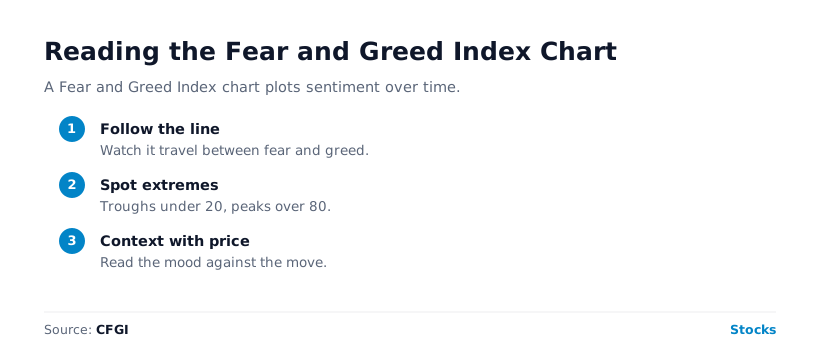
A Fear and Greed Index chart plots the 0 to 100 score over time, turning a single reading into a story. Reading it well means looking at three things: where the score sits now relative to its range, the direction and speed of recent moves, and how the sentiment chart lines up against the price chart. The gaps between sentiment and price, the divergences, are often the most revealing part. Past extremes give the current line context. This is education, not financial advice.
CFGI data
CFGI’s history makes the chart meaningful. With equity sentiment scored daily since 2021, including a 3 on 8 April 2025 and an 83 on 19 December 2023, the chart shows how today’s reading compares to real past extremes rather than floating without context.
Source: CFGI dataset, 2021 to June 2026.
Key takeaways
- A chart turns a single reading into a story over time.
- Read the current level, the direction and speed, and the price comparison.
- The direction of sentiment can matter more than the level.
- Divergences between sentiment and price are the most revealing part.
- Past extremes give the current reading context.
Three Things to Read
- Level: where is the score now relative to its historical range and the five zones?
- Direction and speed: is sentiment rising or falling, gradually or sharply?
- Sentiment versus price: does the mood confirm the price move, or diverge from it?
The third point is the most powerful. When sentiment and price disagree, for example price making new highs while the sentiment chart fails to, it can hint that conviction is fading even as price holds up.
Reading the Level
Start with where the line sits. The chart instantly tells you whether the current score is near an extreme or merely average, which a single live number cannot. A reading of 30 looks very different depending on context: if the chart shows the score has spent the past year between 40 and 80, a 30 is unusually fearful, but if it has been grinding around the teens for months, a 30 is actually a recovery. Reading the level against the chart’s own range, and against the five zones, is what turns a bare number into a judgement about how stretched the crowd really is, which is the whole point of looking at a chart rather than a single dial.
Reading the Direction and Speed
The shape of the line often matters more than its current height. A score of 40 that has been falling fast out of greed tells a very different story than a 40 climbing steadily out of the single digits: the first is a market cooling and turning nervous, the second one rebuilding its confidence. The speed matters too. A sharp, near-vertical plunge into fear is the signature of a sudden shock or panic, while a slow, grinding drift lower suggests a more gradual loss of nerve, perhaps a creeping bear market. By showing the trajectory, not just the destination, the chart reveals the momentum of the crowd’s mood, which frequently carries more information than the static reading at any one moment.
The Line, Not Just the Dot
A live gauge shows one dot; the chart shows the line that got there. The direction and speed of that line often say more than where it currently sits.
Sentiment Versus Price: Divergences
The most revealing use of the chart is laying it beside the price chart and looking for divergences, moments when the two disagree. If price keeps making new highs but the sentiment line fails to, it suggests the rally is losing conviction beneath the surface, fewer participants, weaker breadth, even as price holds up, a potential warning. Conversely, if price grinds to new lows but sentiment refuses to make a new low, it can hint that the selling is exhausting itself and a bottom may be near. These gaps are powerful precisely because they surface what a price chart alone hides: whether the crowd genuinely believes in a move or is merely going through the motions. A divergence is the chart telling you to look twice.
Using Past Extremes As Anchors
A chart is only as useful as the history behind it. Real anchors, like the CFGI equity score of 3 on 8 April 2025 and 83 on 19 December 2023, let you judge whether today’s line is near an extreme or merely average. Reading the chart against those marks is what gives a single point meaning: a reading is "high" or "low" only relative to what the market has actually done before. The longer and richer the history, the more reliable those anchors become, which is why a sentiment chart with years of real extremes behind it is far more useful than a fresh one with nothing to compare against. The live gauge below is one point; the chart is the story it belongs to.
Frequently asked questions
How do you read a Fear and Greed Index chart?
Look at three things: the current level relative to the range and zones, the direction and speed of recent moves, and how the sentiment chart compares with price. Divergences between sentiment and price are especially telling.
Why does the direction matter, not just the level?
Because a score of 40 falling fast out of greed means a market cooling and turning nervous, while a 40 climbing out of the single digits means one rebuilding confidence. The trajectory and speed of the line often carry more information than the static number.
What does it mean when sentiment and price diverge?
When price makes new highs but the sentiment line fails to, it hints conviction is fading even as price holds; when price makes new lows but sentiment does not, it can hint the selling is exhausting. The gaps are often the most revealing part.
Why do past extremes matter on the chart?
They are anchors. Real marks like the equity 3 and 83 let you judge whether today’s reading is extreme or average. A point only means something against history, and a longer record makes those anchors more reliable. This is education, not financial advice.
CFGI.io, Market sentiment research
The CFGI research team builds and maintains the CFGI Fear and Greed Index: a 0 to 100 sentiment score from 10 sub-indicators across hundreds of crypto assets and the equity market, refreshed every 15 minutes. We have tracked market emotion through multiple full crypto and equity cycles.
Think we missed something?
Spotted a gap, disagree with a take, or think we should cover a new topic? Message us and we'll act on your input.
Message us on TelegramKeep reading
This article is educational and is not financial advice. Crypto and equities are volatile and you can lose money. See our disclaimer.